Rural, Urban Farmers Equally Passionate About Food (VIDEO)
| Posted on
Increasing access to fresh, locally sourced food and connecting families with how its grown serve as priorities for urban farmers at Chicago area-based Sugar Beet Food Co-op and Herban Produce. More than two dozen farmers from other parts of Illinois met their urban counterparts and discovered some of the unique challenges farmers and food businesses face in and near the nation’s third-largest city.
Entitled “The Taste of Illinois on Location,” the event took place as part of the 2021 Illinois Farm Bureau Annual Meeting held in Chicago. It highlighted similarities between different types of food production and shared values within agriculture across the state.
For Sugar Beet Food Co-op located in Oak Park, area residents created the food hub because they wanted a source of local, sustainable and healthy foods in their neighborhood. After four years of planning, the grocery store opened in 2016.
“Generally, grocery stores are owned by corporations and those are people that are not in the community,” says Regina Milkovich, the co-op’s education and community outreach coordinator. “Our store is actually owned by consumers, community members, people in the immediate area and producers.”
Community Cooperative
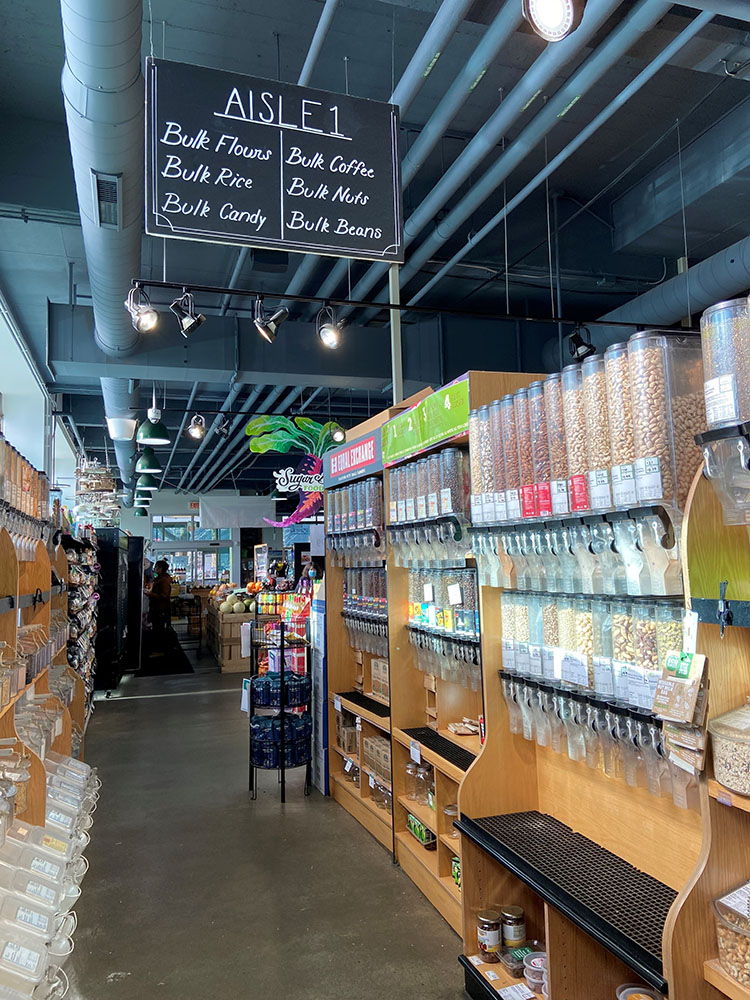
As a cooperative, organizers designed the store to meet the needs and interests of its nearly 2,500 owner members. Cost sharing efforts between produce, meat and prepackaged food departments, as well as the café, absorb premiums on expensive products to lower the overall cost to shoppers. An extensive bulk aisle also helps shoppers save, while providing new opportunities for local, urban and suburban farmers to sell products.
“It’s really beneficial to shopping because a lot of pricing is contained in the packaging – the hidden cost of food,” she says. “If you remove that out of the situation, we’re able to price things specifically for the retail price of food.”
Individual packaging can account for as much as 20% of the cost of the end product, according to Milkovich.
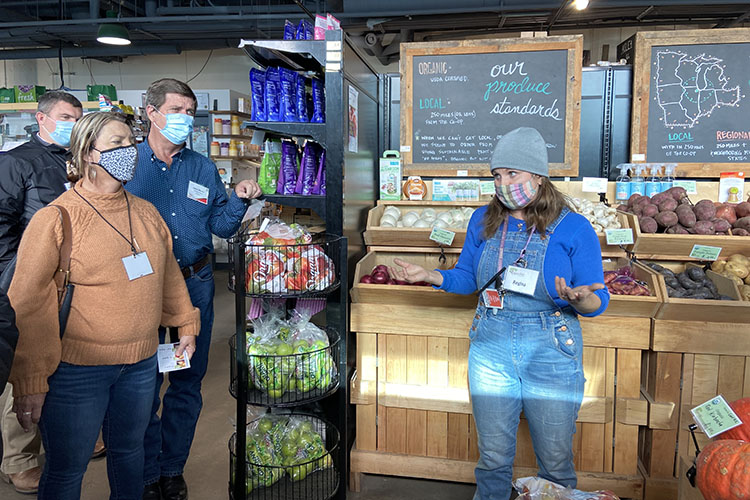
Phil Wright raises cattle in Edgar County and worked as a grain buyer for 35 years. After retiring in recent years, he started a bread making business and sells his creations locally. Visiting the urban grocery store reminded Wright of food insecurity in his hometown, where a fire destroyed the town’s only grocery store.
“This experience to me proves that we all need to work together to create a sustainable food supply,” he says. “I don’t care if I’m from a small town in the middle of a cornfield in central Illinois, or in the middle of Chicago; we’ve got to work together.”
See more: The Dole Hosts Vibrant Sunday Farmers Market Northwest of Chicago (VIDEO)
Producing Change
Alicia Nesbary-Moore, co-owner of Herban Produce on Chicago’s West Side, knows the value agriculture brings to a community.
Before the farm built its greenhouse in 2016, the land had been used as a dumping ground for trash and vacant cars since civil unrest in the 1960s. As development slowly progressed, area residents began asking questions about how food might be grown on site and how it could end up on their tables.
“We’re in East Garfield Park, so it’s traditionally a Black neighborhood,” says Nesbary-Moore. “(The farm) really started to create this narrative and conversation (about food) within the community.”
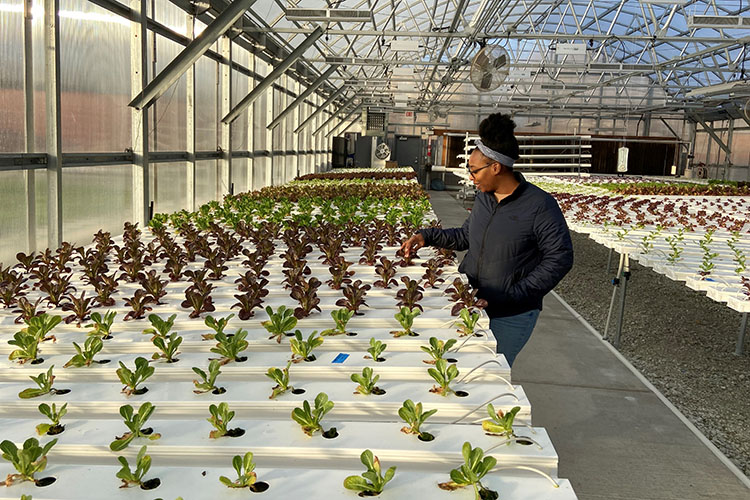
The farm originally started as a non-profit and transitioned to a for-profit business on two acres (or 15 city blocks) in 2020. The business grows 50 types of vegetables and fruits in a hydroponic greenhouse and 100 raised, outdoor garden beds. The farm sells produce to area restaurants and consumers.
A community supported agriculture (CSA) program offers subscriptions to community members who want to purchase fresh produce grown on the farm. Unlike traditional CSA models, where customers pay monthly or yearly fees to help finance the farm for a season upfront, Herban Produce utilizes a weekly fee. The budget-friendly approach makes food boxes more affordable and accessible to residents.
See more: Discover Gardening Workshops in the Windy City
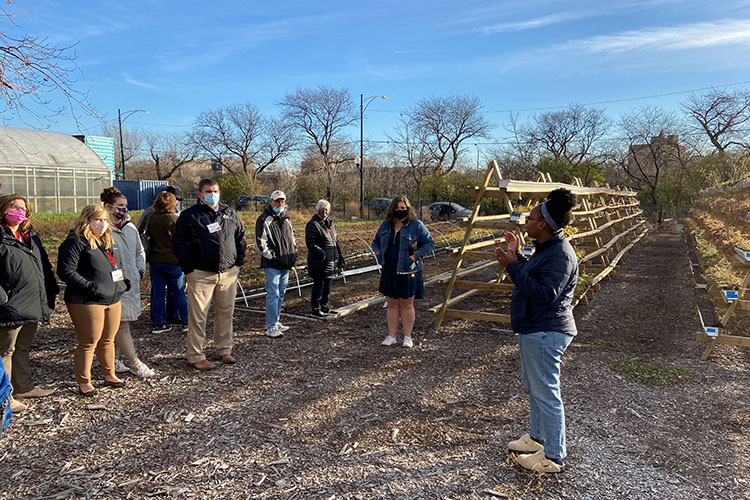
An on-site event space also offers a place for people to take urban gardening classes focused on growing plants in small spaces like windowsills and patios. The farm also partners with other organizations to teach kids and young adults about farming.
“It’s an eye-opening experience for a lot of the youth because they’re exposed to agriculture right in their city,” says Nesbary-Moore. “They’re amazed that they’re able to farm right in the middle of the city.”