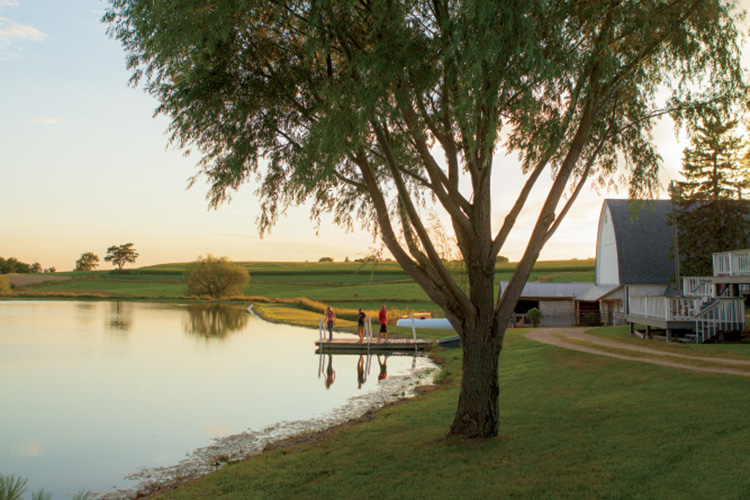
Every summer, my kids, nieces and nephew ask to float the river that borders the farm. We take kayaks – sometimes a johnboat and fishing poles – to navigate the body of water on a weekend afternoon with suitable water levels. The kids bank the experience among their favorite childhood memories.
As kids, my brother and I gravitated toward water, too. The creek in the timber. The big puddle in the barnyard. The hydrant by Grandpa’s pump house. This summer, our families plan to rent a house on a lake for a big family vacation.
As adults with bills to pay, we fully understand that water or lack thereof can equally help or hurt a crop and livestock. Rain dictates field operations and impacts grass in the pasture. Flowing creeks provide a drink for the cattle, or we must haul water to them. Our farmhouses rely on clean groundwater to keep faucets flowing for safe drinking, cooking, bathing and laundering. The drought of 1988 taught me to take short showers.
While indoor plumbing tends to make water an afterthought, this precious resource remains a forethought to monitor and protect on the farm. Land and water resources make Illinois one of the most productive and fertile places in the world to grow food, animal feed and fuel, and this elevates the responsibility of farmers to keep water clean and safe.
In that spirit, many farm families across the state support the Illinois Nutrient Loss Reduction Strategy, which helps guide efforts to improve water quality at home and downstream by reducing nitrogen and phosphorus levels in lakes, rivers and streams.
Farmers have adopted more water and soil conservation practices on the farm while producing more food, fiber and renewable fuel than ever in our history. Grass buffers along our stream banks and field edges trap sediment during rain events, keeping topsoil and nutrients from polluting nearby water sources. Government conservation programs protect land sensitive to water-driven erosion. Cover crops and no-till provide ground covers to prevent runoff of soil and nutrients and support clean water.
As kids, we drank groundwater from garden hoses, untreated and unfiltered. Today, we still do.
About the author: Joanie Stiers farms with her family in west-central Illinois, where they grow corn, soybeans, hay and cover crops and raise beef cattle and backyard chickens.
See more: Farmers Share a Steadfast Commitment to the Land Through Generations