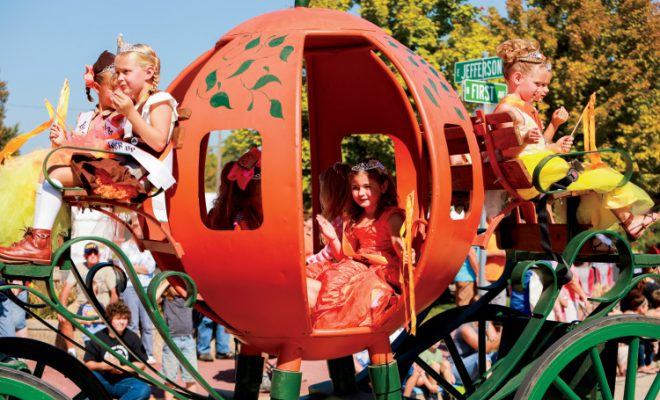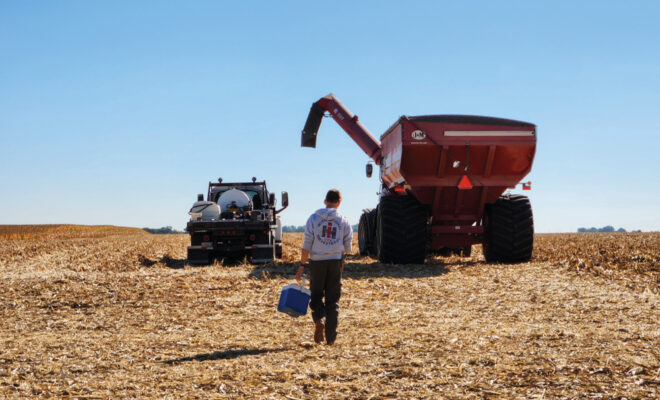
While miles of cornfields surround our tiny town in Illinois, we still make sure 250 cornstalks and a couple dozen locally grown pumpkins adorn the light poles lining the busiest street. By the weekend after Labor Day, volunteers decorate the downtown, helping village residents celebrate the fall season, the local harvest and the community’s biggest event: a fall festival showcasing agriculture, volunteerism and small-town pride.
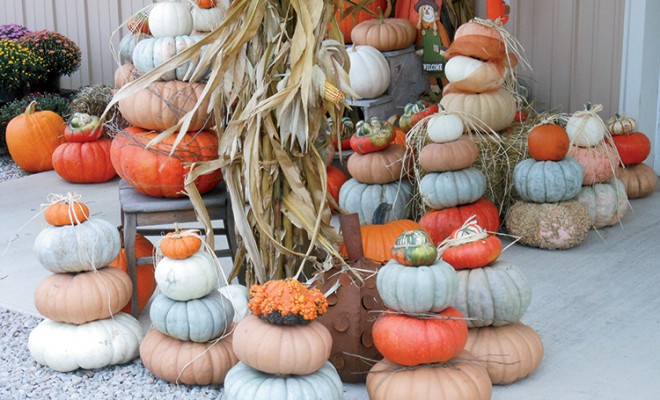
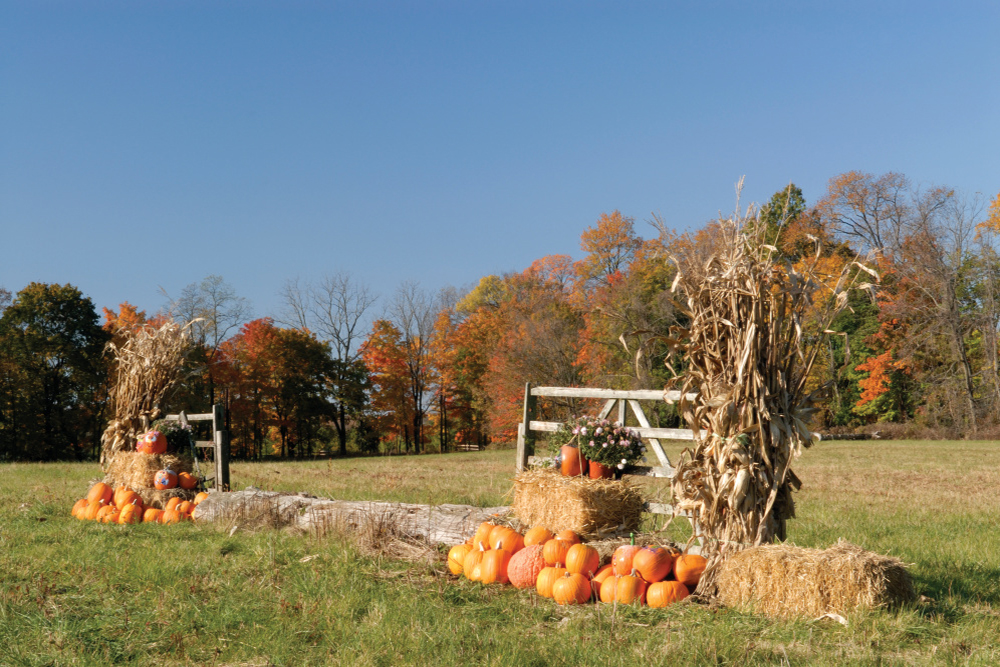
From city streets to gravel roads, it seems everyone wants a piece of the farm during fall, evidenced by the towering stack of straw in the grocery store parking lot. Garden centers sell cornstalks, and pumpkins permeate every retail opportunity, from storefronts to pick-your-own patches. Decorations of corn shocks (the name for a bundle of dried stalks), straw bales and pumpkins represent the fall season as much as they represent Illinois, the nation’s No. 1 producer of pumpkins and No. 2 of corn.
See more: Q&A with Dollinger Family Farm Where Visitors Can Experience a Taste of Farm Life
During her first fall on the farm, my sister-in-law drove to her Chicago-area hometown with a pickup truck bed packed full of cornstalks. In the back seat, she carried straw bales shoved in 55-gallon bags to reduce the mess. She spared space for a weekend travel bag, legroom to drive and window clearance to see Friday-night commuters on Interstates 80 and 55. She yielded honks and hollers as she drove a legitimate farm truck into neighborhoods and distributed our farm’s homegrown fall decorations to relatives and friends who requested them.
Likewise, residents here in farm country appreciate and enjoy the same traditional fall decorations, even as fields of maturing corn stalks exponentially outnumber our population. Interestingly, I’m named “one of those” who puts up Christmas trees too early. But few fuss when pumpkins and corn shocks decorate my porch around Labor Day, more than 50 days before Halloween and 75 days before Thanksgiving.
As Americans distance themselves from the bygone farming days when corn shocks originated, decorating with straw and cornstalks continues by tradition rather than purpose. More than a century ago, farmers hand-cut cornstalks and placed them in shocks throughout the field to dry. Mechanization ended the practice, but the corn shock lives on in rural and urban settings alike to celebrate the season and harvest bounty. In fact, we even put up a corn shock at our farm’s corn storage facility, the hub of our farm’s harvest.
See more: Table Talk: Farm Owners Gather Together for Holidays, Too
About the Author: Joanie Stiers farms with her family, growing corn, soybeans, hay and wheat (for straw bales) while raising beef cattle and backyard chickens in west-central Illinois.