


Steve Archer found his mission in life.
When the Marine veteran returned to civilian life after serving in Iraq in the early 2000s, adjusting to his new world was challenging.
“I was having difficulties fitting in when I wasn’t busy, and my doctor said you need to find something to take care of in your downtime so that you don’t just focus on the past,” he says. “I needed something to keep me in the moment, and that something was bees and chickens.”
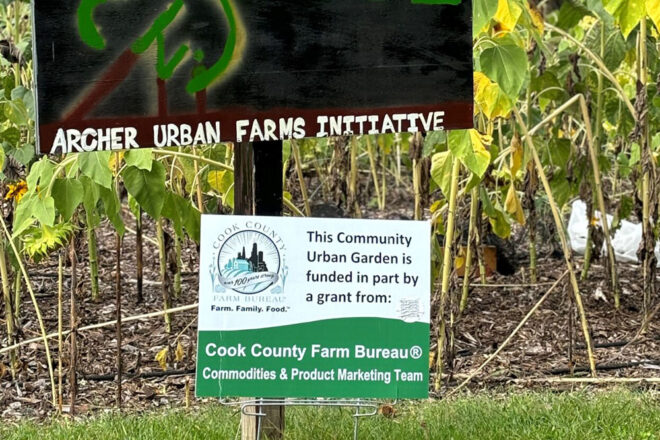
Archer’s hobby ultimately morphed into a community garden in Chicago’s Englewood neighborhood. The 60-by-125-foot plot has been in his family since the 1920s. A house on the property was demolished, but the garden required significant soil preparation due to lead contamination.
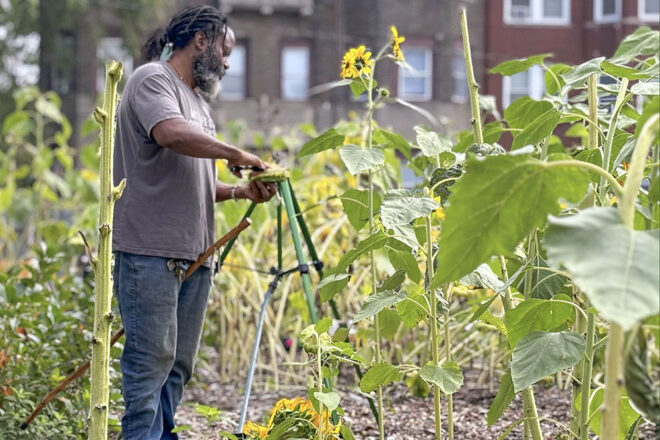
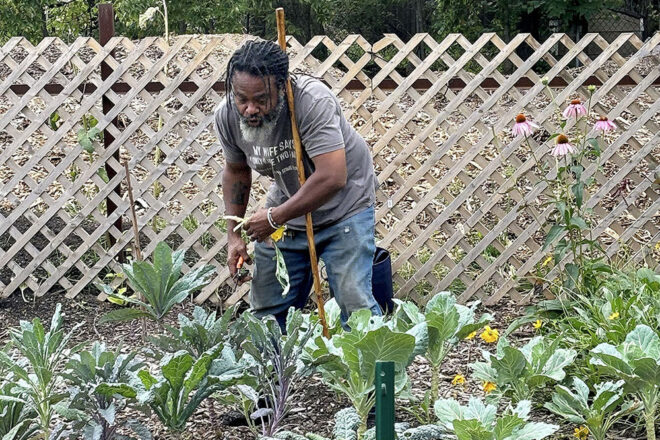
The first seeds were planted in spring 2023, and today, the garden is home to sunflowers, Swiss chard, fairytale eggplants, spearmint, sweet potatoes, tomatoes, kale and more. He also raises about 20 chickens as well as bees at the garden.
“I decided to farm the lot so I could grow food and give it away, because we should not have hungry people in Chicago,” says Archer, who grew up on the South Side of Chicago. Aside from its reputation as being dangerous, Englewood also is located in a food desert. He donates the produce to community organizations, including Stein Learning Gardens at St. Sabina and Stone Temple Baptist Church.
From grants to volunteers, the Archer Urban Farms Initiative came to life with the help of many hands. Archer has also continuously been educating himself, starting with the University of Illinois Extension’s urban farming program.
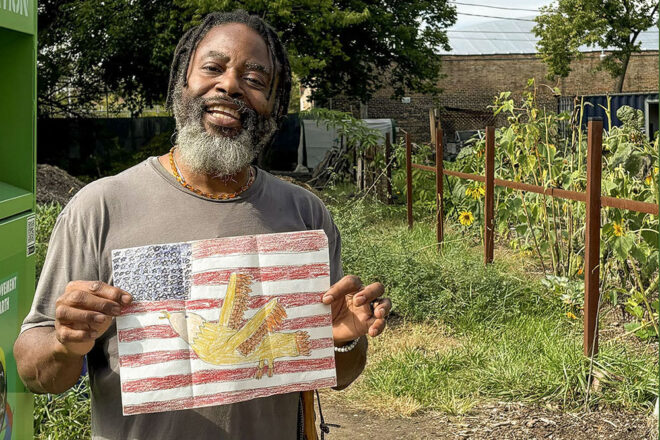
“There are just times where the difference between being a victim or an observer is not hesitating and throwing yourself fully into something, and by throwing myself fully into this, I can get the joy out of it without having any of the reservations,” he says.
He shared a story about his time in Iraq when a helicopter he was supposed to be on crashed into a river, killing all the soldiers aboard. A lance corporal who was standing on shore didn’t hesitate to jump in and try to save the Marines.
“Now, if he had thought about it for a moment, he might have understood how fast that river was moving. He might have understood how deep they were under. But in the moment, Marines are the kind of people that throw themselves into stuff, whether it’s farming or the Tigris River,” he says.
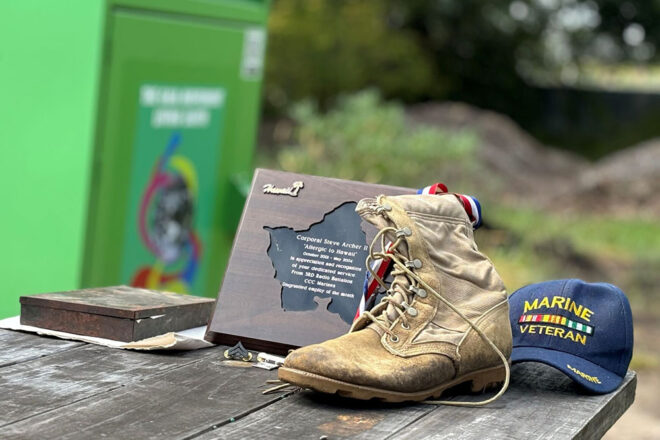
With a long family history of military service, Archer joined the Marines after college in 1999 and served for five years. Aside from his tour in Iraq, he also was deployed to the Philippines.
“When you get into the military, you have a mission, and then when you get out of the military, you have three days of, ‘See you later, you’re a civilian again,’ and now you don’t have a chain of command, you don’t have a mission. You’re not preparing for your next deployment,” Archer explains. “But with this farm, I can plan what I’m going to do, and then do it, and then act on those things, and then I can look back and say, ‘This is where we need to improve.’
“I have a mission again. And it’s something quantifiable that I can see, I can taste and I can feel it when we drop off the stuff, or people come over and they’re like, ‘Oh, that’s the best honey ever.’”
The transformation to a community garden where Archer can educate residents about where food comes from, how to grow it and sustainability practices has inspired neighbors to pay it forward.
“A gentleman came up to me one day and he goes, ‘You know, I pick up garbage I see on the street now, because of watching you do this for the last couple years,’” Archer says. “I had a lady tell me she recently moved back to Chicago. She left Illinois looking for a place of peace and nature and beauty. She says she came back, and three months later, I was building this and she says she just walks past here and she looks at the sunflowers and what’s growing.
“I told her we’re building community, not fences. Nothing that we have here prevents people from coming in.”
The garden was made possible with many partners and volunteers, including Advocates for Urban Agriculture, Farmer Veteran Coalition, Cook DuPage Beekeepers Association, Cook County Farm Bureau, the Green Gang, Homan Grown, Gaia Movement, neighbors and family.
Archer was named the 2024 Illinois Farmer Veteran of the Year at the Farmer Veteran Coalition of Illinois annual meeting at the Everything Local Conference in January.
The farmer veteran finally found a way to combat his PTSD – focusing on the mission in front of him.
“I think we have to live as if this is it. There are no promises. And if something I do today might have made somebody else’s day a little bit better, then I’m serving the purpose that I’m here for.”
This content is part of the Cultivating Our Communities series, a collaboration among Lt. Gov. Juliana Stratton, Illinois Farm Bureau and the Illinois Specialty Growers Association. It strives to raise awareness of Illinois’ diverse farmers, farms, and the food, animal feed and fuel they produce.


Thank you for the opportunity.