


With little fear of the unknown, and certain there was no other choice, Robert Ehnle said goodbye to his 7- and 3-year-old daughters as he embarked on a seven-week absence from his family, and from the farm. He explained to his girls the time away was going to help him be a better dad and a better person.
The farmer-veteran was headed to an inpatient facility 220 miles away from his Kewanee home to seek treatment for post-traumatic stress disorder (PTSD).
The 40-year-old served 20 years in the Illinois Army National Guard and was deployed for nine months in Afghanistan, taking part in 150 combat missions.
See more: Dairy Farming Prepared Veteran for Anything (VIDEO)
While serving in the military from the age of 17 was something he was extremely proud of, Ehnle suffered from PTSD upon his return from Afghanistan and never quite understood how it was affecting him. The Army was so ingrained in him, it was difficult to separate the two, and as a fourth-generation farmer, Ehnle also faced the uncontrollable stressors of farming, growing corn and soybeans with his dad, Paul.
“You’d put on the clown makeup and be happy during the day, and then I was at my safe spot at home where I could just emotionally collapse and not have to feel anything,” he tells FarmWeek. “And that goes back to the military … not wanting to feel because, you know, that’s how you got through your days.”
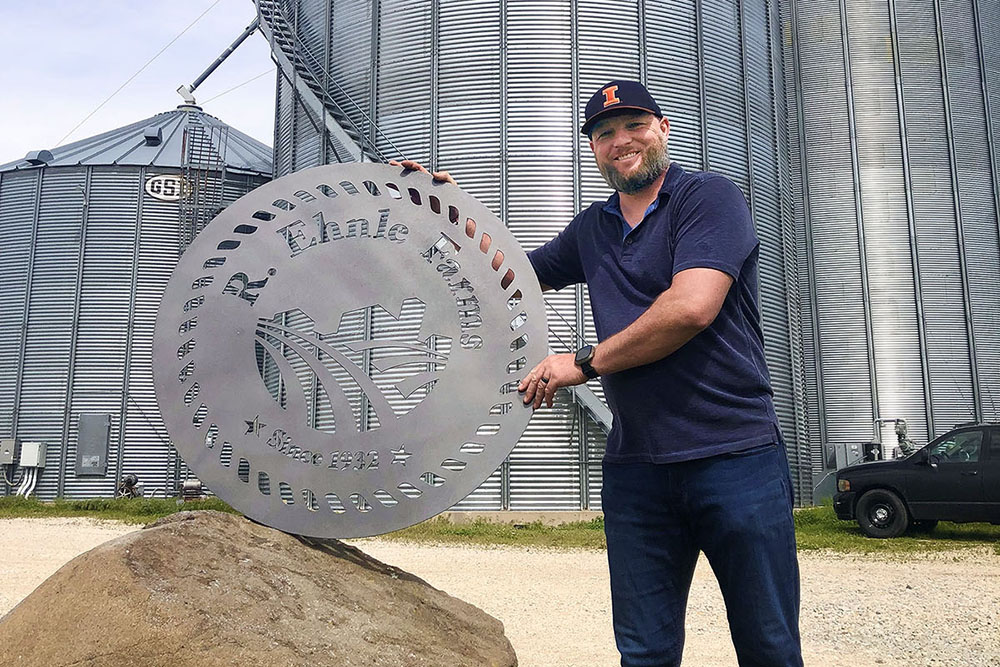
He finished the inpatient treatment in Des Moines, Iowa, in April and continues to choose God, himself and his family, through therapy and other mindful exercises.
“Coming back, I feel a lot happier. I feel joy in life. I have something to live for,” he says. “I just feel very blessed to have this life because you only have one, and you want to be present in it. And a lot of times before I wasn’t, and being mindful helps with that.”
In sharing his journey, he hopes his story can encourage others having similar experiences, especially farmer-veterans who are not only living with PTSD but the isolating mental health battles that come with farming, to reach out and ask for help.
Ehnle and his younger sister, Katie, grew up in Bradford, and in 1990, moved to the house where his parents, Paul and Cheryl, still live in Henry County. His grandfather grew his first crop on their farmland in 1973. While proud of his family’s ag legacy, Ehnle initially didn’t have much interest in farming. Unsure what he wanted to do in life, he enrolled in the Illinois Army National Guard in 2000 to pay for college.
He attended Western Illinois University where he studied political science and was active in ROTC, graduating and commissioning as an officer in 2006. During his time at school, Ehnle came to the realization that carrying out his grandfather’s legacy was an opportunity that he just could not pass up, and he wanted to return to the farm.
See more: Farmer-Veteran Cultivates More Than Crops
Still a member of the National Guard, Ehnle was deployed to Afghanistan for nine months in 2008 and 2009.
“I was part of a police mentoring team. We would assist the Afghan police in logistics and security, and I assisted in helping build up their infrastructure around their area. We went on probably over 150 combat missions,” he says, adding his experience in the military took him from driving a tank to becoming a cavalry officer. He retired as a Major in 2021.
Upon his return to Kewanee after his deployment, he was happy to be home and tried to find his groove. He still found it difficult to continue to leave the farm for drill weekends, and annual military training, when a crop needed to get in and out.
“Some days would be harder than others, but you wouldn’t think anything of it. And you would just kind of push and drive on,” he says. “Emotional vulnerability wasn’t one of my strong suits, I could very much turn off emotion, and then just kind of go through the motions.”
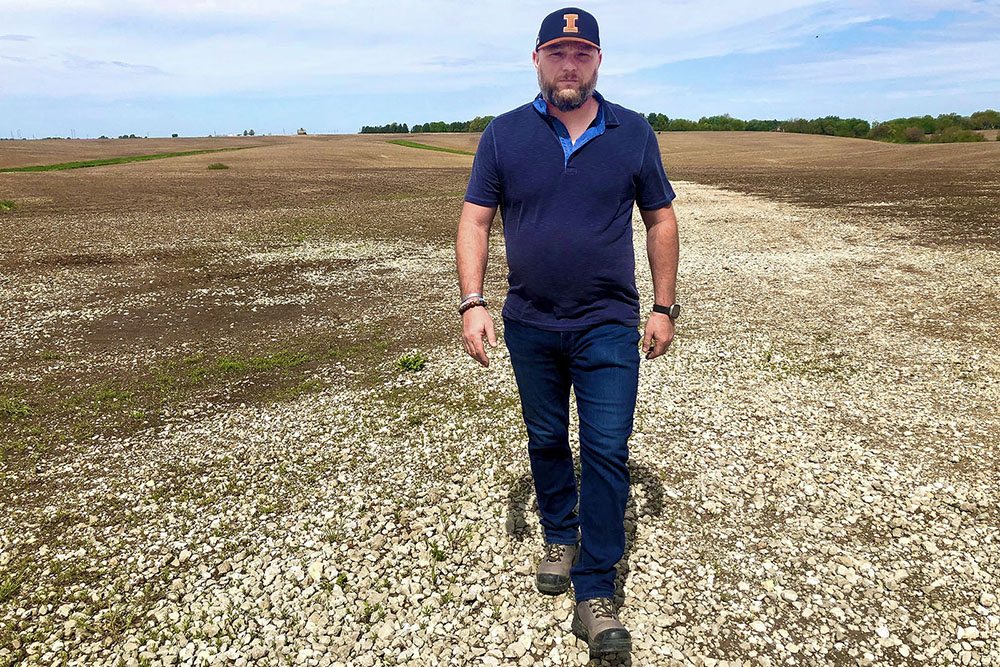
It wasn’t until he and his wife, Lindsay, were married in 2015, that the reflection in the mirror was made all the more evident. Although he thought he was turning off his emotions, Lindsay noticed his extreme highs and lows, his irritability, anxiousness and sadness.
He finally realized the chokehold his PTSD had on his emotional health. Leaving his family for nearly two months for treatment was a difficult decision. He pointed to his wife as his biggest supporter. “She is my light, and I don’t know if I would be standing here today if she weren’t there with me. In treatment, there were so many veterans without spouses, families or even friends to be there for them.”
“Lindsay loved me through my darkest moments and thought she could help me through the years, but it became so clear over time that the only person who could help me was me.”
At first, it was hard to leave. “I kept saying, ‘I’m being selfish. I’m taking time away.’ But over time, in treatment, I was able to develop that into being self-full instead of selfish,” he says of his decision to seek outside help.
Balance is a key piece of his coping toolkit, specifically, understanding what he can control and what he cannot. Also, the idea that we must choose life, and celebrate it, regardless of the circumstances.
“That balance has been what I relate to as a veteran and farmer … control what you can control. And the other stuff, you have to put it aside or it’s going to just really affect your life and burden you.”
Part of his treatment entailed roundtables with other veterans who shared their experiences. Ehnle says he’d be interested in starting something similar, possibly with farmer-veterans in the community.
“I know it’s hard to get farmers to talk about stuff like that, but you could just have something like this to talk about what’s going on in life in a judgment-free area,” he says.
This content is part of the Cultivating Our Communities series, a collaboration among Lt. Gov. Juliana Stratton, Illinois Farm Bureau and the Illinois Specialty Growers Association. It strives to raise awareness of Illinois’ diverse farmers, farms, and the food, animal feed and fuel they produce.

We’re very proud of our son, his accomplishments and his loving wife, Lindsay. She is a most remarkable supportive individual. The Army experiences and being deployed, taught Rob many different skills, some positive and some negative. The 7 week course at the DOM is a definite help when he was needing special guidance. PTSD should be dealt with asap and we’re thankful he and his wife made the decision. His faith is stronger and his focus on things is clear. Rob is a hard working young man, husband, father and an awesome son:). No matter the situation, seeking help is courageous and benefits all.