“Mission first and people always.”
It’s a verse of the Cadet Creed Tim Scarbrough recited as a member of ROTC at Murray State University. The motto stuck with him throughout his 21-year military career and he now uses those words to help fuel his purpose as a farmer.
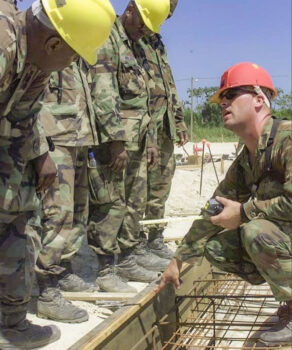
Scarbrough enlisted in the Tennessee National Guard in 1986 at the age of 17. He began his service as a tank driver and aspired to leadership as a platoon leader of combat engineers. Transferring to the Army Reserve, he sought out roles in Illinois as a civil engineer and public affairs officer, achieving the position of company commander four times before being promoted to captain.
Continuing to develop skills in engineering and project management, he became an active-duty officer for nearly eight years, serving various roles in the continental U.S. and Central and South America. He retired in 2007 after his deployment to Iraq.
His duties always centered around project management and serving people, so he chose to further use those skills stateside as a disabled veteran outreach specialist for the Illinois Department of Employment Security.

“I tried to reach out to those veterans who were homeless, disabled or incarcerated,” he says. “I spent a great deal of time in prisons, homeless shelters and halfway houses.”
He told FarmWeek that is where he noticed the localized shortages of fresh, healthy food.
“In the prisons, unfortunately, I found that the food supply was condensed and spread out over the entire population. I never saw a lot of variety,” he adds.
See more: Farmer-Veteran Shares PTSD Journey (VIDEO)
It went against what his in-laws, Bill and Marilyn McIntire, had taught him about the importance of the food supply.
“Whether it was from their garden or pasture, they taught me that knowing the source of what you ate was paramount to long-term health. Notwithstanding the importance of never wasting those items that helped the food grow whether grains, manure or compost,” he says. “When we ate, it was hearty and knowing where it came from just enhanced the flavor.”
“Those four years working with veterans made me start to think that maybe I wanted to contribute to a healthy local food supply,” Scarbrough says.
So, he began diversifying the family’s 17-acre farm in West Frankfort along the county line separating Williamson and Franklin counties. Today, his farm is home to corn, soybeans, sheep, goats, honeybees and blueberries, with plans to build two greenhouses and a hydroponics building to specialize in locally grown produce year-round and seasonal U-pick opportunities.
The honey goes to local restaurants, and he sells some of his sheep to private owners for processed lamb and mutton.
“When the greenhouses and hydroponic house produce the volume I need, I want to sell to the Illinois and federal prison systems, work with the St. Louis Food Bank, and be a farm-to-table producer for regional restaurants.”
Scarbrough says looking back on his journey, he realized “Mission first and people always” has been an undercurrent in everything that he does.
“As an officer leading troops, I learned that the mission must always be accomplished, but the people are essential for success.”
And he says that translates to farming.
“Everything is cyclical. You can only grow corn certain times of the year,” he says. “Baby goats are only born certain times of year. Honey can only really be made in certain times of the year. But people will always be hungry and they’re always going to need good food.”
Most days, Scarbrough is the only one tending to the farm around his full-time job as a regional facility manager for the Department of Children and Family Services, but he credits many friends and his children, Addison, Riley, Will and Noah, for help and encouragement. He says his kids’ involvement in 4-H growing up also helped spark his interest in agriculture.
Like many farmers, he faces challenges around finances and weather, but his mission remains clear.
“The end goal is that when I’m gone, I leave a legacy for my children and my grandchildren,” he says.
“But along the way and then from that point on, people are going to get fed, they’re going to be healthy, they’re going to be happy, and Scarbrough Farm will provide that resource.”
See more: Dairy Farming Prepared Veteran for Anything (VIDEO)