Whether you’re a traditional milk drinker who prefers skim or 2%, or someone who enjoys unconventional milk flavors like cappuccino and orange cream, every glass starts on the farm.
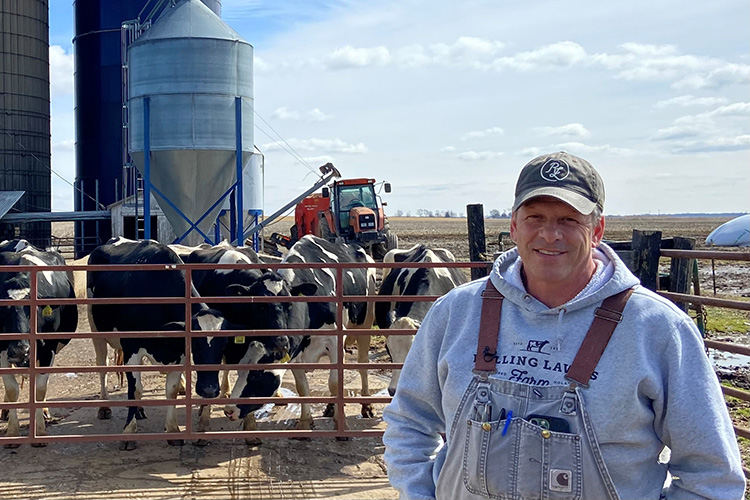
“My favorite thing about bottling our own product is that we can celebrate with consumers the same day milk goes from the farm to the processing facility, to the retail location,” says fourth-generation farmer Michael Turley, owner and operator of Rolling Lawns Farm in Greenville.
With so many options in the food and beverage industry, Turley wanted to focus on making dairy products exciting for customers. In 2017, he and his wife, Jennifer, purchased a building to start bottling and processing milk from his farm.
Chocolate milk – an industry standard – was the first experiment.
“We set out to find a flavor profile that we were happy with and then started making fun flavors like orange cream, strawberry and cappuccino milk,” Turley says. Root beer flavored milk may be next on the list.
“That’s the least ‘science-y’ part of what we’re doing: Finding out what people might like,” he says.
Visitors at The Milk House can shop for traditional milk options, such as 2% and skim, or purchase novelty milks and ice creams made on site. A glass front on the side of the bottling and processing room invites them to watch and learn how milk is pasteurized, or heated to kill bacteria, and made into fun dairy treats.
“It kind of demystifies the food processing concerns that some people may have,” Turley says. “They can look through the window and see a spotless processing room producing Grade A fluid milk.”
About 75% of Rolling Lawns Farm’s products are sold to customers in St. Louis, including wholesale deliveries to restaurants, coffee shops, bakeries, ice cream shops and more.

Customers can also find the farm’s products at retail locations in Illinois, such as the Harvest Market grocery store in Springfield. Rolling Lawns Farm cream is used to make butter in the store’s Butter Churn Room.
Karen Sisulak, special events and marketing specialist at Harvest Market, said watching fresh butter being made is a unique experience for shoppers, and one that helps emphasize where their food comes from.
“When you’re talking about local, fresh ingredients, all of a sudden you have all of the basics for good food,” Sisulak says. “We connect our customers with the land…that means getting them to know more about farmers and what they’re growing just down the road.”

Unlike a conventional grocery store that relies on national manufacturers, Harvest Market carries locally sourced options.
Product packaging that highlights farm family stories and colorful graphics of tillage, planting and harvesting tools adorn displays and refrigerated cases throughout the store.
“We are so happy to bring these alternative choices to everyone,” Sisulak says. “It’s a whole different layer to that sense of farm community: That circle broadens beyond the farmer and his direct consumers to include retail.”
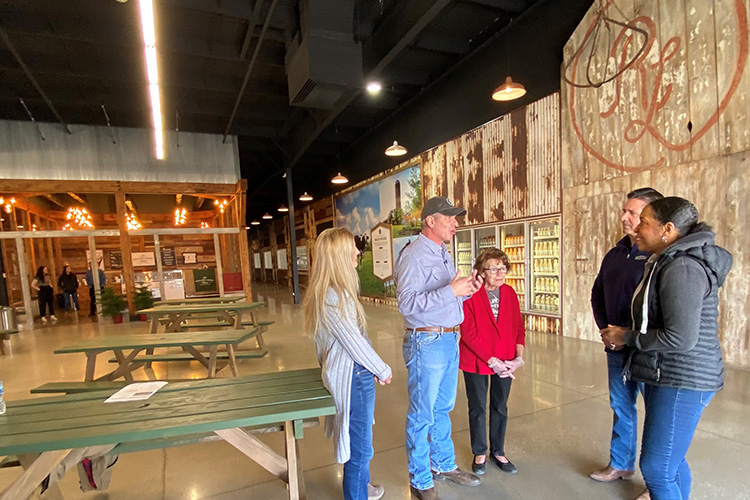
Harvest Market’s role in expanding brand recognition for small businesses like Rolling Lawns Farm has been a game changer, according to Turley.
“Everybody has helped redefine community for us,” he says. “I consider the state as our community because the support has been unreal.”
Listen to this episode of the Partners podcast to hear more about Rolling Lawns Farm, The Milk House and Harvest Market:
Listen to “Cultivating Our Communities Pt. 1: Rolling Lawns, Harvest Market” on Spreaker.