Spring upstages January in delivering a fresh start, a contagious feeling when flowers bloom, morel mushrooms pop and calves frolic through greening pastures. Warming temperatures recharge motivations to grill out, eat healthier and take walks. We again experience the satisfying exhaustion of days spent in fresh air and sunshine.
I welcome this season when my family acts on our resolution to grow better crops in better ways, making May a more ideal start to the new year than Jan. 1. In fact, I’ll stay up past midnight more in this single spring planting season than the last several New Year’s Eves combined.
See more: Ask a Farmer: How Do You Work Through Challenges During Planting?
Since harvest in the fall, our farm has serviced the planters and tractors, stocked seed, prepared the planter maps and loaded seeding prescriptions in the monitors. We studied last year’s harvest data, planned new test plots, researched soil-improving microbials and prepped the planters to give millions of seeds equal opportunity to produce a better crop than the last.
Thousands of farm families like ours across Illinois will work in windows of favorable weather and ground conditions to plant corn, soybeans and other crops that cover about 75% of the state’s land mass. Planting season re-energizes the state’s quiet landscape, painting this blank canvas with seeds to grow golden tassels and bushy soybean plants.
In our gardens, seeds promise feathery carrot tops and scratchy squash vines. Our daughter aims for sky-reaching sunflower blossoms for an FFA and 4-H project.
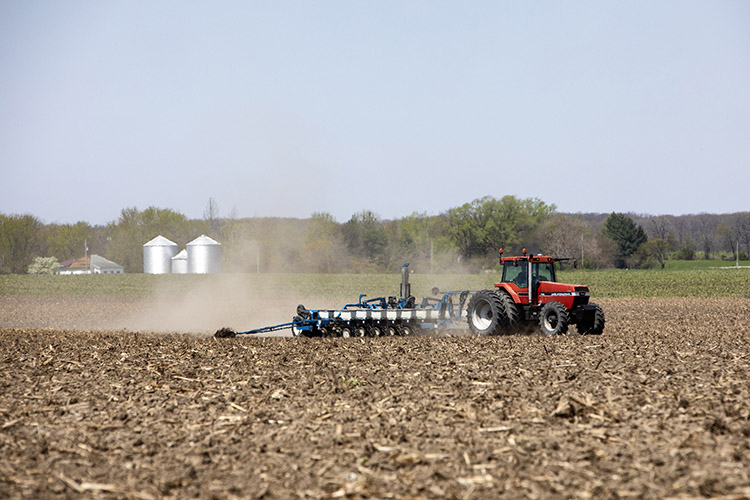
Technology has introduced the art of satellite-guided rows and picket-fence stands. The tractor drives itself hands-free, allowing corn to sprout in straight rows at precise spacing like posts on a yard fence. Ideally, the plants emerge at the same time, courtesy of ground pressure sensors that help sow seed at consistent depths. The planter operates via satellite guidance in the absence of a row marker, the steel “arm” that once reached out to etch a line in the soil for the tractor to follow the next pass.
See more: Farm Innovations Drive Sustainability for the Next Generation
In many ways, the process of planting represents an act of faith and a belief in tomorrow. When the weather threatens or field conditions seem too ideal to stop, we may experience today and tomorrow in the same work session.
About the author: Joanie Stiers farms with her family in west-central Illinois where they grow corn, soybeans, wheat, hay and cover crops and raise beef cattle, backyard chickens and farm kids.