Morgan Johnson entered Chicago High School for Agricultural Sciences (CHSAS) intending to become a doctor. Even though she knew nothing about agriculture, the magnet school’s small size and unique programming attracted Johnson. But a pivotal internship sent her down a different path. Today, she’s a multisite plant manager for OSI Group, a global company of meat processors serving the retail and food service industries.
Johnson’s trajectory is not unusual for the 800 students at CHSAS, part of the Chicago Public Schools (CPS) system. Since its founding in the 1980s, the school continues addressing concerns about the future of ag education and the future of agriculture by providing a unique curriculum. As a college prep high school, its mission provides opportunities for diverse students from across the city to study agriculture and develop marketable skills along with college-level competencies.
Principal Bill Hook says students take classes in math, English, science and other core subjects, but also take two agricultural courses every year.
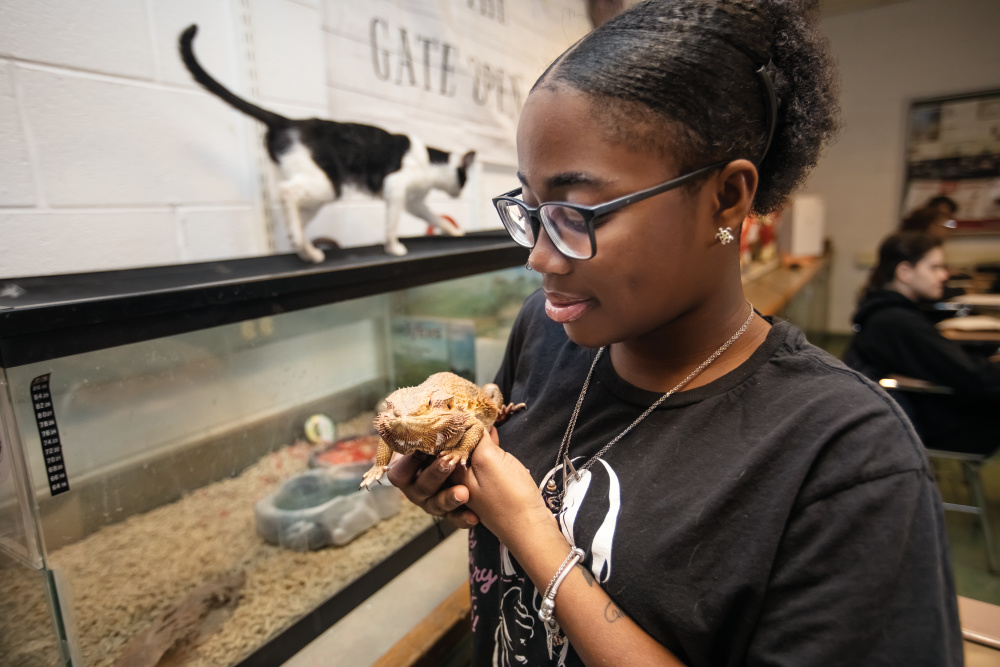
The 78-acre campus includes greenhouses, a food science lab and a FarmBot, a precision ag project allowing students to program robots to plant, harvest and water crops in a small space.
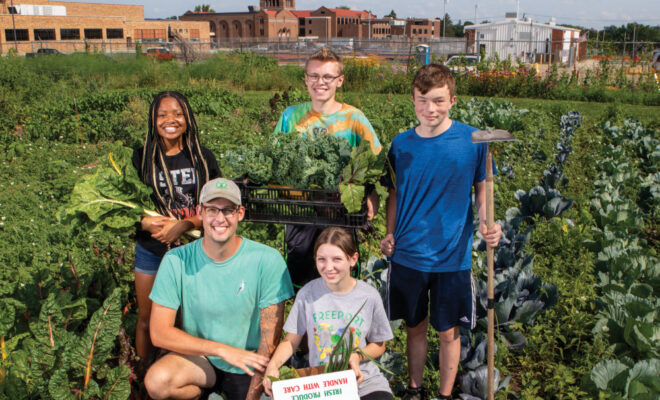
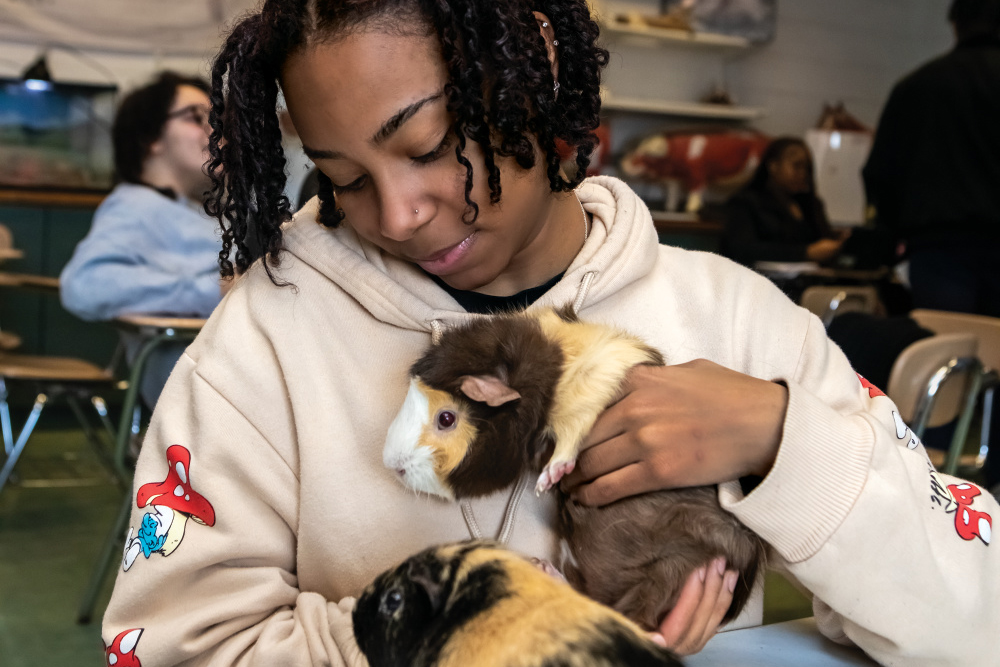
Students also grow produce in the market garden, which they sell at the school’s farm stand. In the urban agriculture and biotechnology area, aquaculture methods produce tilapia, and vertical aquaponics systems grow basil, lettuce and tomatoes. Students care for alpacas, pigs, chickens, turkeys, pygmy goats and horses while cattle graze in pastures out back. They also raise about 30 acres of corn and pumpkins, plus tend the 20 beehives on the property.
See more: Farm-to-School Partnerships Make a Nutritional Difference for Illinois Children
Pathways to Success
“We do have kids who come here because they want to work with horses or livestock or maybe in the greenhouse, but the majority of our students are coming because it’s a good, safe CPS high school on the South Side,” says Noelle Coronado, lead agriculture teacher and FFA chapter advisor.
The school receives 2,000 applications for 180 slots determined by a lottery system.
“Our main purpose is to educate our students on agricultural production and urban agricultural practices so they have a basic understanding and respect for where food comes from,” Coronado says. “When they leave us in four years, they are educated advocates for agriculture.”
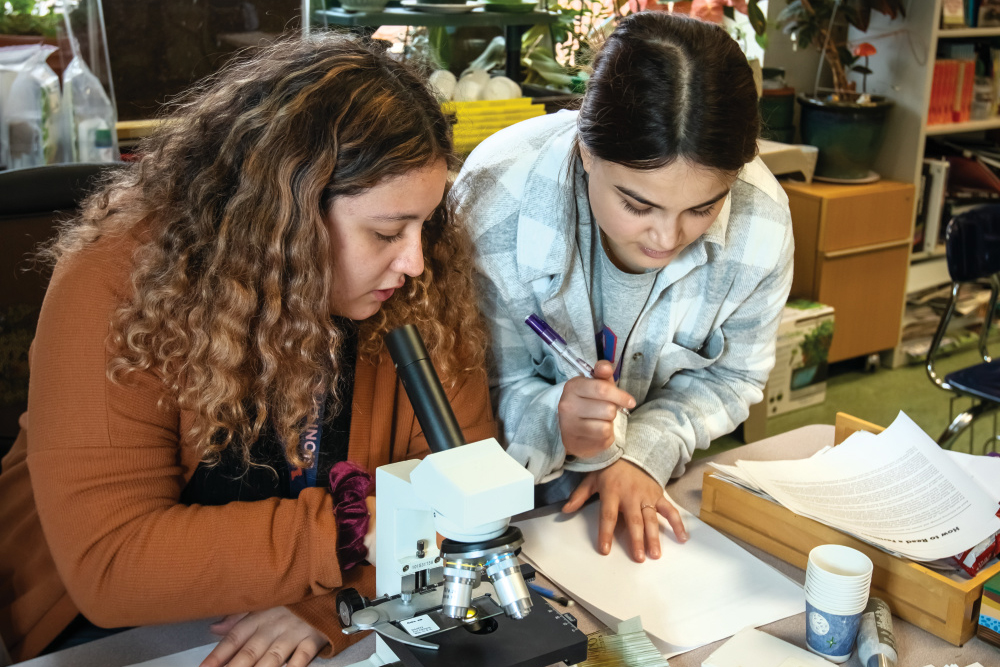
Students select one of six career pathways: Ag Finance and Economics; Ag Mechanics and Technology; Animal Science; Biotechnology in Agriculture (in transition to Urban Agriculture Education); Food Science and Technology; and Horticulture and Landscape Design.
They can attend classes half the day and spend time at an internship or job shadow the rest of the day, like Johnson did in the Food Science pathway where she interned at Eli’s Cheesecake.
“That gave me some manufacturing experience, and I was also able to do some lab work,” Johnson says. “I got experience in research and science in my classes as well, which also aligned with my initial goal of wanting to be a doctor.”
These and other CHSAS experiences provide opportunities to meet an FFA requirement for a Supervised Agricultural Experience.
Every student is a member of FFA. In fact, instead of a student council, FFA serves as the student governing body at CHSAS, Coronado explains.
See more: Illinois Educational Programs Connect Students to Food and Agriculture Careers
Business Partners
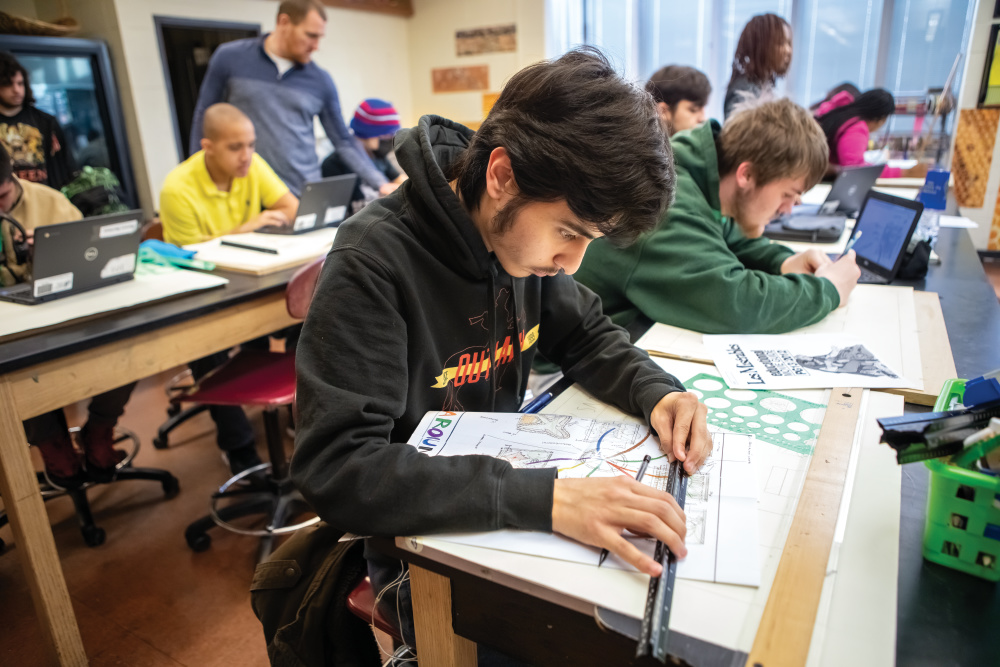
Johnson’s internship exemplifies the important relationships CHSAS maintains with industry partners. Employees of ag and Illinois food sector giants, including John Deere, Syngenta, Kraft Heinz, OSI Group, Eli’s Cheesecake and others, serve on the school’s business advisory board, host field trips, provide job shadowing and internships for students, speak at the school’s Career Day, or conduct exit interviews for graduating seniors.
Often, those employees, like Johnson, also attended Chicago High School for Agricultural Sciences.
“CHSAS really sets their students up for success with the different resources and by partnering with companies,” she says.

In her role at OSI Group, Johnson oversees strategic operations of the West Chicago and Geneva manufacturing sites. She most enjoys overseeing a concept and turning it into a product for use in some of OSI’s restaurant customers, such as McDonald’s, Subway, Domino’s and Chipotle, along with developing employees to be the best they can be every day.
“No day is ever the same,” Johnson says. “If I hadn’t chosen CHSAS, I’d probably be a doctor right now but wouldn’t have much of a life being on call and with all the challenges of that life. Because of CHSAS, I was able to choose a career that has given me a lot of balance. I’m challenged every day.”
Careers in Agriculture series: This is the third of a four-part Careers in Agriculture series. Check out the second part here:Illinois Community Colleges Prepare Students for Successful Agriculture Careers.
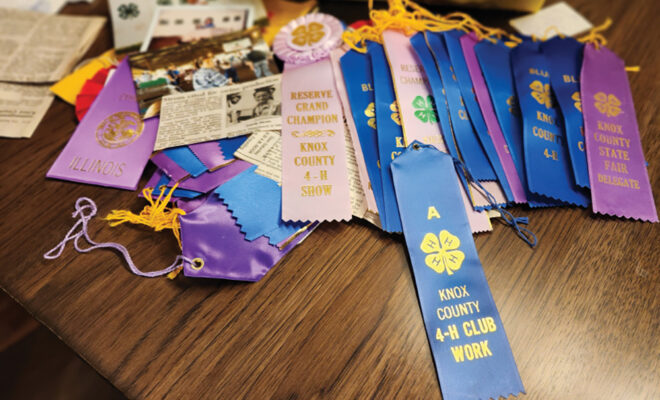
Youth programs, like FFA and 4-H, expand agriculture’s reach and strengthen the next generation’s skill sets. Formerly known as Future Farmers of America, FFA’s mission is to enhance personal growth, career success and premier leadership, according to Mindy Bunselmeyer, Illinois FFA executive director. Through camps, conferences and conventions, students’ leadership skills grow through service to one another. “That service all starts at the local level, through activities building up their communities, strengthening agriculture and growing leaders,” she says. Illinois membership jumped to more than 41,000 in 2023, thanks to Illinois Department of Agriculture funding ensuring every student enrolled in an ag education class could join FFA. “We also had record attendance at our state convention and the highest enrollment at career development events and conferences,” Bunselmeyer says. Illinois 4-H empowers more than 180,000 youth across the state through hands-on, experiential learning. Dr. Lisa Bouillion Diaz, assistant dean and director of Illinois 4-H, says 4-H works to prepare youth ages 5 to 18 for future success. “Even when they are really young, 4-H youth start building life and workplace skills,” she says. A range of projects draws students from all backgrounds and interests to find a place in 4-H. “We have nearly 80 projects that support everything from corn and soybean production to visual arts and robotics,” Diaz says, noting 4-H sponsors FarmBot at CHSAS. “Everything we do creates opportunities for young people to put their skills to work in ways that benefit their family, their community and the world.”Growing Future Leaders