Some homeowners are looking for ways to replace some or all of their monoculture lawns with alternatives that are safer for the environment and beneficial to pollinators. Like with most trends, there are pros and cons with native garden trends, and they transition over time. Let’s take a look at how natural landscape trends have developed so you can learn how to better care for your native landscape.
See more: Epiphany Farms Hospitality Group Blends Agriculture, Community and Cuisine
Chaotic Concerns
The first trend, now dubbed “Chaos Gardening,” evolved with the hope of creating a diverse, vibrant garden that was also low effort. Wildflower and native plant seeds are scattered across the soil, and the gardener stands back to delight in the unpredictability of what grows. It resulted in randomness and biodiversity. However, it also often looked like the property was abandoned, leading to angry neighbors, homeowners associations and municipalities, with some even sparking court action.
The next idea resulted in something less messy, extreme and controversial: “Cues to Care,” which showed the property design was intentional and being cared for. It also demonstrates that the garden and landscape are physically and aesthetically accessible, a place that can be entered and enjoyed. It balances the needs of both wildlife and humans.
See more: Cutting Gardens Provide Plants for Floral Arrangements All Summer Long
Cues to Care
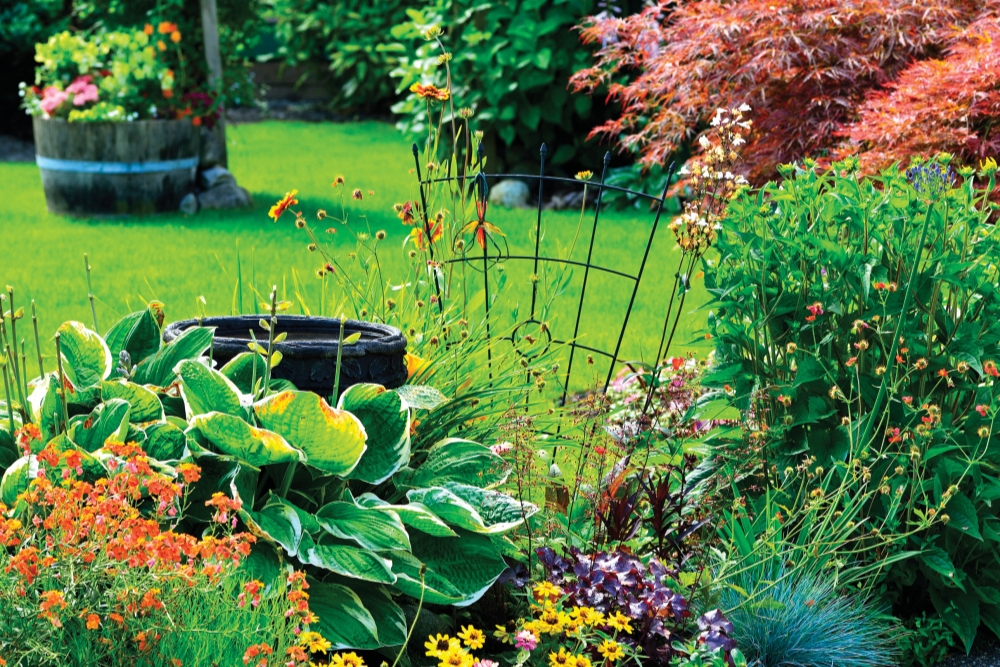
So, what are some cues that show the yard is deliberate, maintained and used? Pathways through the space are important. It gives the gardener access to the plants for maintenance. They also make it easy to reach the doors from the street and driveway without being ambushed by looming foliage. To achieve this, use shorter plants as edging lining the walkways, with the taller flowers behind them.
Containers are a strong cue to care since they need water periodically. Use smaller pots to line the walkways or the larger 20- to 22-inch pots standing alone as a focal point. Containers also add color during times when gaps appear in the natives’ bloom cycle.
For the native parts of the yard, choose plants that self-seed and benefit wildlife, especially insects. Also include some native perennials. They may not contribute much in the first year or so, but once established, they add a lot of color and leaf interest.
Next, support the needs of wildlife with a water source such as birdbaths, nesting sites, and protection provided by trees and shrubs.
Alongside these, adding yard decorations shows the space attracts humans as well. Choose a sculpture, fountain or bench because to enjoy any space, people prefer a place to sit.
Aim to plant a space that benefits all of nature, both the wildlife and humans who will share the yard. Cues to care lead to success.
See more: Exposing Gardening Myths
Ask the Expert
Q. I read houseplants can clean the air. Is that true?
A. Yes and no. All green plants remove carbon dioxide and release water and oxygen into the air. However, the latest research I read noted you need 680 plants per room to make a difference.
Q. Wind blows over my top-heavy houseplant that spends the summer outside on a porch. Any ideas to prevent this?
A. I have the same problem. I set those plants down into another heavier pot. The added weight of two containers keeps them from tipping. If it’s not a tight fit, wedge some filler in the space between the pots.