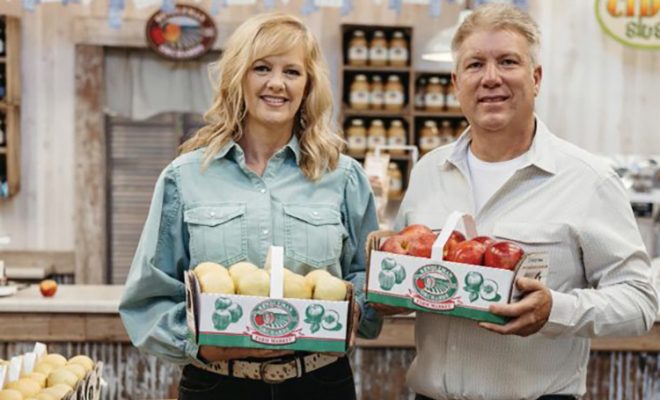
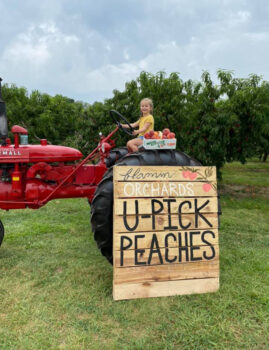
During their rare moments of downtime, members of the Flamm family enjoy riding side-by-side vehicles around their sixth-generation orchard in southern Illinois. But nothing can spoil the fun faster than a glimpse of the peach pile spoiling in the sun.
Learn More
The Farm to Food Bank Program serves as a collaborative effort between Feeding Illinois, the Illinois Farm Bureau, the Illinois Farmers Market Association, the Illinois Specialty Growers Association and the Prairie Research Institute at the University of Illinois. To learn more or get involved, visit feedingillinois.org/farmers.
“We will literally avoid going by the pile of peaches in the summertime because it just makes you sick to your stomach to see all your efforts go to waste,” says Austin Flamm, whose ancestors began growing peaches and apples in Cobden back in 1888.
While it may sound like an obvious choice, donating surplus crops can be cost-prohibitive for the farmer.
“In the past, these types of donations would require us to lose money because of the labor, packaging and transportation costs involved,” Flamm explains. “Plus, it’s hard to deal with the volumes of donations we have.”
Fortunately, thanks to Feeding Illinois’ new Farm to Food Bank program, the Flamm family can reduce the size of that peach pile and help feed people in need.
See more: Ingredion Provides the Key Ingredients for Chicagoland Educators’ Ag Lessons
Waste Not, Want Not
Eliminating food waste serves as one of the foundational goals of the Farm to Food Bank Program administered by Feeding Illinois and funded by a grant from the U.S. Department of Agriculture.
Launched as a pilot during the 2021 growing season, the program connects food banks with Illinois farmers to establish a pipeline of fresh food for food pantries throughout the state.
“This is a program we’ve been dreaming about here in Illinois for quite some time,” says Steve Ericson, executive director of Feeding Illinois. “First and foremost, the program aims to reduce food waste and to help folks facing food insecurity. It works by providing a secondary market for products that might otherwise be left in the field or on the trees, or blemished produce that can’t be sold to primary markets.”
The program reimburses farmers for their picking and pack-out (PPO) costs – any expense related to harvesting, packaging and transporting the food. This makes it financially feasible for farmers to donate surplus crops that would previously have gone to waste.
“The Farm to Food Bank Program provided us a great outlet for fruit and vegetables that otherwise would not have a home,” Flamm says. “The amount of produce we were sending the food bank was pretty astonishing. We were able to provide peaches by the truckload, and the food bank did a great job figuring out the logistics.”
Neighbors Helping Neighbors
Feeding Illinois works one-on-one with each participating farmer to make the process as simple as possible.
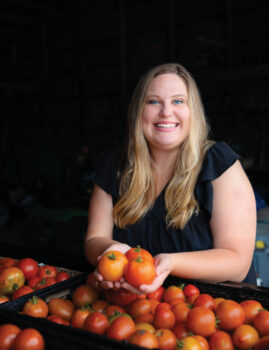
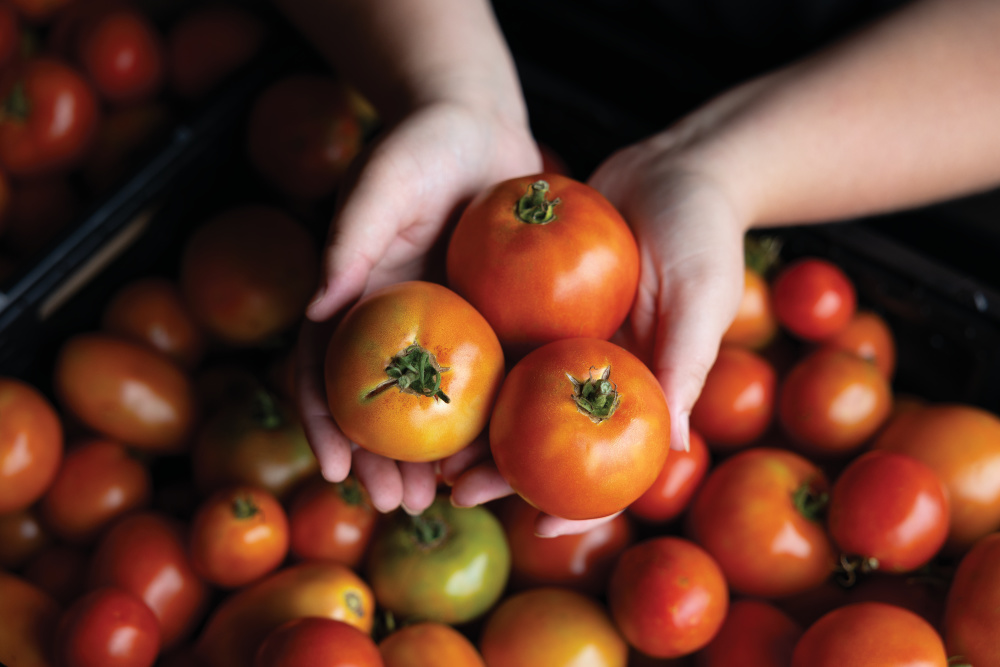
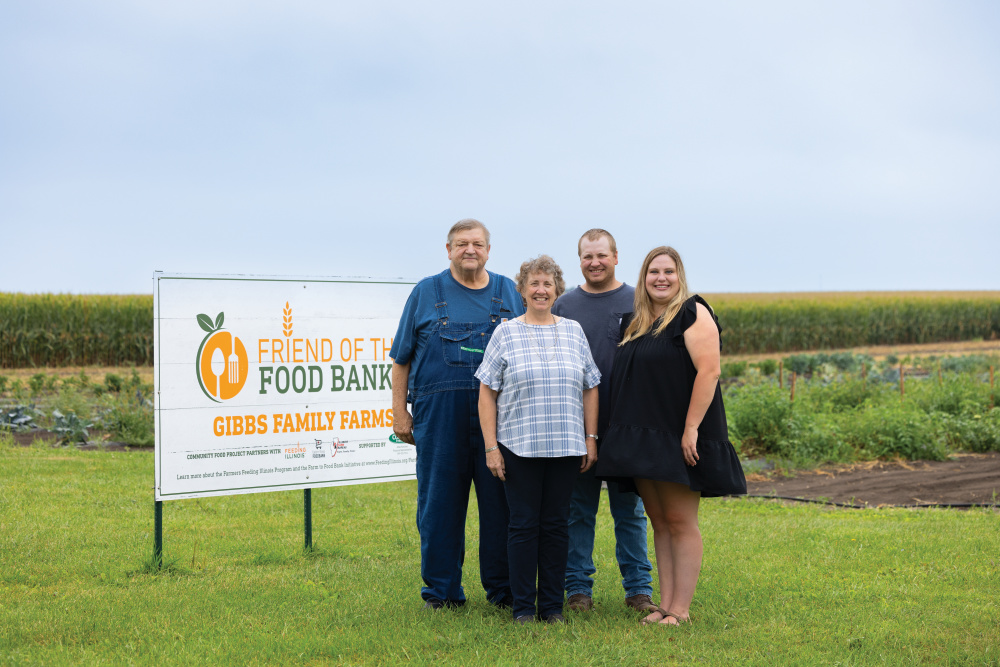
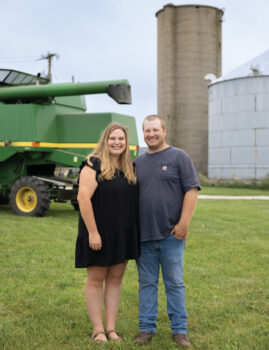
“Feeding Illinois is incredible to work with. They will make sure every piece of produce is put to good use,” says Ali Gibbs, whose experience began with an extra bushel of tomatoes she wanted to donate from the family farm in Benson.
Before long, a conversation with Feeding Illinois grew into a 2-acre garden overflowing with tomatoes, cabbage, lettuce, corn, eggplant and peppers to support the Farm to Food Bank Program.
Many participating farmers work directly with a food bank or food pantry in their area to get the produce where it needs to go – often, just down the road.
“It was a fairly simple process. We would call our local food pantries, and they would come and pick up the produce from our farm as we were picking it,” Gibbs says. “It doesn’t get fresher than that. It feels so good knowing that our produce stayed local to help neighbors in need.”
See more: Meet the Family Farmers Behind Bull Valley Farm Country Store (VIDEO)
Banking on Illinois
With federal funding set to end in 2023, Feeding Illinois and partners like the Illinois Farm Bureau are working to ensure the program continues.
“The experience we’ve had with this program in Illinois has been exceptional,” Ericson says. “The Farm to Food Bank Program is an investment in Illinois farms and communities. And when food pantries can provide better quality food, it helps with people’s dignity.”
The farmers appreciate knowing their surplus no longer goes to waste but rather works to help feed those who need it most within their community.
“I would definitely encourage other farmers to get involved,” Gibbs says. “It is extremely rewarding and a great thing to do for your community.”
The grant funds administered by Feeding Illinois allow food pantries to purchase food directly from farmers so that, at minimum, the picking and pack-out (PPO) costs are covered. Thanks to their participation, Flamm Orchards increased revenue by 9% with the bulk donation purchases in 2022. Along with bottom-line benefits comes a priceless feeling of satisfaction.
“When it first came around, the Farm to Food Bank Program felt too good to be true,” Flamm says. “Just knowing that the product we put our blood, sweat and tears into is not going to waste – and is going to somebody that can truly benefit from it – is extremely rewarding.”
See more: Farmers and Food Banks Fight Hunger Together
Next-Level Support
With creativity and community support, Gibbs Family Farms in Woodford County took their support for the Farm to Food Bank Program to another level.
“Feeding Illinois has a grant to cover the farmer’s PPO costs, but our goal was to let them use that grant money for other farms that maybe didn’t have the community support that we had,” Ali Gibbs says. “We hosted a fundraiser and raised approximately $30,000 in one night to fully fund our Feeding Illinois project. The support we got from our local community was incredible.”
The fundraiser included a dinner, live auction and lawn mower raffle. They even had enough funds left to purchase 900 raised beds for Feeding Illinois garden projects throughout the state.