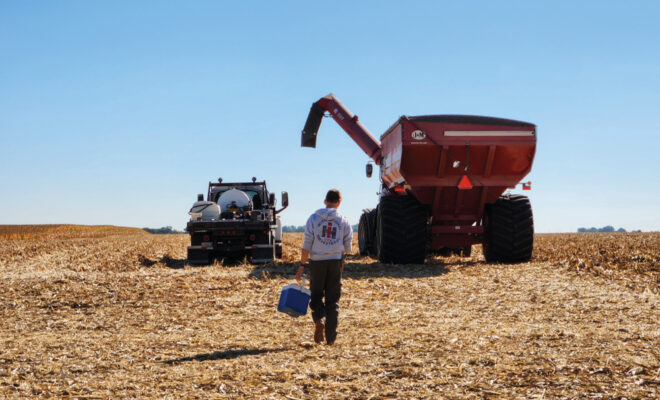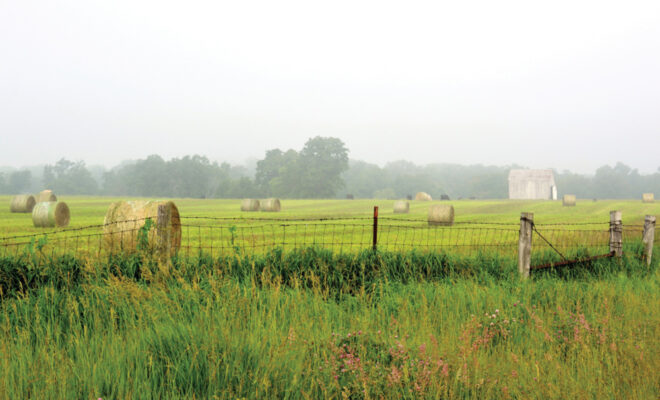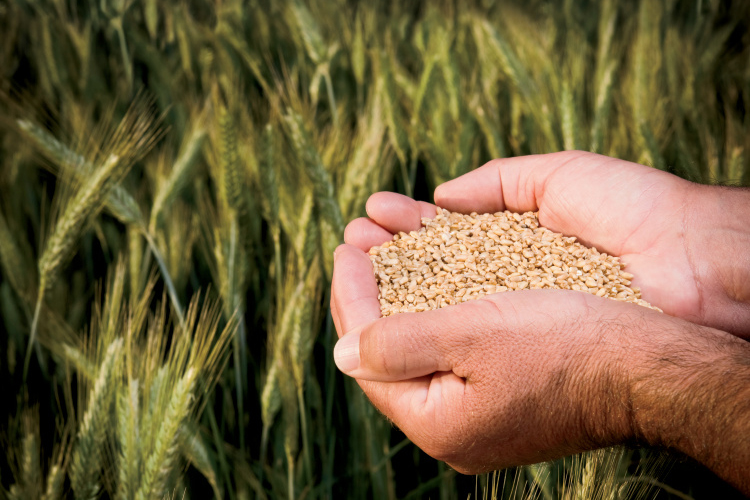
The price point for our crops has no regard for skyrocketing fertilizer bills nor damage from the windstorm that flattened the once-standing corn in our largest field.
A global marketplace offers a price for the corn and soybeans we grow, whether profitable or not. Take it or leave it.
For the most part, farmers are price takers, not price makers. We pay retail prices for seed, fertilizer, pesticides and machinery to grow our crops. Then, we sell at wholesale prices, predominantly determined by a two-step process.
First, the Chicago Board of Trade (CBOT), now part of the CME Group, determines prices of agricultural commodities – including Illinois’ top crops of corn and soybeans – for farmers throughout the state, nation and world. Global supplies, worldwide crop conditions, fluctuating demand and international conflicts influence the value of what we grow.
Second, local buyers of our corn and soybean crops, such as biofuels plants, feed mills and river export terminals, then set a variance from the price at the CBOT to determine the local price. This positive or negative adjustment reflects local transportation costs and immediate local supply and demand.
Our farm works with a local grain merchandiser to sell the crops we harvest, grow and plant. Marketing often ranks on the list of undesirable farm jobs, like sweeping grain storage bins. But we know those bins help manage risk, as a place to store crops to wait for improved prices. Some farmers manage risk with marketing tools, like puts, calls, hedging and selling into the future. During price rallies, we sell crops months in advance, locking in profits with production predictions. (And then hope our predictions are correct.)
We buy crop insurance to protect against production losses due to natural disasters or revenue losses associated with declines in commodity values. Still, the stress exists to find the market high and the best profitability for the households our farm supports. Sometimes, you wish you’d sold more bushels; other times, fewer or none at all.
As I write this, crop prices are strong, necessarily so to counter the record-high expenses to produce the crop. Inflationary pressures have impacted our costs for inputs and labor. We face rising interest rates to borrow money to operate our farms. And we’re consumers, too, paying more for everything from groceries to gas, like every American.
We take it with the faith that we’ll make it.
About the author: Joanie Stiers farms with her family in west-central Illinois, where they grow corn, soybeans, wheat and hay and raise beef cattle and backyard chickens.
See more: Farm Innovations Drive Sustainability for the Next Generation