Herd Health, Hormones and Antibiotics, Oh My: Sorting out the Facts from the Myths
| Posted on
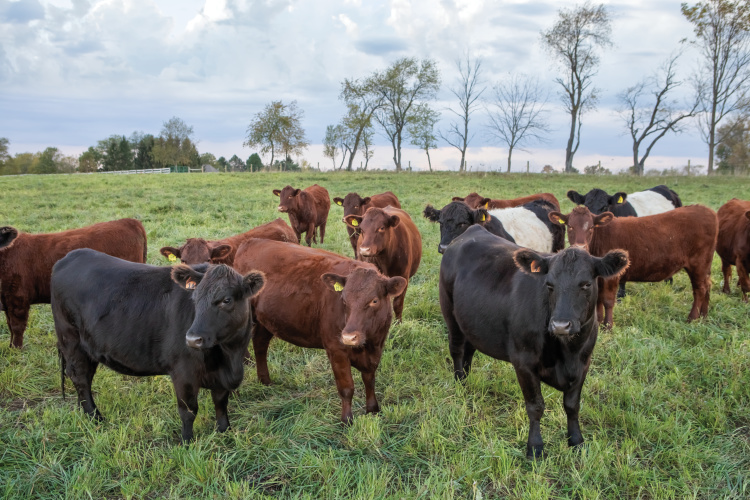
The sound of a side-by-side utility vehicle gathers cows and calves from across the pasture swifter than chanting “come boss.” The bovines correlate the vehicle’s hum with a treat of grain, providing farm-style evidence of Pavlov’s theory. After parking, Dad will chant his sing-songy phrase to round up any stragglers.
Our farm’s small herd of cows and calves knows my Dad’s voice as well as his utility vehicle. Likewise, he knows them. He understands their behaviors. He knows their dietary needs and how those change with the stage of grass and progression of pregnancy.
Like farmers across the state, Dad cares about cattle through mud or snow, cold or heat, and droughty periods that stunt the grass and dry water from the creek.
And when one falls ill, our farm uses antibiotics. We consider the medication the humane choice to comfort, treat and heal a sick animal, just as we would ourselves or kids.
Even with that choice, I still consider our farm’s beef antibiotic-free: We must wait for the medicine to exit the animal’s system before it enters the food chain. That antibiotic-free policy applies to all meat – no matter how it’s labeled – and is required, tested and enforced by the U.S. Department of Agriculture.
A local veterinarian guides our management strategies. Every fall and spring, he travels to the farm to assess herd health, visiting more frequently than most people go to the doctor themselves. He delivers vaccines to prevent disease and checks cows for pregnancy. For the steers – the males intended for meat production – he adds a hormone implant in their ears, enhancing growth efficiency to produce meat with less grass, grain and water.
For more than 50 years, many farmers have used this approach to reduce the use of natural resources and the cost of growing food. Yet some food labeling vilifies hormones when, in reality, a baked potato contains far more estrogen than the steak.
A DeKalb County farmer once used M&Ms to visualize a study that showed a 3-ounce steak contained less than 2 nanograms of estrogen, regardless of whether the animal had received FDA-approved hormone supplements. By comparison, a potato has 225 nanograms of estrogen. A single daily birth control pill contains more than 30,000. (Read more about this topic at watchusgrow.org.)
I don’t worry when my husband grills the family-favorite New York strip steaks. I’ll pair the entree with potatoes, like most other Americans, and know that my farm family – similar to the 96% of family-owned farms in Illinois – values healthy and responsibly grown food for our table.
About the author: Joanie Stiers farms with her family in west-central Illinois, where they grow corn, soybeans, wheat, hay and cover crops and raise beef cattle and backyard chickens.
See more: Farm Innovations Drive Sustainability for the Next Generation