Joseph Ring always knew he would be a farmer. In fact, his first word was “tractor.” The young farmer raises cattle and crops in Oregon, Illinois, with his twin brother, Michael, and the rest of his family. He also owns a direct-to-consumer beef business and even finds time to DJ on the side.
Ring spoke to Partners about growing up in agriculture, how his farm cares for the cattle and how technology plays a role in farming, as well as how DJing fits into the mix.
What was it like growing up in agriculture?

I’m a fourth-generation farmer, and when I was 6, my grandfather bought my brother and I each a cow. I’ve had cattle ever since and grew up raising and showing cattle, which is how I met my wife.
What do you currently produce?
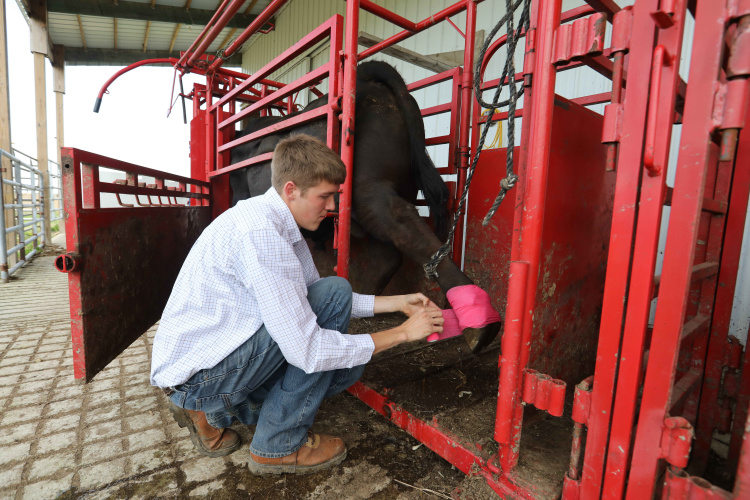
Now, my farm has a small cow herd that consists of Gelbvieh and Angus-influenced mama cows. The calves are what we market through our direct-to-consumer beef business, Ring Brothers Beef LLC. We formed the company a few years ago due to the rising demand for locally raised, high-quality, dry-aged beef.
In addition to cattle, we raise crops for feed and sale including corn, soybeans, wheat, alfalfa hay and other mixed forages. We also spend quite a bit of time in the shop working on the equipment required for these operations – everything from oil changes to overhauls.
See more: Q&A with Clavin Dairy Farm’s Leanne Casner
What do you want non-farmers to know about why and how you farm?

Well, 6-year-old me would first stress the difference between cows, steers, heifers, bulls and the general term “cattle.” But now, a few more important things come to mind. First, if the cattle aren’t happy and comfortable, they don’t grow well or stay healthy. Even the smallest details, like how you walk through a group of cattle, make a difference. Our cattle only receive medications if they need them and they are prescribed by a veterinarian. We have strict protocols for pre-harvest residue withdrawal to make sure medications don’t enter the human food supply.
Also, quite a bit of land in our country isn’t tillable to farm. It can only be utilized by grazing livestock. Properly managed grazing herds keep plants vegetative, increase oxygen production and more. It also lowers the risk of fires, improves our water cycle, and reduces erosion and desertification.
Another question we get a lot is the difference between pasture-raised beef versus feedlots. Even with most calves being born on pasture, the main difference between the two is that grass-finishing takes far more resources than grain-finishing and creates a different product. Beef would be significantly more expensive if not for feedlots.
Finally, farmers are learning every day. I try to ask myself, “Is this really what’s best for our cattle and land?” before each decision.
What technological advancement has been most beneficial on the farm?
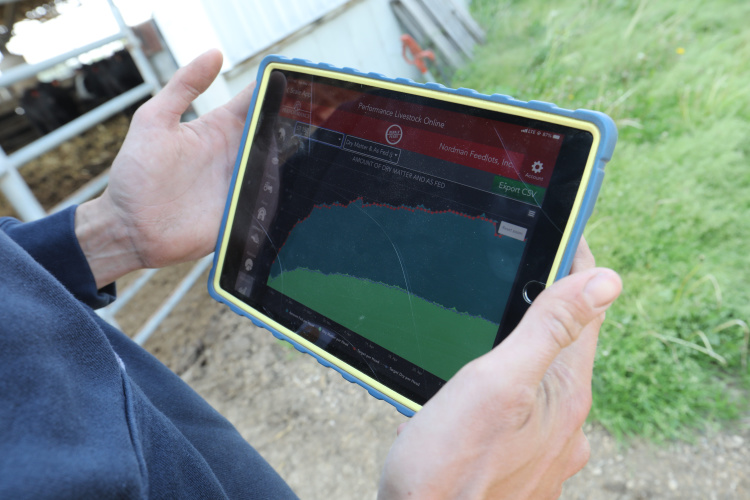
One piece of technology that has been really helpful is called Performance Beef (PB) from Performance Livestock Analytics. It’s a cloud-based iPad app that connects via Bluetooth to our feed trucks and cattle scales. We use it to track animal performance and feed intakes. It’s been a great management tool. Based on the PB analytics, we can be sure to give each animal exactly how much they need of a nutritionally balanced feed each day. Proper nutrition is a big part of keeping cattle healthy.
I hear you’re a DJ on the side. How did you get into that?
I do have an audio business. I’ve been interested in designing, building and operating audio equipment since middle school, when I was involved with it at church. My interests evolved over time, and I started taking the business a bit more seriously a few years ago. I book as many events as I can fit comfortably around the farm schedule and help service local theaters. I don’t typically talk about myself or my farm on the mic, but showing up with bale spears on my truck is usually a good conversation starter.
See more: Q&A With Cheryl Walsh, the Pig Lady of Peoria County