
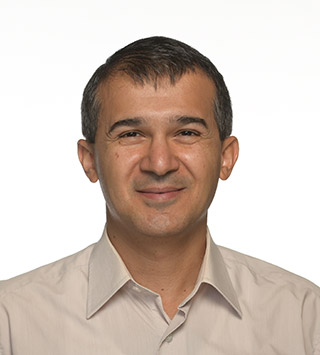
Chicago-based Illinois Institute of Technology (IIT), also known as “Illinois Tech,” offers the only artificial intelligence (AI) college bachelor’s degree program in the Midwest and has a master’s program in the discipline as well. Partners posed these questions to Mustafa Bilgic, Ph.D., director of the IIT master’s AI program, about this technology:
How do you describe artificial intelligence (AI)?
As strange as it sounds, there is no universal definition of AI. It is often defined as systems that can perform the tasks that typically require human intelligence. These tasks include, on a high level, reasoning, planning, learning, and decision making. Some people also describe the specific tasks they have in mind, such as recognizing faces, driving, etc.
What might be the biggest benefits of AI?
AI systems have already improved our lives significantly. Examples are plenty. Tools can translate from one language, say English, to another, say French, pretty accurately. These tools can process our photos and tag them based on which of our friends and family members are in them so that we can catalog them better. These tools already sort our emails so that the junk email goes to our spam folder. These tools are helping doctors with medical diagnoses.
What might be the biggest risks of AI?
The dangers that we already face include the following: autonomous weapons, surveillance (e.g., through face recognition), profiling through data, using AI for creating and spreading misinformation and disinformation, unemployment, biased decision making, etc. Let me elaborate on only one. Some people think that AI systems cannot be biased because they are just mathematical models. However, this is far from the truth. The AI systems often amplify the biases that exist in the data that they are built on.
What do most people misunderstand about AI?
The media often treats ‘deep learning,’ ‘machine learning’ and ‘artificial intelligence’ as synonymous phrases, whereas deep learning is a subfield of machine learning and machine learning is a subfield of artificial intelligence. AI requires more than just ‘learning’; an intelligent agent has to represent its knowledge, has to make a plan, has to decide what actions to take. Learning is only one component of all of that.
Second, AI is extremely overhyped these days. The media is blowing it out of proportion. AI was overhyped in the past and it didn’t end well for AI. Hypes were followed by AI winters.
Third, AI is not magic, it’s data + math + computation. It will not magically solve your problem, unless you have ‘good’ data.
To hear about an Illinois Tech student’s study on the ethics of artificial intelligence use in agriculture, go to this link.
For more information about Illinois Tech and its artificial intelligence programs, go to this link.