Along with programs in computer science, engineering, architecture and law, Illinois Institute of Technology (IIT), located in the Bronzeville neighborhood of Chicago, has blazed a trail in artificial intelligence (AI). Also known as Illinois Tech, one of its doctoral degree candidates has been exploring the ethical use of AI in agriculture.
Read more: Q&A About Artificial Intelligence With IIT Master’s AI Program Director
“I would be at these large, very metropolitan conferences and we’d be talking about AI and agriculture would just never come up in the conversations,” says Monika Sziron, a Ph.D. candidate at IIT. “In the background in my head I was like, ‘Where is agriculture? Why aren’t we talking about agriculture more,’ where there are so many developments of artificial intelligence in agriculture now.”
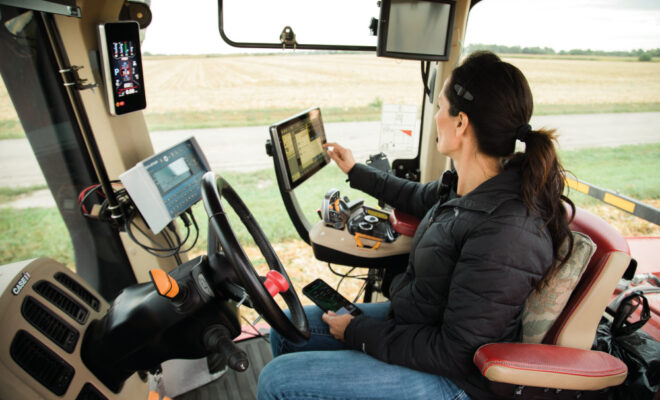
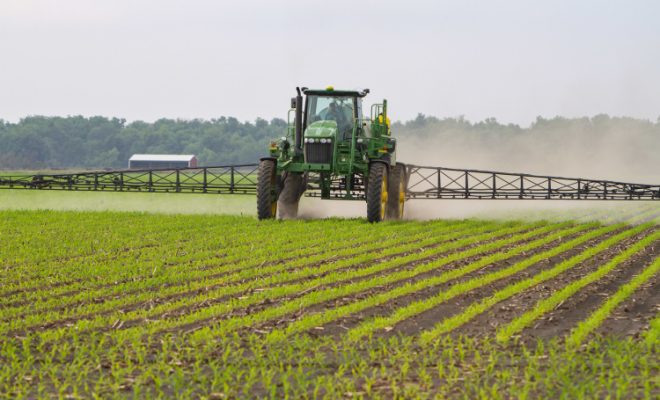
Examples of AI used in farming include driverless tractors and neck sensors on cows that monitor their nutrition and health. Sziron describes the technology as “layers and layers of (computer-based) neural networks, huge algorithms, code.” Data collected moves through each, which results in human-less actions.
“Computer systems are often much faster than humans and these systems do not get tired, do not need to sleep,” says Mustafa Bilgic, Ph.D., who oversees the private Illinois school’s master’s degree program in AI and has been supervising Sziron’s doctorate work. “When we develop an AI system that can analyze X-ray images accurately, it can analyze a lot more images than a human can analyze. For critical decisions, we need to make sure we use the systems for decision support, rather than in full-automation mode.”

Sziron, a rural Minnesota native, secured an undergraduate degree in communications from the University of Wisconsin-Superior and a master’s in digital communication and media arts from DePaul University. She continued to commute from Montgomery, which borders Kane and Kendall Counties, when accepted into IIT’s ethics doctoral program.
“I want to make sure that ethical artificial intelligence in agriculture includes the farmers and includes the growers in the development process and deployment,” Sziron says. “I think a lot of companies are doing their part to include farmers and growers, but which farmers and growers becomes an ethical concern, right?”
The doctoral candidate believes additional ethical considerations related to the use of artificial intelligence in agriculture includes ownership and privacy of data collected, impact on care for animals, reduced labor needs and preventing accidents in farming, one of the most dangerous of all professions.
“Some of these things aren’t necessarily negative ethical things,” said Sziron. “Some people are looking at like, ‘Hey, this will be a positive ethical consequence, making us safer and more efficient.’”
The millennial cites Craig Rupp, an IIT master’s degree graduate, and founder of Sabanto, as someone schooled in the urban setting who has returned home and put AI to use in agriculture. Rupp’s company has conducted autonomous farm implement research that has taken place in Illinois.
Hear more about the technology and Sziron’s area of study in this episode of the Partners podcast.
You Might Also Like
-

Tech-Savvy Farmers Spend All Day On Screens – Even While Driving Farm Equipment
-
Q&A With Lenkaitis Holsteins Dairy Farm About Keeping Their Cows Cozy (VIDEO)
-
Farm Innovations Drive Sustainability for the Next Generation
-
Q&A With the Director of Illinois Tech’s Master’s in Artificial Intelligence Program