University of Illinois Extension Service’s Evolution and Dedication to Research
| Posted on
The target audience has grown, and communication tools have changed, but University of Illinois Extension continues its goal of sharing unbiased, research-based information with the state’s residents.
The national Cooperative Extension Service began in 1914 to ensure that land grant institutions would share technologies discovered on campus with people in rural areas. (Land grant colleges and universities were designated to receive the benefits of the Morrill Acts of 1862 and 1890 by focusing agriculture, science, military science and education.) Early data centered around agronomy, farm mechanization and livestock management, as well as domestic arts and sciences, including farm and home financial management.
“The thought was that people were not able to travel to the university to obtain information or participate in programs or education, so part of Extension’s role was to literally go out to people where they were in their farms and homes and businesses,” says Shelly Nickols-Richardson, Ph.D., University of Illinois at Urbana-Champaign director of Extension and Outreach. Nickols-Richardson also serves as an associate dean in the College of Agriculture, Consumer and Environmental Sciences.
Today’s Extension organization reaches beyond rural areas to include a more diverse Illinois population.
“We have programming around urban food and agriculture and youth development programs for larger metro areas,” Nickols-Richardson says. “We develop programs that can be contextualized to urban locations as well as rural locations, really thinking about the needs across all of the state.”
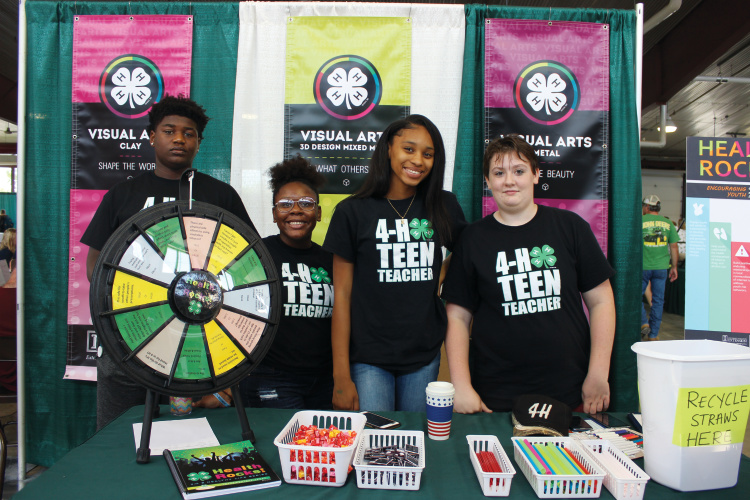
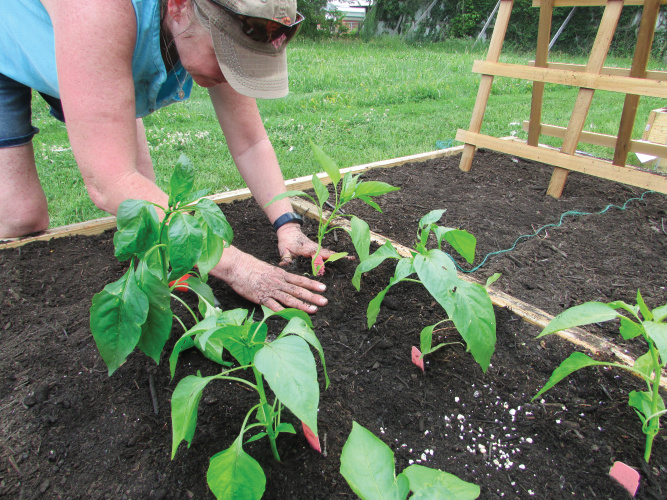
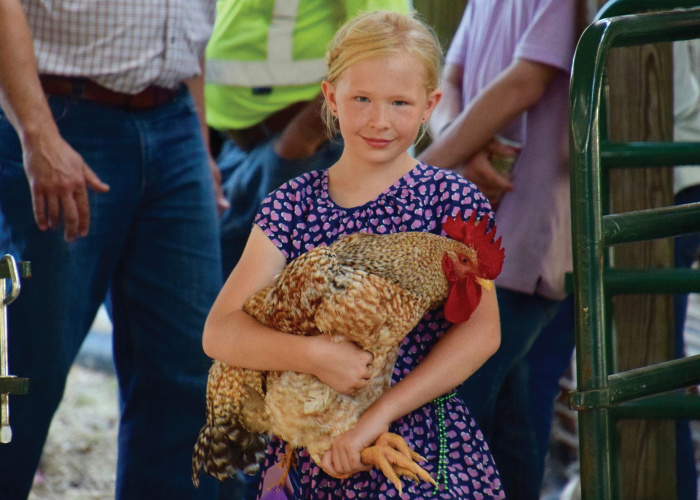
Examples include food and nutrition education programs as well as plant clinics to help residential and community gardeners identify growing challenges. Extension also offers a variety of online webinars, providing information ranging from financial tips to healthy recipes. In addition, the 4-H youth development program has grown beyond livestock and crop exhibition to building public speaking and leadership skills, along with career development opportunities in areas like STEM and robotics.
A Helpful Partnership
Early on, newly formed county Farm Bureaus hired farm advisers from a list of scientists provided by the University of Illinois. These advisers served as a conduit between area farmers and the university. In time, Illinois Extension placed an agent in nearly every county. While consolidation has occurred and today’s Extension educators serve multiple counties, commercial agriculture educators like Russ Higgins still work closely with farmers.
“We go from planting concerns, early season seedling problems and continue to address other issues that arise as the crop season progresses,” says Higgins, who is based in Grundy County. “The offseason is dedicated mostly to development and delivery of training and educational programs.”
See more: How Research at the Peoria Ag Lab Has Impacted Decades of Innovations
Innovative Information
Higgins, who began with Extension in 1984, says the way he shares information represents the most significant change he has seen in his career.
“When a farmer called with a question or stopped at your desk, often your first option was to try to find the answer in print and newsletter resources within the office. If you couldn’t find an answer quickly, because most ag questions required almost immediate responses, you contacted campus specialists or coworkers to get the right answer,” he says. “Compared to today, you now have at your fingertips a great amount of information that is accessible and sharable that you can supply to people.”
Nickols-Richardson says the “train the trainer” model has been a classic characteristic of Extension, continuing today with in-person instruction supplemented by virtual education opportunities through a variety of platforms. Illinois Extension sees information exchange in real time as the new standard driving digital agriculture and consumer education to the next level, whether that means communicating with farmers in the tractor cab or giving consumers tools to identify Illinois-grown products.
See more: Refresh, Repair, Renew Your Relationship
Parallel Paths
Illinois Extension and Illinois Farm Bureau (IFB) share a parallel history and similar goals.
“Extension and Farm Bureau grew up together,” says Shelly Nickols-Richardson, Ph.D., University of Illinois at Urbana-Champaign director of Extension and Outreach. “Our role was providing the education, and Farm Bureau provided the advocacy.”
The organizations worked in tandem, especially at the county level. Extension agents were sometimes paid by county Farm Bureaus as they shared research locally, says Chris Magnuson, IFB executive director of operations.
“There is still synergy in terms of the desire to provide agronomic input to farmers,” he says. “We access Extension resources in many ways, and I think Extension values the partnership to connect to farmers.”
Learn more about the University of Illinois Extension at extension.illinois.edu or call (217) 333-5900. Find a list of upcoming and recorded webinars online at extension.illinois.edu/global/webinars.