When farming communities in Brazil enjoy moderate rainfall or when parts of East Asia suffer from livestock diseases, Illinois farmers take note. Both developments can have a significant effect on the bottom line.
Forecasting has always been a part of the farmer’s makeup, but with global trade affecting supply and demand, it’s become a bit more complicated – especially in high-export states like Illinois.
Illinois Farm Bureau Senior Economist Mike Doherty says the No. 1 agricultural product exported from the United States is soybeans (and Illinois is the largest soybean-producing state in the nation). Illinois also ranks fourth when it comes to producing pork in the U.S., and our country exports about 27% of pork produced here and around the country.
Our state also ranks as the second-largest corn producer in the nation, after Iowa, although Doherty notes that a significant portion of our corn crop never leaves the state.
“A lot of our Illinois-grown corn is consumed by hogs within Illinois and by Illinois ethanol plants,” he says, about the importance of animal agriculture and renewable fuels, though he notes both have strong ties to global markets.
See more: Farm Facts: Pigs

Getting It From Here to There
Food production in Illinois is an export-driven sector primarily because it plays to the state’s strengths: transportation infrastructure, experience as a food processor, some of the best soil in the world and relatively cooperative weather for growing. The state’s three major waterways – the Mississippi on the western edge, Illinois down the center and Ohio at the south – give farmers an advantage on moving their farm products to in-state processors and beyond via the Gulf of Mexico.
“The Illinois River runs right down through the middle of some of the best agroclimatic conditions for corn and soybean rotation in the world,” Doherty says. Soybeans are made into soybean meal and oil. And with the largest soybean processor in North America located in the state (ADM), farmers don’t have far to go with their harvest.
Ethanol plants in the state purchase about a third of the state’s corn crop each year, he adds, sometimes as much as 40%.
Hog Heaven
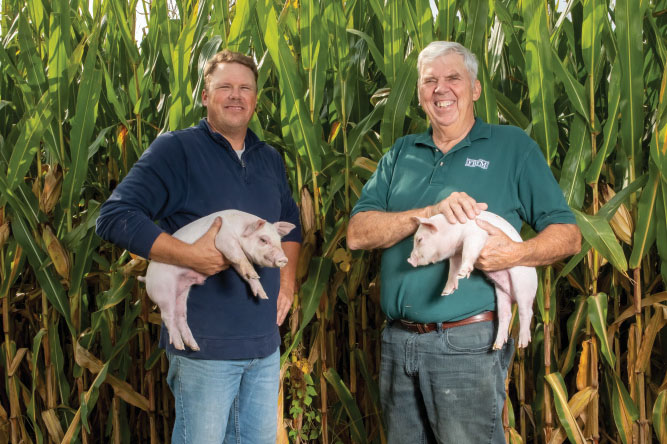
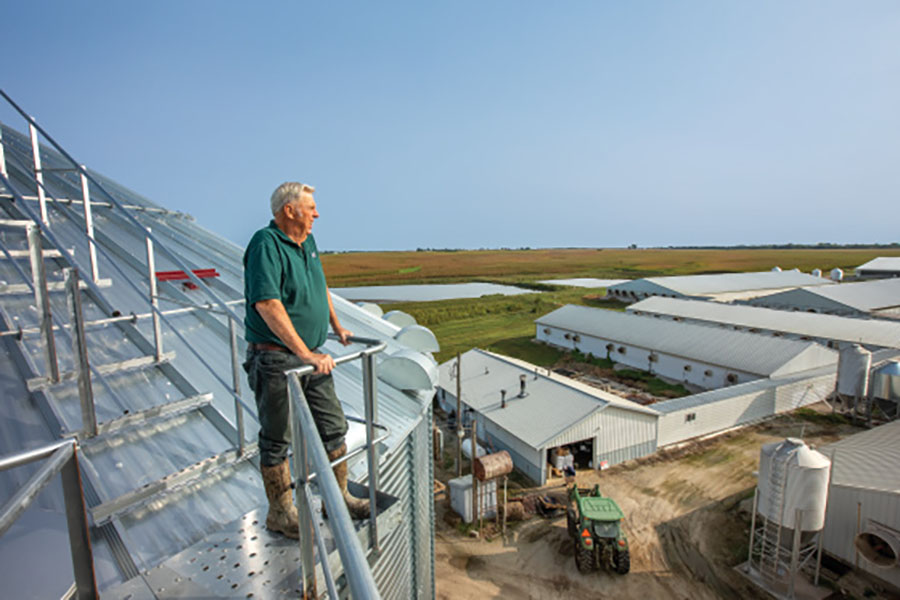
Randy Sims’ family farm has existed in Adams County for more than 200 years. Growing corn, soybeans and producing pork has changed with the times.
“I consider myself in a global market,” he says, “Not an Illinois or a U.S. market. What the demand and supply is in the entire world is what really affects me.”
China represents the largest importer of U.S. pork, Sims says. Mexico ranks second, followed by Japan and Canada. And, fortunately for him, each prefers a different part of the pig.
Sims and his wife, Mary Ann, still live on the original 160 acres that have been in the family since the War of 1812. His son and daughter-in-law, Darren and Andrea, and their children also serve as an integral part of this extended, family farm. Sims served on the U.S. Meat Export Federation board of directors for 10 years, which gave him keen insight into the inner workings of the livestock and poultry sectors.
“About a million pigs are being transported in this country every day,” he says. For that to happen, everything has to move together, carefully timed over a 10-day or two-week window. “It’s really efficient.”
Companies process about 30,000 to 35,000 pigs per day in the state’s three biggest plants. They ship meat in boxes to wholesalers or retailers. Refrigerated trains and trucks are used for transportation to Mexico and Canada and container ships for the others.
See more: Ask a Farmer: Where Do You Sell the Grain Raised on Your Farm?
Shifting to Meet the Demand
Mike Doherty, who grew up on a small livestock and grain farm in McLean County, says international trade affects all citizens of the state, not just farmers. Illinois agriculture contributes nearly 500,000 jobs (about 8% of the total) and generates over $136 billion in total economic activity. Essentially, what affects U.S. international trade affects Illinois families.
In recent years, China lost much of its hog population to swine fever, which significantly increased the demand from Illinois and other U.S. pig farmers. And since food waste contributes to spreading the disease, Chinese farmers have started to convert more of their herds to a corn-soybean meal diet, which has grown the market for those products as well.
The swine disease is just one example of the ups and downs of international trade in food and fuel from farming.
“It’s highly unpredictable,” Doherty says. “Declines are always just around the corner, but something else will pick up the market.”
Adaptability and inventiveness remain the traits that have kept farmers farming through the generations. They’re known for keeping an eye on the landscape, and today that vision extends over land and overseas.
Technology makes it all possible. “Our industry has figured out how to make a high quality and a good volume of meats available to not only our domestic customers but world customers too,” Sims says. “We pride ourselves being able to do that.”