After serving his country in World War II, U.S. Army medic Ernest Boring returned to the family farm in McLean County, Illinois. The land and his family’s beekeeping tradition helped restore his spirit.
“I think Grandpa found his happy place here after the war, and having grown up here, it’s mine, too,” says Amber Rutledge, Boring’s granddaughter.
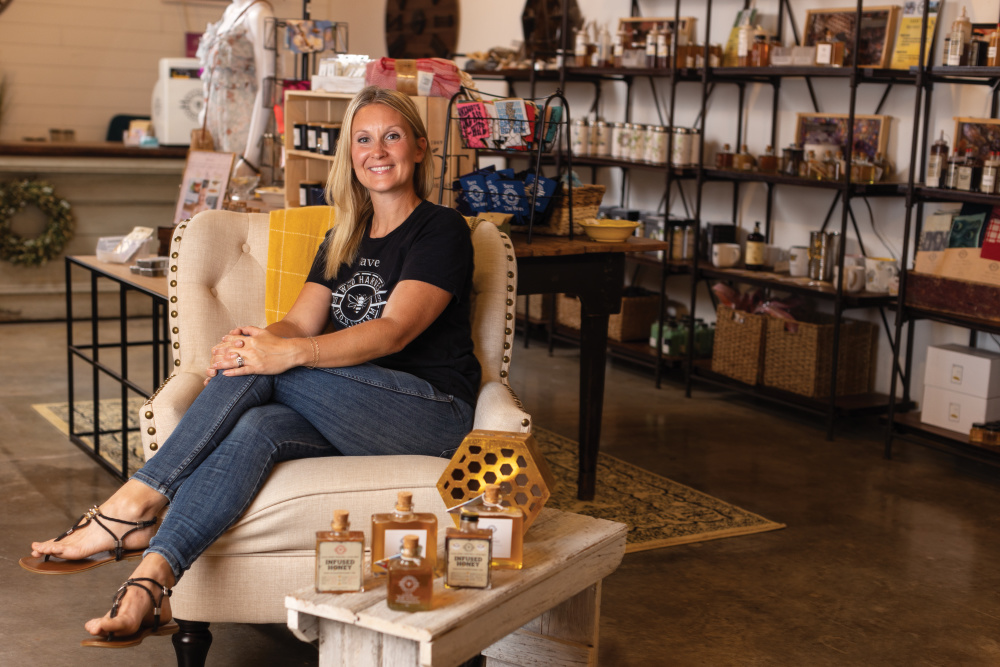
In tribute to her beloved grandfather, Rutledge created a happy place for bees: Wild Harvest Honey Farm in Heyworth.
See more: Flower Farmers Bring Colorful Joy to Customers Throughout Illinois and Beyond
Honey & Bee-yond
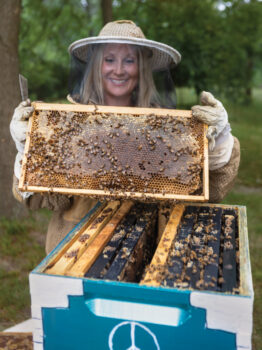
An aesthetician-turned-beekeeper, Rutledge transformed the old chicken house into a charming apiary, education center, honey tasting room and gift shop.
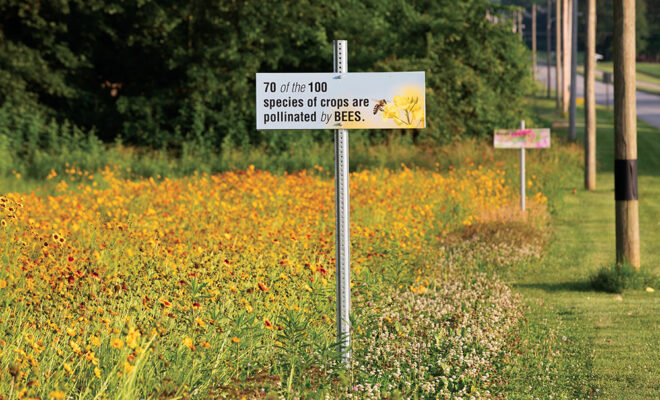
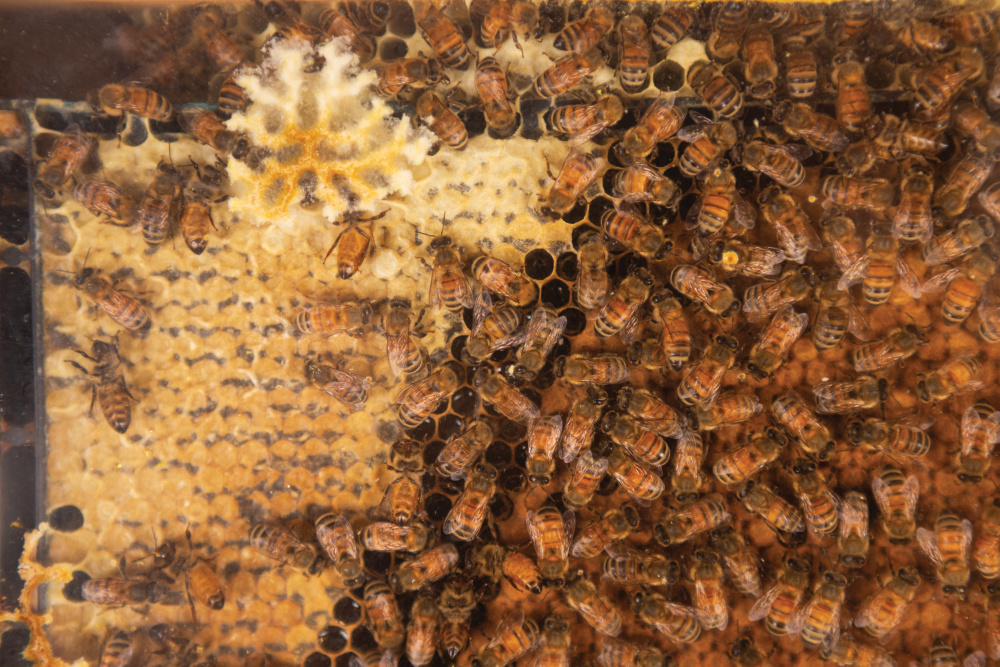
“Beekeeping has been a part of our family for over 100 years,” Rutledge says. “We wanted to turn the land we grew up on into a bee sanctuary. One in every three bites of food depends on bees for pollination. Our goal here is to educate people on the importance of bees for our survival.”
With global bee populations on the decline, her work has never been more important.
Honey contains antioxidants and boasts antibacterial and immune-boosting properties. (And it never spoils!) Every year, Wild Harvest Honey Farm hosts an annual Honey Festival to celebrate this superfood and the pollinators that produce it. This year, mark your calendar for July 20 and head to Heyworth.Hurray For Honey
According to the Planet Bee Foundation, U.S. beekeepers lost more than 45% of their managed honeybee colonies between April 2020 and April 2021. Several factors conspire against the honeybee, including pathogens, pesticides, poor nutrition and, primarily, parasites.
By providing a safe haven for honeybees – and food for thought for visitors – Rutledge hopes to protect this petite pollinator.
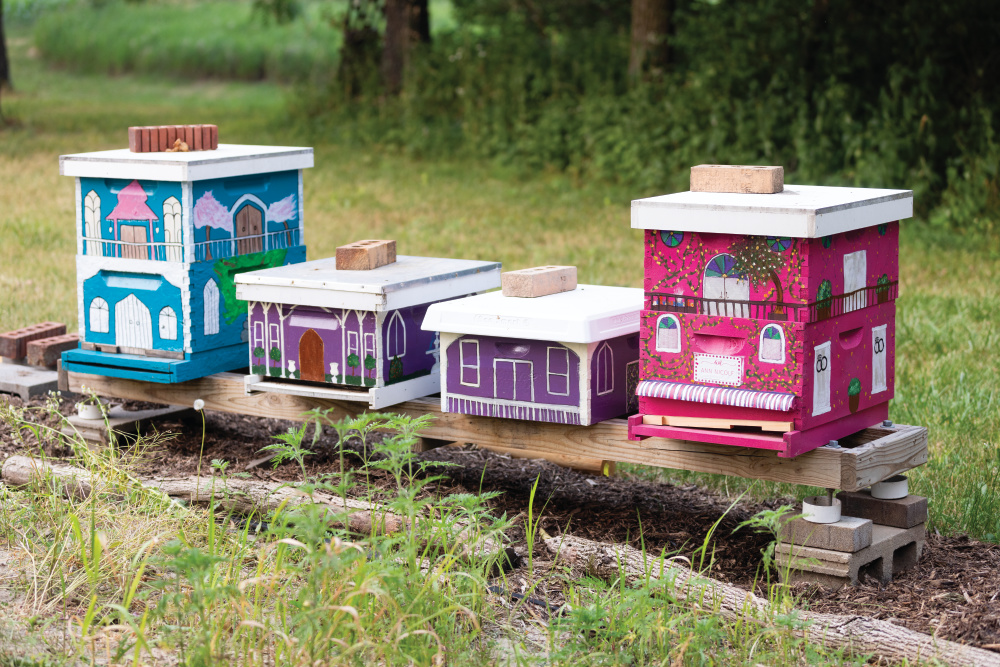
About 20 brightly decorated hives make up “bee village” at Wild Harvest Honey Farm, a favorite destination for school and community field trips. The farm also hosts themed events throughout the year, including fairy nights and an annual Honey Festival in the summer.
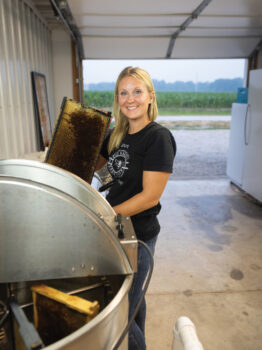
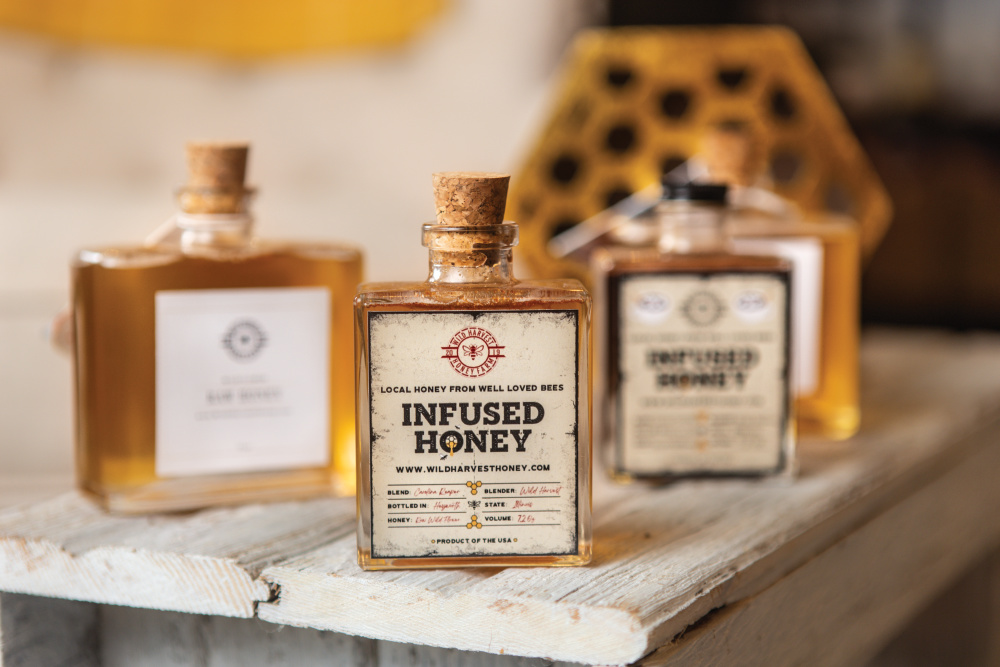
In her charming gift shop, Rutledge’s wildflower honey products and pollen-enriched tea blends fly off the shelf. Visitors buzz about her infused honeys, which feature flavors like lavender, bourbon and Carolina reaper. Visitors can even take a honey sensory class, similar to a wine tasting.
“Even three hours from here, honey tastes different because of the soil, and pollen from different plants has its own notes and flavors. I plant things to keep my honey sweet all year round,” says Rutledge, who swears by radish to produce super-sweet honey.
In the tasting room at Wild Harvest Honey Farm, visitors can sample honey that hints of olive trees and wildflowers from Pompeii, the rosemary fields of Barcelona, and the lime trees of Monaco.
See more: Learn How Different Flowers Attract Diverse Pollinators

The Buzz on Beekeeping
Beyond a satisfied sweet tooth, you’ll leave Wild Harvest Honey Farm with a greater appreciation for the power of pollinators.
“You don’t have to have bees to help save the bees,” Rutledge says. “The best thing anybody can do is to feed the bees. If you do want to pursue beekeeping, take a class and join a club where you’ll get support and help.”
The Illinois State Beekeeping Association (ISBA) is a great place to start.
Actively supporting beekeeping in Illinois since 1891, the ISBA offers a forum to share best practices and scientific developments – and maybe find a mentor.
“We get beekeepers together twice a year and help educate each other and help with research projects and things like that,” says Rose Leedle, ISBA president. “We provide an ongoing opportunity to talk with more experienced beekeepers and possibly find one to mentor you if needed.”
Rose says ISBA membership usually hovers around 1,500, which is roughly a third of registered beekeepers in Illinois. The ISBA encourages would-be beekeepers to take an introduction to beekeeping class and to get to know their local farmers.
“Go out and introduce yourself to the neighboring farmers and explain what you’re trying to do,” says Doug Leedle, Rose’s husband and a Certified Master Beekeeper. “And in your second year of beekeeping, give them a bottle of honey.”
See more: How You Can Support Illinois Pollinators
Protecting Pollinators
Learn more about Wild Harvest Honey at wildharvesthoney.com, and visit ilsba.com, to learn more about pollinators and the Illinois State Beekeepers Association.Learn More
Even farmers who do not grow bee-friendly crops like soybeans, pumpkin, melon or fruit can help pollinators.
“A lot of farms no longer have fence rows, so we’ve taken away all the nutrition from the honeybee,” says Doug, a second-generation beekeeper since age 10. “But farmers can plant wildflowers in the corners of their field, so bees have something to eat, too.”
Rose asks farmers to consider planting cover crops in the fall that come up early in the spring. Let them flower, then plant soybeans or other crops later.
On a smaller scale, homeowners can help by planting pollinator-friendly flowers, such as coneflower, bee balm, zinnia and milkweed, as well as flowering trees.

And remember, while humans may not appreciate a messy yard, pollinators do. Simply leaving a few leaves on the ground in the fall and slowing down spring cleanup can give native miner and digger bees – which winter in piles of leaves – a better chance of survival.
The Leedles also offer a fresh take on those despised dandelions.
“Your lawn doesn’t have to look like the 18th hole of Augusta,” Doug says with a laugh. “Dandelions are one of the first flowers that bees utilize. What we humans see as weeds, pollinators see as a buffet.”
Back at Wild Harvest Honey Farm, the beloved bees feast on a smorgasbord of pollen, while Rutledge nourishes a family legacy.
“Bees are part of my heritage. I feel connected to my ancestors knowing that I’m carrying on a tradition they would be proud of and doing my part for the environment,” Rutledge says. “Besides, I’m always rooting for the underdog – and these days, that’s the bees.”
See more: The Buzz About Pollinators and Farming