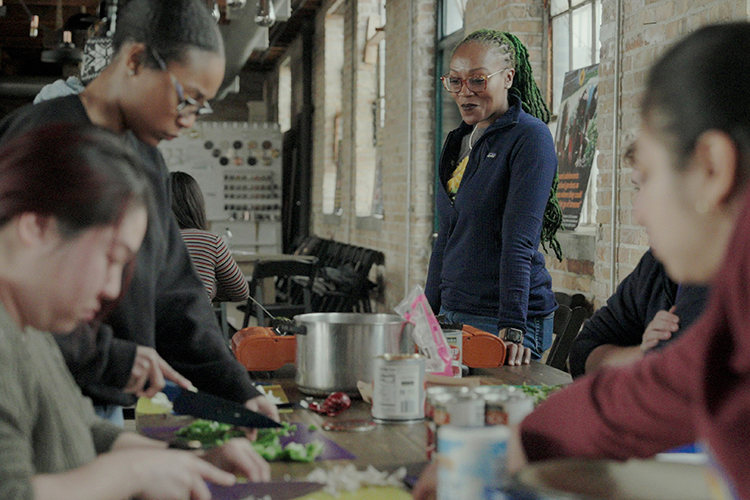
Selma Sims didn’t sleep in on the weekends when she was young. She didn’t want to miss breakfast with her mom.
“It was a whole thing about getting to go to a restaurant to eat breakfast on a Saturday morning because my mom was off work,” she says. “Just being able to read through the menu to see what the different things were.”
That’s when her interest in food began. And it led her to the Chicago Park District’s After School Program on the north side of Chicago where Sims engaged with youth and the different snacks they would bring. It’s also where she tried macerated strawberries for the first time.
“I was like OK, that’s good. That’s a healthy snack,” she says.
Sims moved from Rogers Park to Chicago’s South Side in 2010. That’s when she first noticed a difference in nutrition and food access. Students would come to the after-school program with Takis and peppermint sticks for snacks.
“All of that’s delicious, I love it,” she says. “But it’s the nutritional density of those foods that’s one of the reasons they were lethargic 30 to 45 minutes after they came to after school.”
A scientist at heart, Sims went “down a rabbit hole” researching food inequity. At the same time, she prepared to transfer to Iowa State University (ISU). Those two experiences led her to agriculture.
“I know a lot of people chose agriculture because they want to fix a problem,” she notes.
Sims wanted to combine her love of research and recreation with her newfound problem of food deserts in her home city. With help from her academic adviser, she decided on an agronomy degree with a minor in horticulture. What she would do with that, she didn’t know. But she knew she wanted a career that would make an impact.
She found one.
VIDEO: See and hear from Selma Sims about her career journey.
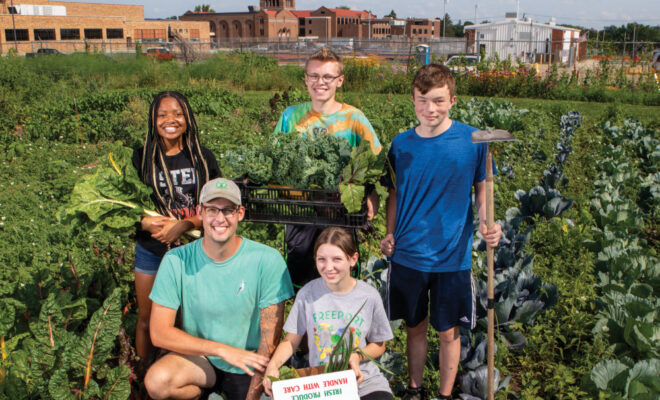
As CEO and head grower at Gardeneers, Chicago’s only custom full-service school gardens program, Sims teaches youth where their food comes from and how to grow it. That same food feeds students and community members within a 1-mile radius of each garden. But one of the most impactful aspects of Sims’ role comes in the form of representation.
“I think in agriculture, especially when it comes to modern American agriculture, there aren’t many people that look like me doing this work,” she says.
It was an issue she first noticed while attending ISU, where she was one of six people of color in its agronomy department.
“I felt like a drop of dye in a bowl full of water. And it’s like, how am I supposed to get help,” she recalls after attending an agronomy club meeting with over 100 members.
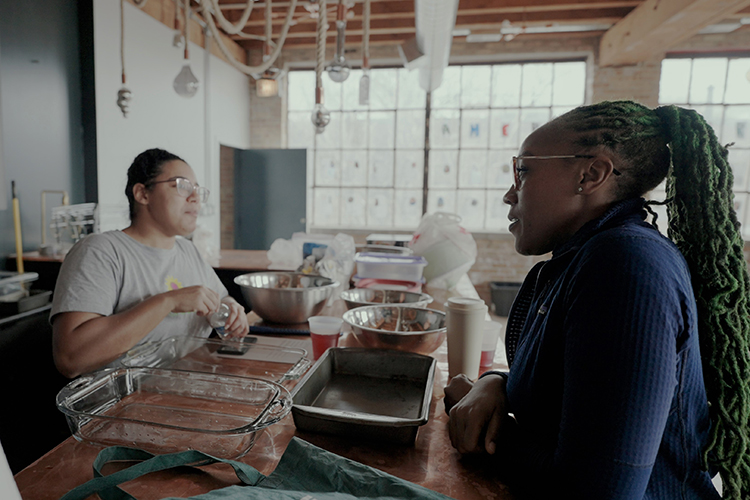
Sims got involved in organizations that supported her career path.
“MANRRS (Minorities in Agriculture Natural Resources and Related Sciences) was one of those organizations that let me know, ‘well, you can do this,’” she says.
Sims remains involved in MANRRS today, in addition to serving as president of Advocates for Urban Agriculture and a member of Lt. Gov. Juliana Stratton’s Agricultural Equity and Food Insecurity Council.
When asked what it means to be a female leader in ag, she says it means everything.
“I want others to know they can lead,” she says. “They can lead looking like me, green hair and all. I hope that when they see me, they know they can go further than me because somebody like me told them earlier about something like this.”
This content is part of the Partners 2023 Cultivating Our Communities series, a collaboration among Lt. Gov. Juliana Stratton, Illinois Farm Bureau and the Illinois Specialty Growers Association. It strives to raise awareness of Illinois’ diverse farmers, farms, and the food, feed and fuel they produce.