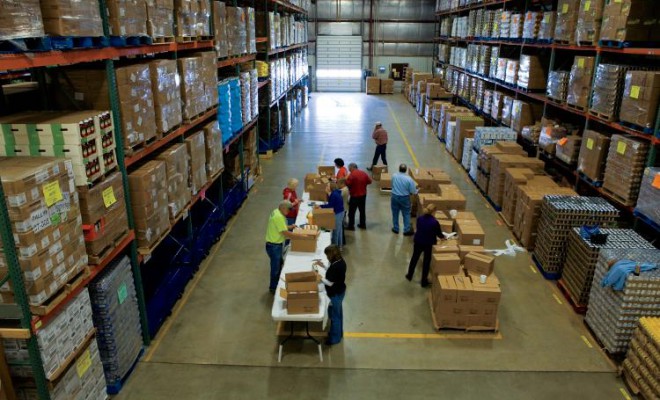
From farm to a table in need, the Midwest Food Bank rescues food and restores faith. Some 20 years ago, the Kieser family from Bloomington converted a shed on their central Illinois farm into a local food distribution site. Now known as the Midwest Food Bank, the effort has grown to span dozens of states and even countries, all while still supporting the mission to “share the love of Christ by alleviating hunger and malnutrition and providing disaster relief.”
“Midwest Food Bank was founded on a farm, and that remains in our DNA as we expand our services throughout the country and internationally,” says Jada Hoerr, chief resource officer for the organization.
See more: Freeport Student Garden Sows Solutions for the Community
Surplus to Service
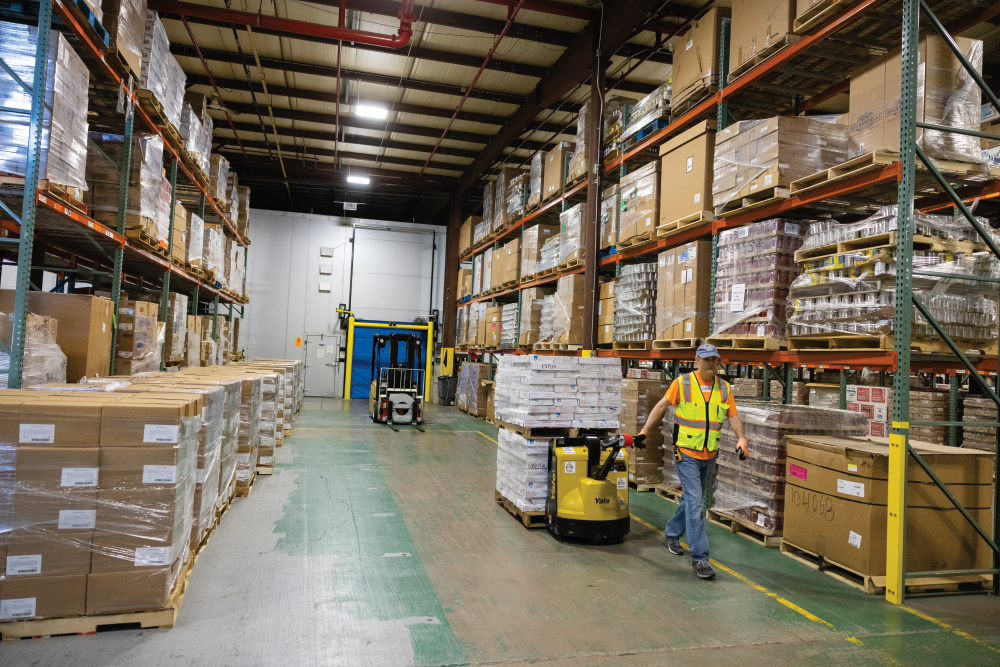
Today, the Midwest Food Bank operates 10 domestic distribution facilities serving 2,400 nonprofit groups such as food pantries, soup kitchens, shelters and churches. Their mission reaches 25 states, including all of Illinois, and extends into Haiti and Kenya.
The nonprofit works in part to “rescue” food that would otherwise be thrown out.
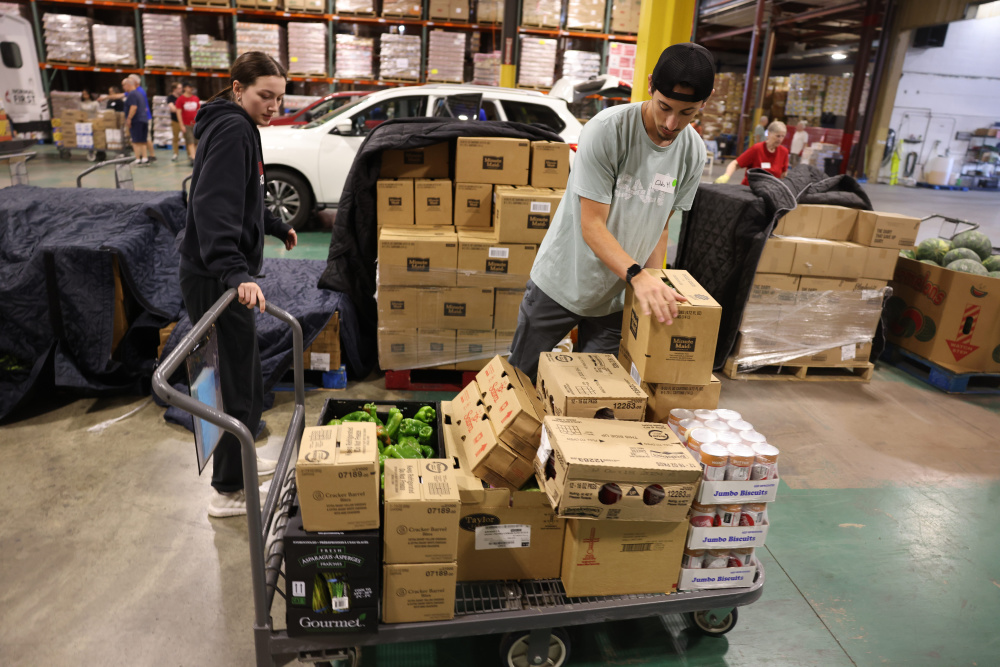
“One of the primary ways Midwest Food Bank addresses its mission is through vendor partnerships aimed at rescuing surplus food from these sources,” says Melanie Tennell, marketing director for Midwest Food Bank. “We take food that is no longer sellable due to near-expiration dates, packaging defects, discontinued items and more and redistribute to our nonprofit partners that reach communities directly.”
The distribution facilities are supplied with what are considered food waste items. Food waste is defined as food from grocery stores, food manufacturers, restaurants, federal programs and farms that is in surplus or simply cannot move through the supply chain in time to be sold.
The U.S. Department of Agriculture estimates 30% to 40% of the food supply ends up as food waste. Taking a portion of that and moving it safely and in a timely manner to organizations that can share it with those in need is a tall order. However, Hoerr explains it is a team effort to quickly and effectively transport the food to those in need.
“We know timely management of the logistics for food rescue is our opportunity,” Hoerr says. “Last year, we implemented an inventory management system across our warehouse for efficient, accurate oversight of food coming in and leaving our facilities.”
Currently, 51% of donated food comes from food distributors, 44% comes from food manufacturers and 5% from local grocery runs, food drives and other sources. The food bank accepts most any kind of food item.
“Some of the most wanted items include peanut butter, canned meat, and vegetables and traditional meal staples everyone wants,” Tennell says. “We also share our knowledge about which foods must be refrigerated or can be frozen, and which can be stored in a pantry. We provide free, nutritious items to our nonprofit partners, allowing those they serve to access a variety to ‘shop’ with dignity and choice.”
See more: International Farm Workers Play a Vital Role in Illinois Agriculture (VIDEO)
Reclaim, Redistribute, Relieve
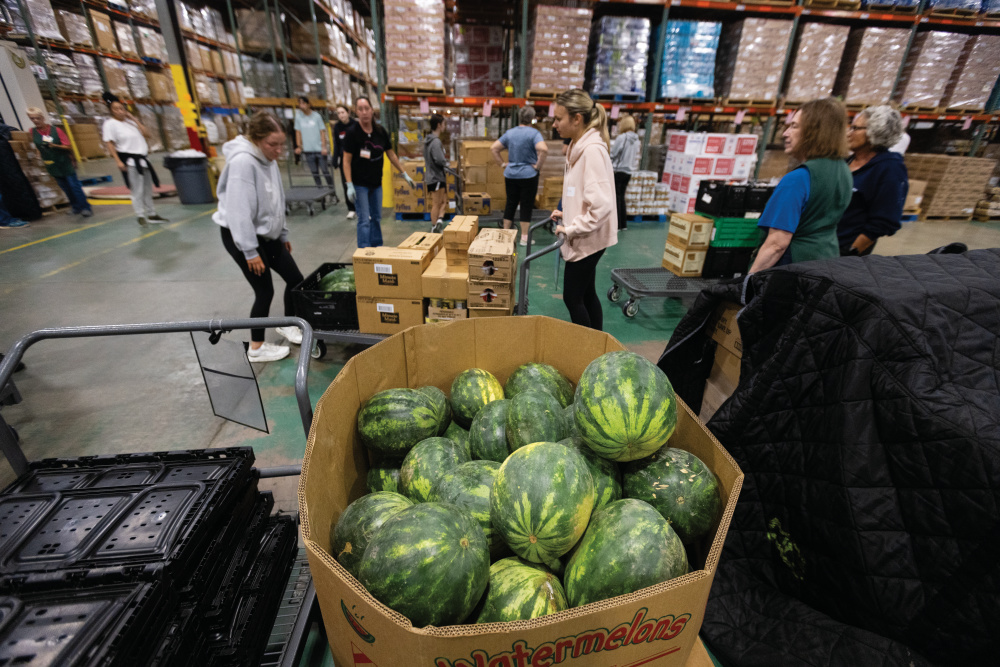
The food bank always looks for ways to increase access and adapt to the demands of those in need, thanks to the help of volunteers and their vast partnership network.
For regions that may have need but no close access to one of the distribution sites, Midwest Food Bank offers remote pickup locations. For example, a truck may be sent from Peoria to Sioux Falls, South Dakota, where a pop-up shop can be established for nonprofit partners. Then, food pantries within driving distance to Sioux Falls can collect food from the truck rather than having to drive all the way to Peoria, reducing travel burdens for agencies while expanding the food bank’s reach.
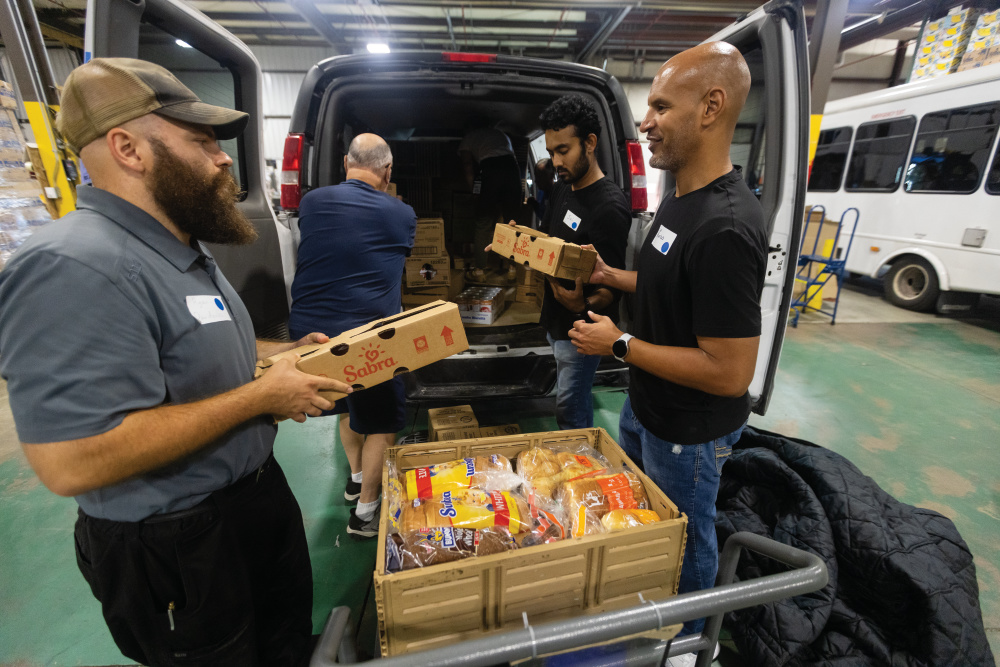
Midwest Food Bank’s fleet of trucks gathers and distributes food. Drivers are dispatched to food manufacturers, grocery stores and other locations to collect food nearing expiration, food manufactured in excess or even local produce. Any food accepted is checked for consumption before being redistributed to nonprofit partners.
In 2024, Midwest Food Bank had 36,000 volunteers – including individuals, families and corporations – who worked approximately 350,000 hours sorting and distributing food, working in administrative roles and more.
“Our large pool of volunteers helps rescue food and brings it into our warehouses before it can be taken to landfills,” says Tennell, noting that according to the Food and Drug Administration, food is the largest category of items ending up in municipal landfills.
Less food waste means land, water, labor, energy and transportation resources used to produce food and move it into the supply chain aren’t wasted either – meaning the food bank’s efforts to eliminate hunger also benefit the environment.
Midwest Food Bank also partners with producers through the Farm It Forward initiative, inviting farmers to donate grain, turning their harvest into meals for families facing food insecurity.
Not only does Midwest Food Bank manage its food resources efficiently, it also focuses on financial stewardship. Less than 0.5% of every dollar spent is allocated to management and fundraising, with the bulk – 99.5% – dedicated to program services.
Other advantages to food rescue include helping recipients stretch their food budgets, since the food collected is provided to them at no cost. Midwest Food Bank also stretches its own budget, with each donated dollar in 2024 equating to $30 in food distributed.
While the ultimate goal of Midwest Food Bank is to no longer be needed, it remains here to help anyone affected by hunger – whether due to temporary causes such as natural disasters, or long-term effects like rising food costs’ impact on those below the poverty line. And so long as the need is there, the organization plans to expand offerings and help even more people in need.
“We continue to look for ways to grow,” Hoerr says. “Our 2030 strategic goals focus on expanding our reach and deepening our impact in the communities we serve.”
To learn more about Midwest Food Bank, visit midwestfoodbank.org.
See more: A Place to Grow: Navarro Farm Nurtures Capabilities for People of All Abilities