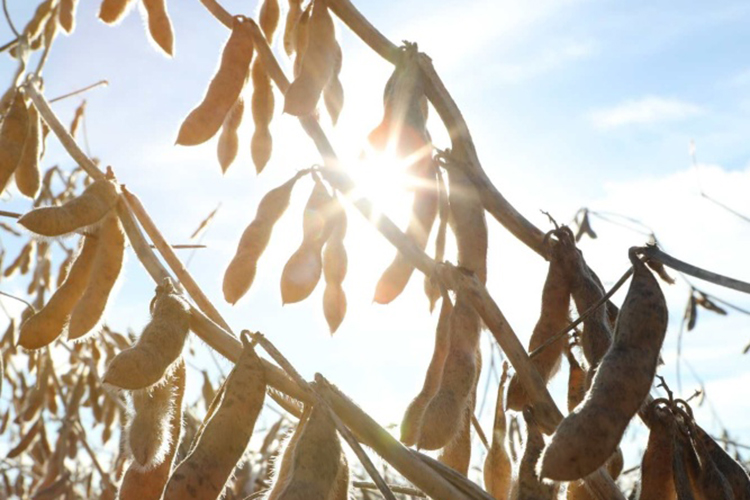
In any given year, Illinois farmers grow more than 10.5 million acres of soybeans, making it the No. 1 state for soybean production in the U.S. Most soybeans get turned into animal feed, cooking oils and biodiesel. But in pockets around the state, some farmers produce food-grade soybeans for niche markets such as tofu makers and Asian food stores.
Read on to discover how food-grade soybeans in Illinois come full circle – from pod to plate before returning to the farm.

Protein Power for Humans and Animals
Dan Deering has grown non-GMO, food-grade soybeans for more than 30 years. He believed growing food-grade soy would make economic sense by yielding a premium price even though the early years were difficult.
“It was very, very hard to find markets,” Deering recalls. “There were limited buyers, but as the years progressed, more people started looking to specific soybeans for their products.”
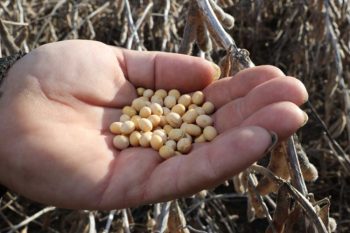
In an average year, he plants about 225 acres of non-GMO clear-hilum soybeans on his La Moille farm. Clear-hilum beans are commonly used to make soymilk, tofu and other products.
Deering says one of his heirloom soybean varieties, Vinton 81, provides a distinct flavor when made into tofu.
In addition, clear-hilum soybeans have about 44% protein compared to other soybean varieties, which derive an average of 35% of their calories from protein, according to the U.S. Soybean Export Council.
A member of the Bureau County Farm Bureau, Deering also operates a farrow-to-finish pork farm (meaning all phases of pork production), raising as many as 7,500 Berkshire hogs a year.
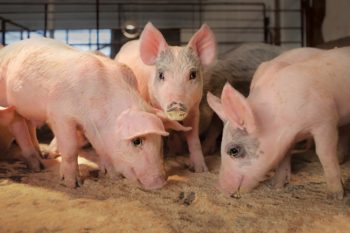
Part of the pigs’ diet includes soy pulp – a byproduct remaining after processors puree soybeans when they make tofu and soymilk. Deering likes using byproducts from Chicago-based tofu maker Phoenix Bean and other food manufacturers. His usage also keeps the byproduct out of landfills.
He says using natural feed produces a superior pork product, although it’s more labor-intensive to use the byproduct.
“Having the help of my employees makes it more feasible to use the byproducts,” Deering says. “In the long run, it evens itself out, and it’s just better to do it this way all the way around.”
See more: Nourishing Nutrients: How Farmers Manage Soil Health to Grow Better Crops
An International Search Leads to Illinois
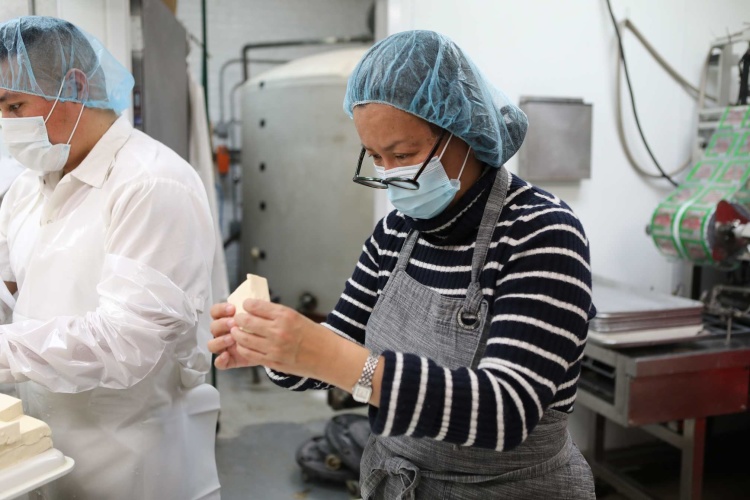
Phoenix Bean owner Jenny Yang is so committed to buying Illinois soybeans that she traveled to Taiwan to find them.
Yang purchased Phoenix Bean, one of the first Chicagoland sources of fresh tofu, in 2006 when the owners wanted to retire. She’d been a Phoenix Bean customer for years. The company’s rich, creamy soymilk and fresh tofu reminded her of what her mother made when Yang was growing up in Taiwan.
But when Yang took over the company, she struggled to find a consistent, local soybean supplier.
While visiting her mother in Taiwan in 2007, Yang explained her dilemma to officials at the company making machines for Phoenix Bean.
“They said to go to the Taiwan World Trade Center,” she recalls. “All the associations had offices there.”
So Yang did, connecting with the Illinois Soybean Association, where staff marveled that she’d traveled more than 7,000 miles to find farmers who were growing non-GMO, food-grade soybeans about two hours from her factory in Chicago’s Edgewater neighborhood.
Yang insists on Illinois soybeans for one simple reason: They’re local.
“I want to see where the ingredients are grown,” she says. “The previous owner used a broker to get beans, and they came from all over, but he could just look at the bean and know if it worked or not. I didn’t have knowledge of soybeans then like I do now, so I want to make sure each batch of beans is consistent.”
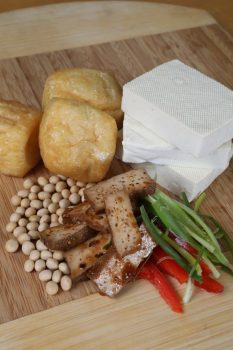
Phoenix Bean makes its products in small batches without preservatives or additives. After grinding and boiling the soybeans, the soymilk is curdled to craft tofu. Each tofu variety has its own unique taste and texture because of this process.
The product line now includes both Phoenix Bean and Jenny’s Tofu brands of soymilk, soft and firm tofu, sprouts and ready-to-eat tofu salads. You can find their products at Whole Foods stores throughout the Midwest, Mariano’s stores in the Chicagoland area, various Asian grocery stores and 10 farmers markets.
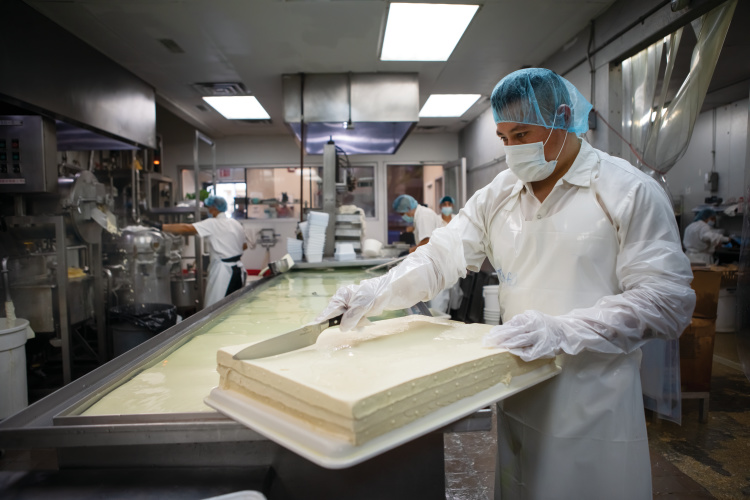
This year, Yang expanded into two additional buildings on her block. One operates as a storefront for prepared tofu salads, packaged items and soymilk. The other holds an updated, much larger processing facility.
“Our old kitchen was only 1,000 square feet,” Yang explains. “Our new facility is 10,000 square feet, with a new machine five times faster than the old one.”
See more: Studying the Ethics Behind Artificial Intelligence in Food and Farming
Full-Circle Farming
In addition to her commitment to purchasing Illinois soybeans, Yang is equally committed to finding more local farmers, like Deering, who can use byproducts as natural animal feed.
“We follow the complete soybean life cycle encouraging local, sustainable food,” Yang says. “We want to make sure we continue working with farmers to recycle, reuse and continue that full circle.”
Learn more about Phoenix Bean in this Partners podcast:
Listen to “This Food Goes from Farm, to City, to Plate” on Spreaker.
See more: Spilling the Beans on Soybeans