


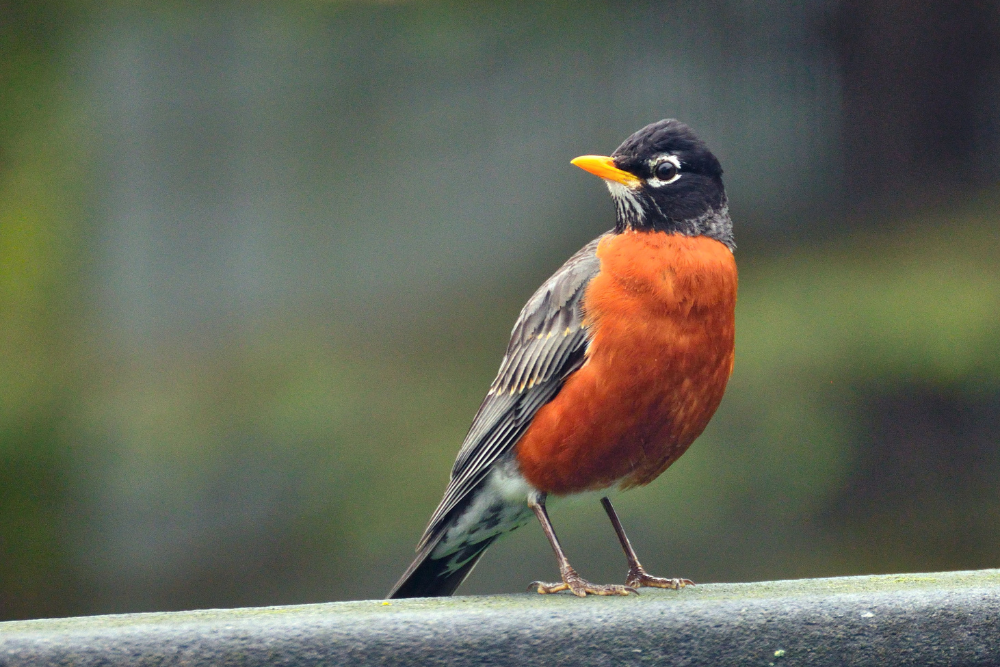
Gardening dovetails nicely with similar interests like learning to identify and feed visitors such as birds, bats, butterflies, toads and frogs. For some, the secondary interest becomes the main interest, bypassing plants; however, not for me.
When asked why not just let the robins nest in my hanging baskets containing Boston ferns, I rattle off multiple reasons.
One being watering becomes harder as I try to judge exactly where the nest resides in a plant that hovers higher than my line of sight. I worry about a tsunami cascading down on their little heads or upturned beaks. Worse yet, floating them out of the nest. Also, the watering can suddenly appearing out of nowhere scares almost-grown fledglings into flapping – half falling, half flying – prematurely out of the nest.
Another is the Boston fern grows lopsided and can’t recover symmetry after late July, when I can safely pull the nest out of the plant.
See more: Journal Keeping Become a Valuable Garden Resource
Robins 4, Gardener 0
So, what have I tried so far?
Year one: I tried plastic forks with the handle stuck down into the soil and the tines protruding upward. They either pushed the forks out of the way or incorporated them into the nest’s structure.
Year two: I thought I’d come up with a surefire solution: bird netting. After all, it was designed to keep birds out, right? I threaded the netting over the hanging hook and draped it over the fern. The parents just flew up under the netting and built their nest. Knowing the fledglings would never be able to maneuver a way to exit, I removed the net.
Year three: I read in a magazine to use plastic Easter eggs. The birds, thinking the nesting site was occupied, would choose somewhere else – wishful thinking. They ruthlessly pushed the eggs over the side.
Year four: A friend at church said her daughter had luck using balled-up foil. According to her, the birds don’t like shiny metal. Suddenly, foil balls started appearing in the garden in front of the porch. Instead of pushing them out, the robins flew them off-site.
I devised a new idea for year five. Most birds harbor a fear of owls. If I dangle several toy owls from the ceiling right over the ferns, I should finally get on the scoreboard. I’ll purchase them from ACME Markets. After all, it even works for Wile E. Coyote.
See more: Don’t Be Too Quick to Judge Dandelions

Ask the Expert
Q. I love gladiolus, which are easy to plant. Unfortunately, they flop all over the place. Any ideas?
A. The deep-planting method helps. Instead of planting the corms 2 inches below the surface, dig a trench 7 inches deep. Place the corm and cover with 2 inches of soil. As the shoots emerge, keep adding more but never cover the green shoot completely. End by mounding 2 to 3 inches of soil against the stalk. They should remain more erect. Note, this method takes up more garden space because of the room needed to store the extra soil along the trench until it slowly fills in the hole.
About the Author: Jan Phipps is a University of Illinois Extension Master Gardener. She gardens, writes and podcasts near Chrisman.
See more: Expert Tips and Insights for Successful Container Gardening

Why not just let the birds be for the short time (maybe 4 weeks)? Do they have many other places nearby to go? Probably not… humans take all of the habitat and don’t share, poison the insects that would be food, then wonder why there are not as many birds anymore. Having nesting birds is a wonder and an gift, a sign of blessing.
We’ve had the same problem this year!! My grandpa put some moth balls in a mesh sack and put them in the plants and the birds lave left them alone thus far.