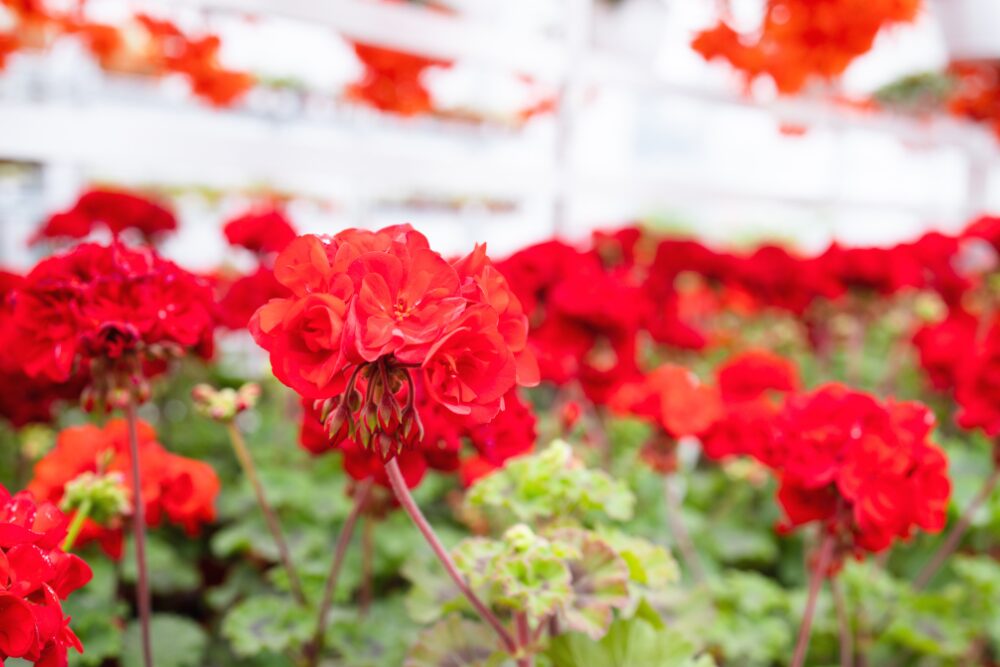
You say geranium, I say pelargonium. The term “geranium” refers to two related, but different, plants. Real geraniums fall into the category of herbaceous perennials. The plant commonly called a geranium, aka storksbill, with scalloped leaves and ball-like blooms, belongs to a different species called pelargonium, which is an annual. For ease of understanding, going forward I’m going to talk about pelargoniums while referring to them by their common name, geraniums. But just know that a true geranium is their cold-hardy cousin.
See more: Understanding Fairy Circles and the Myths Around Them
Colorful Perks
If you are looking for an easy-to-grow plant, geraniums (again, the kind that are technically pelargoniums) make a good choice. “Choice” being the operative word since the flowers and leaves come in multiple colors. Choose solid, bicolored or even tricolored leaves in two-toned green, white-rimmed green, or a green, burgundy and cream combo. Bloom colors – usually bright like red, orange, pink and rose – might also be less showy in salmon, light pink and white with a darker eye.
While most geraniums grow into medium-sized robust plants, ivy geraniums are smaller, working well for window boxes or borders and container edges.
Here’s the good news. Geraniums seem to be toxic to Japanese beetles. While not always lethal, after one bite the beetles enter a stupor, just lying there easy to pick off and destroy. Japanese beetles seem to be the only insect pests attracted to them, and disease pathogens don’t bother geraniums, in my experience.
See more: Create an Oasis for Hibernating Insects Beneficial to Your Garden
Cool Blooms
The only drawback of these wonderful plants shows up in the heat and humidity of high summer. The flower production reduces in both quantity and bloom size. Never fear because when the cooler weather returns so does their prolific blooming.
Because geraniums look so good at summer’s end and into fall, many gardeners want to save the plants for next year. You have three options when trying to save them for the next season:
- Houseplant: It’s doable but messy. If not already in a container, pot it up. Prune back the growth by one-third to one-half. Place in a sunny window in a cool room and pick up dead leaves all winter.
- Bare Root: Dig up, shake off all soil from the roots, place in a paper bag or cardboard box, and store in a cool, dark place. In spring, cut back stems to firm green tissue and plant.
- Cuttings: Cut 3 to 4 inches off the branch ends, remove bottom leaves, dip in rooting hormone, plant in rooting medium, water, tent with clear plastic, place under grow lights and plant after four to eight weeks in potting medium.
See more: Planting for the Future: A Perennials Guide for Beginning Gardeners
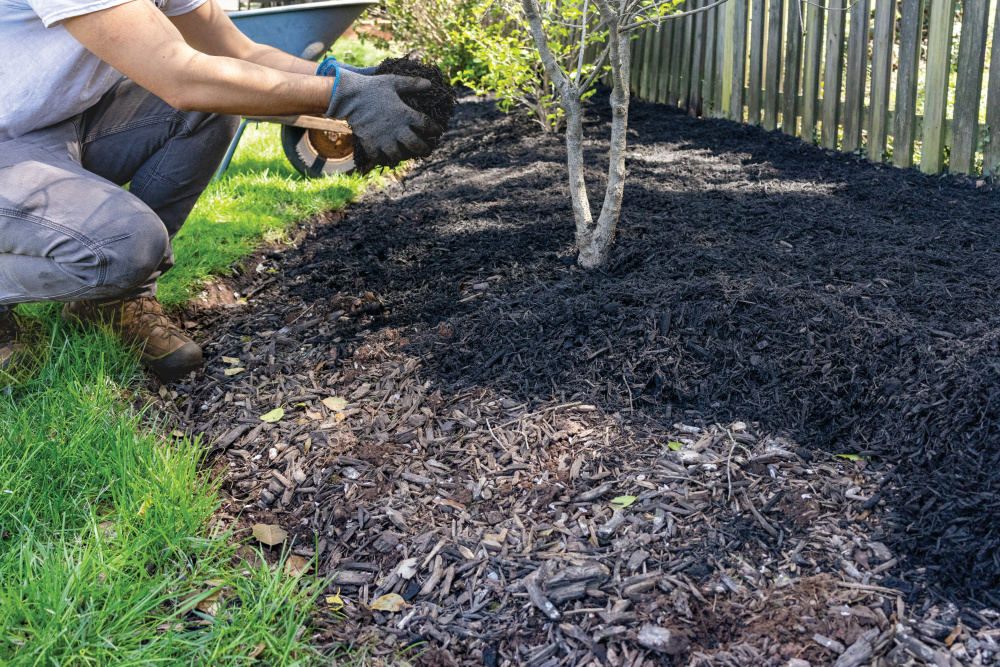
Q: I’m tired of replacing the wood mulch in a shrub border every two years. Any suggestions? A: Try a living mulch to fill the spaces between shrubs. Choose a ground cover, planting close together to achieve a canopy faster. I like Iberis (candytuft). It blooms as a white carpet in spring and the plants are usually evergreen for the southern two-thirds of Illinois. For a lower-growing mulch, plant one of the creeping sedums or thymes. They all require little maintenance other than an occasional weed sneaking through.Ask the Expert