


Years ago, horticulture specialists and common practice advocated a scraped earth policy for winter garden cleanup. It looked neat, and everything started with a fresh slate in the spring. That advice changed once we realized the importance of leaving the past season’s debris as protection for hibernating insects. The same holds true for problem insects; however, maintaining a balance between the good and the bad provides a food source for the beneficial insects that eat the destructive insects.
See more: Hypertufa Creates Concrete-Looking Garden Containers Without the Weight
Helpful Hibernators
So, how do those small, fragile bugs survive winter? Depending on the species, overwintering happens in one of the four insect stages: egg, larva, pupa or adult.
Lady beetles (ladybugs), who are efficient aphid eaters, spend the winter as adults in any protection they can find – under branches, in logs, in the mass of ornamental grasses or under house siding, especially on the south side. Because lady beetles eat up to 5,000 aphids in a lifetime, it benefits gardeners to provide them a winter home.
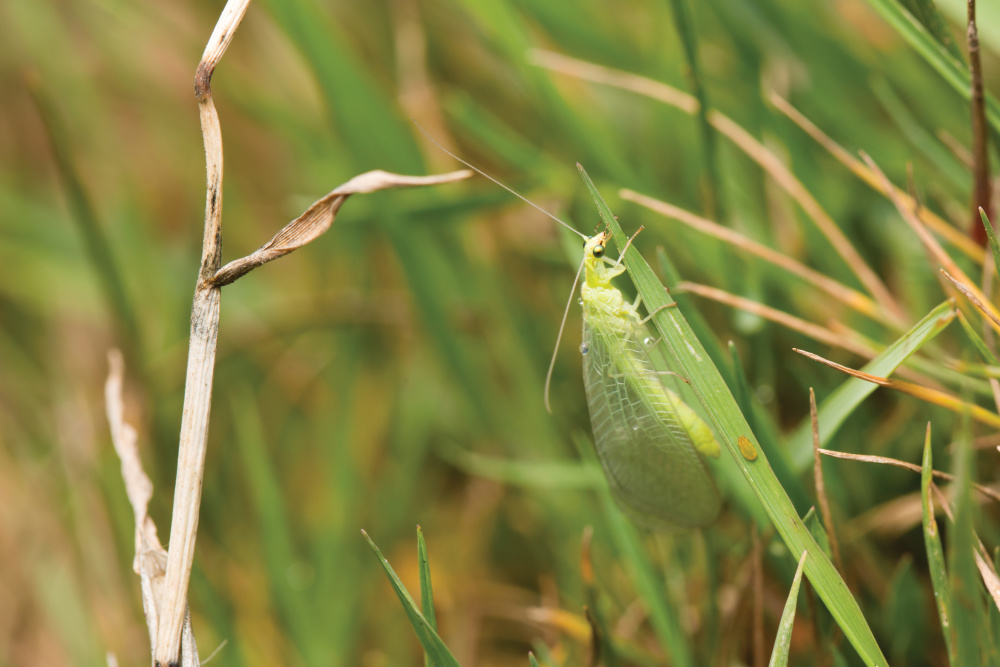
Green lacewings, another aphid killer, earned the name “aphid lions” by devouring 40 to 60 aphids per day. They grab an aphid, inject it with paralyzing venom, suck out the juices and then toss the carcass on the ground. Lacewings spend the winter attached to stems and leaves.
Don’t discount spiders because they are scary. Outside, they play an important role in our garden ecosystem. Many spiders overwinter safely inside egg cases, while others – like jumping, wolf and crab spiders – survive as adults or juveniles sheltering themselves in rotting logs, leaf debris and bricks.
Leafcutter, mason and other native bees overwinter as larvae in the pith or holes in stems, stumps and logs. However, carpenter bees survive winter as adults with the queen finding a crevice somewhere in the garden.
Moths and butterflies spend the cold months as pupae or adults on the soil surface, hidden in leaf litter or secluded in dead plants, depending on the species.
See more: Learn How Different Flowers Attract Diverse Pollinators
Survival Mode
That tells us where, but how does something so small not freeze solid? Hibernating insects enter a state called diapause, a cessation of growth. The shortening daylight triggers a drop in metabolism, allowing them to survive on body fat. Some insects produce alcohols that act as antifreeze, protecting their cells from ice damage.
Plants left in the garden until spring provide more than winter interest. Insects depend on them for survival.
See more: Rooted Bird Feeders Allow Mother Nature to Take Over Filling the Bird Feeder
Ask the Expert

Q: I love “Heavenly Blue” morning glory, but it doesn’t bloom. How come?
Most plants thrive on rich soil with added compost and fertilizer, but morning glories prefer fewer ideal conditions. Either the soil is too rich, or you fertilized them when they failed to bloom. Look for a spot with well-drained, poor or average soil. Do not add any amendments to the soil and no fertilizing. They also like a minimum of six to eight hours of direct sunlight. Next spring, provide lean growing conditions, and I’m confident you will see that heavenly blue color.
About the Author: Jan Phipps is a University of Illinois Extension Master Gardener. She gardens, writes and podcasts near Chrisman.

I’m just loving every issue that I have received.
Looking forward to the next one already.
I think I have read more interesting articles than ever. Used the recipes to find great food to share.
Thank you!
Happy Days ahead!!!