Every fall finds many homeowners rummaging around in their garages for their bird feeders, cleaning them and choosing the best spot to hang them. So begins six months of repeatedly buying and filling the feeder because once you start, the birds become dependent on that food source.
Another way exists. Grow plants in your yard that take over your avian culinary responsibilities, and let “rooted bird feeders” swoop in for the rescue.
When looking for a place to start, remember birds native to Illinois evolved with plants native to Illinois. A little research usually turns up plenty of options. Look for plants that produce seeds, nectar and/or berries. The following ideas should help you get started.
Rooted Bird Feeders for Our Feathered Friends
Begin with three easy-to-grow annuals: cosmos, zinnias and sunflowers. Cosmos and zinnias provide nectar into late fall. Sunflowers – a common ingredient in many birdseed mixes – contain high fat levels, which translates into high energy for our feathered friends. Sunflowers come in many sizes, with the tallest plants sticking up above the snow for growers in northern Illinois.
Perennial choices include asters, coneflowers, autumn sedums and rudbeckia. Asters and the Autumn Joy sedums provide nectar into fall, followed by seedheads in winter. Coneflowers also keep seedheads above the snow on sturdy stalks, lasting a long time. Goldfinches love the seeds of rudbeckia.
Choose cotoneaster, spruce and viburnum shrubs, which provide nesting sites along with berries and fruits into winter. Viburnums come in many varieties with wonderful floral displays.
Looking for a tree? How about Easter juniper, spruces or hollies? Juniper and evergreen hollies provide nesting sites with fruit lasting into winter and early spring, respectively. Dogwoods help migrating birds with high-fat berries.
See more: Use the Off-Season to Grow Your Gardening Expertise
A La Carte Necessities
March brings a tough month for birds. By then, all the seeds have been eaten, most of the berries are gone and the insects haven’t emerged yet. With rooted bird feeders empty, I’m sure they would appreciate some help from commercial birdseed mixes until spring has truly sprung.
Looking for an added advantage to attract birds to your yard? They need water in winter, which often proves hard to find. A heated birdbath that never freezes means nonstop entertainment. Consequently, it looks like we’ve exchanged filling bird feeders for filling birdbaths.
See more: Round Robin: A Gardener’s Continuing Battle to Discourage Nesting in Hanging Baskets
Ask the Expert
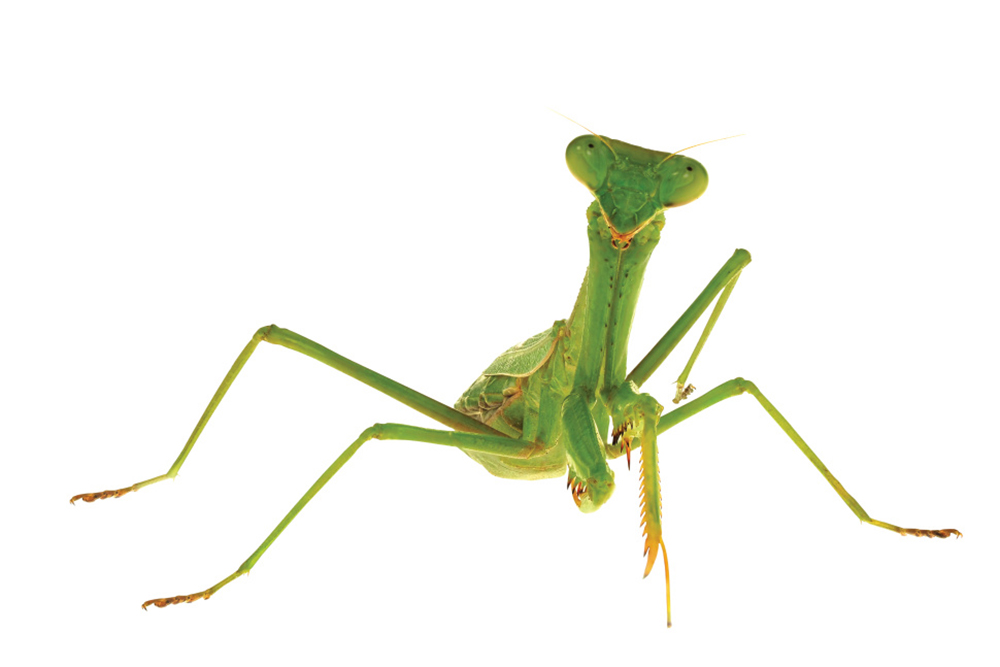
Q: I’m looking for a biological way to kill harmful insects. Is the praying mantis a beneficial or harmful insect?
A: To answer in one word: both. While the praying mantis does kill many harmful insects, it also destroys beneficial ones. To keep nature in balance, leaving it alone seems to work best. Sometimes introducing large numbers of one insect just creates a new problem.
If you choose to buy some egg sacs, be doubly sure they are native praying mantis and not Chinese or European mantises, which prey on our natives. Being larger, they also eat hummingbirds and small toads.
About the Author: Jan Phipps is a University of Illinois Extension Master Gardener. She gardens, writes and podcasts near Chrisman.