


Standing on an Illinois hillside surrounded by thousands of hostas, it’s hard to imagine Erica Kniffin was once less than enthusiastic about the easy-to-grow perennial. Her husband, Brian, was the one who suggested hostas to landscape their heavily shaded property in Fairview Heights.
“I was kind of ‘meh,’ and I thought surely we could find something more exciting,” Erica recalls. “But once we started researching, there were so many different varieties, sizes, shapes and colors, I thought these were amazing.”
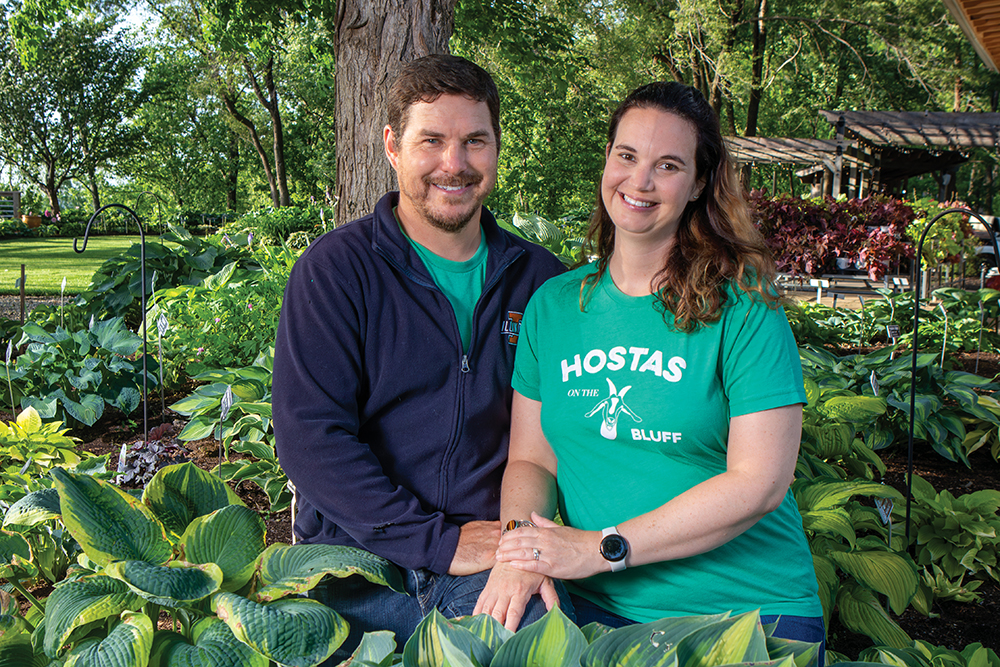
Their first hostas were splits from Brian’s grandmother, Helen Hunter, known as Grandma Honey.
“The plants did so well here,” Erica says. “We just kept going, and it kind of snowballed.”
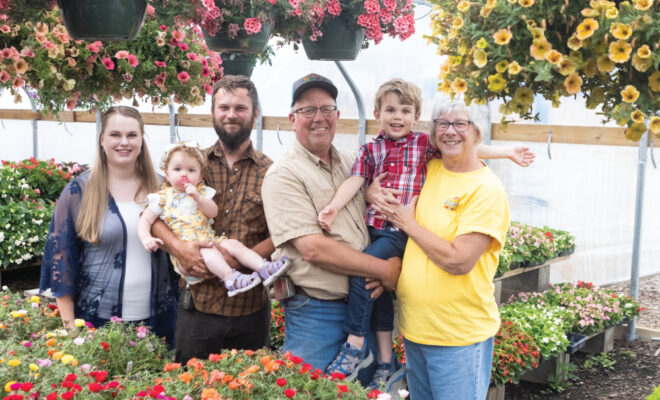
Realizing they might have a hosta problem, the Kniffins wondered how they might develop their problem into a business. Today, they operate Hostas on the Bluff, growing more than 500 types of hosta plants for sale.
In a typical season, they’ll pot more than 20,000 hostas, selling them from their 6-acre property or online to customers nationwide. Started in 2016, Hostas on the Bluff is now one of the largest hosta farms in the bistate area.
See more: Wild Harvest Honey Farm and Others Work to Protect Pollinators and Educate
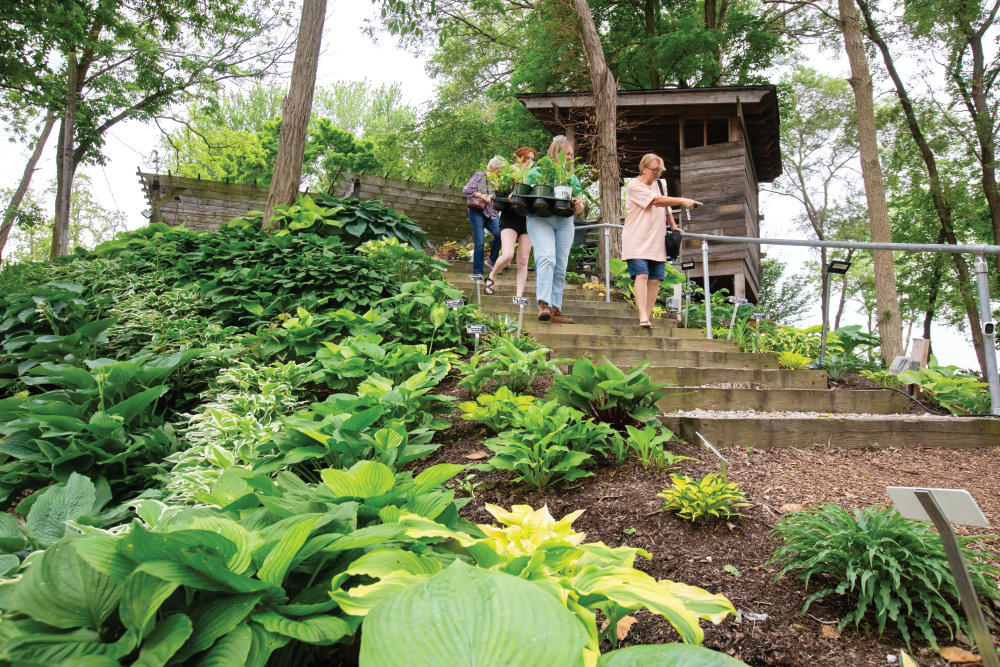
Rooted in Support
If You Go …
Hostas on the Bluff
Location: 1601 Pleasant View Drive, Fairview Heights
Hours: Mondays through Saturdays 10 a.m. to 4 p.m.; open Sundays in the spring, beginning the end of April. Follow Hostas on the Bluff on Facebook for updated hours and special events.
Phone: 618-233-2743
Email: info@hostasonthebluff.com
Website: hostasonthebluff.com
Both Brian and Erica come from a long lineage of farming families.
“Our farming is obviously a little different than theirs, but clearly it runs deep,” Erica says. “The farming took hold of us.”
The couple says they would not be where they are today without the help of Brian’s late father, Andy Kniffin, who was a master gardener.
“Andy was a phenomenally wonderful supporter from literally day one,” Erica says. “He connected with customers who came just to see him.”
Along with the initial hostas from Hunter, family and friends have supported the couple from the beginning.
“Grandma Honey was so excited about the hostas,” Erica says. “Her plants started it all, so it’s been very special to have those be the initial staples of the whole business.”
In fact, a favorite hosta is named Sweet as Honey in honor of Brian’s grandmother.
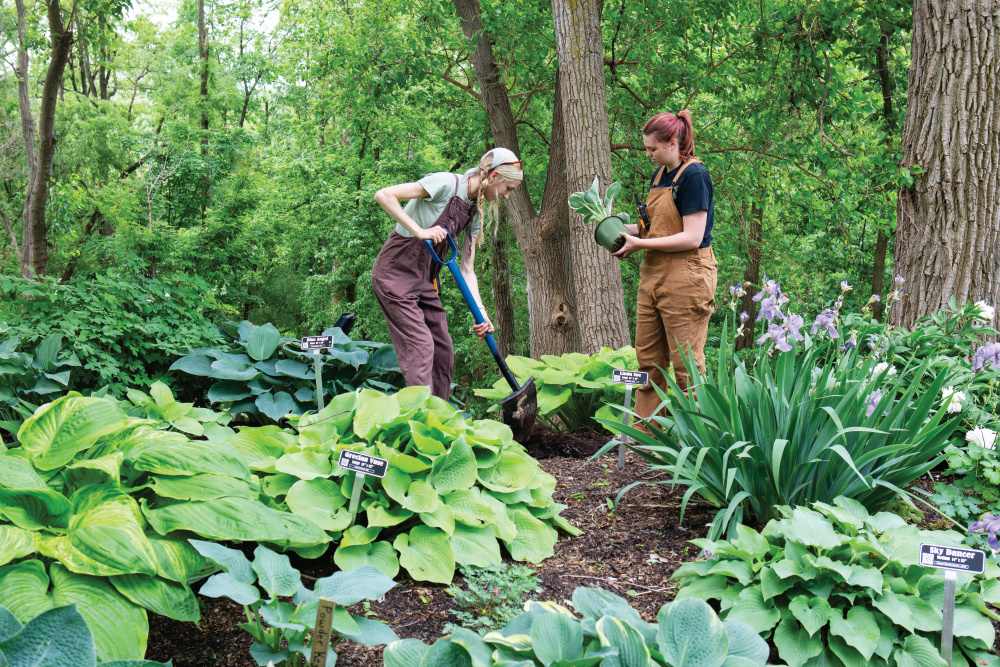
Cultivating Color

“We work with different companies and tissue cultures to develop hostas you can only find here,” says property manager McKenzie Black, noting the Goodness Gracious and Best Friends hybrids can only be found at Hostas on the Bluff.
Erica’s favorite hosta, Emma Rose, is named for the Kniffins’ daughter.
“It’s a large variety, almost a blend of colors at full maturity, and it’s really, really beautiful,” Erica says. “Our son is waiting for a hosta to be named for him as well.”
Other favorite types of hostas include Island Breeze, which has red stems and green and yellow leaves; Wiggles and Squiggles, partly for its whimsical name; and Rainbow’s End, for its unique coloring. Black enjoys Faded Blue Jeans for the plant’s tie-dye vibe and Midnight Oil’s dark green, shiny leaves.
These favorites demonstrate the broad color variations. Hostas come in blue, yellow, variegated, white and chartreuse.
“There are hostas with red or purple stems, and the leaves have different textures, from rippled to wavy,” Erica says.
See more: Flower Farmers Bring Colorful Joy to Customers Throughout Illinois and Beyond
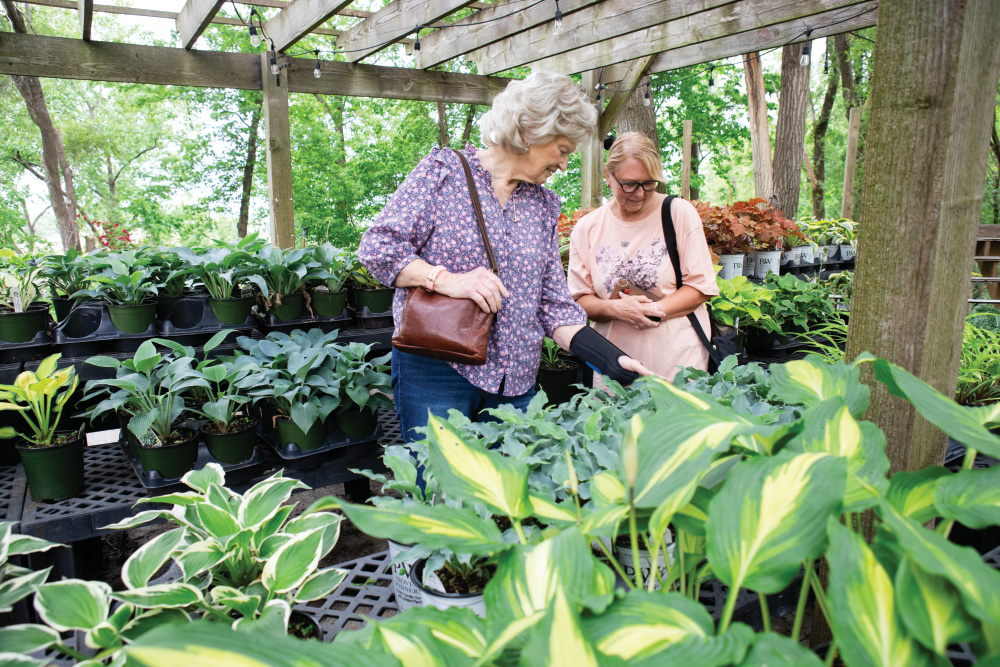
Sowing Success
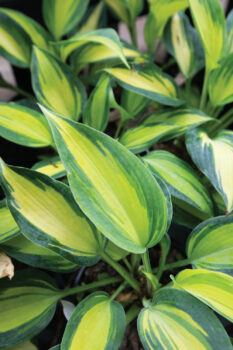
Hostas on the Bluff carries a multitude of varieties, except for pure white hostas because they don’t fare well in the southern Illinois summer.
And while the mature trees on the Kniffin property provide the ideal shade hostas love, there’s hope for hostas in a sunny yard, but placement is key.
“A majority of hostas can handle a decent amount of morning sun,” Black says. “It’s the hot afternoon sun that gets them.”
Guacamole, Ambrosia, Fragrant Blue and Grandiflora are good varieties for sunny spots. A bonus, these types of hostas that can handle more sun also tend to have fragrant flowers.
The Kniffins tell people hostas, in general, are a great plant for those who think they can’t garden.
“Hostas are really hard to kill,” Erica says. “They do prefer a soil that’s fairly well drained with lots of organics, but they’re pretty forgiving. Hostas are a great plant for anybody, from the beginner to the experienced person who has been gardening for years and years.”
See more: The Farmacy Farmstand – Just What the Farmer Ordered
Beauty on the Bluff
Living on a property with views of the St. Louis skyline and surrounded by cascades of hostas, the Kniffins were told repeatedly they had the perfect setting for weddings. After hosting a close friend’s wedding, they found themselves holding special events such as sunset yoga sessions, birthdays, anniversaries, baby showers and other small weddings.
“We hope to grow and add more of these,” says Erica, who notes they also host gardening workshops and guest speakers.
Farm
Q&A With Klein’s Farm & Garden Market Owner
Third-generation farmer Matt Klein runs Klein’s Farm & Garden Market with his family, growing a variety of vegetables and flowers from seed.
What tips do you have for repelling deer? Deer love hostas. Some people have good luck with Liquid Fence animal repellent; others don’t. We have motion-activated sprinklers, which help a lot, plus your plants get a little water, too. Do I have to split, or can I grow hostas from seeds? You can grow a hosta from seed, but you aren’t guaranteed the variety because they cross-pollinate. We grow from seed to see if cross-pollination creates something unique and special. However, for the regular gardener, it’s best to get plants already in pots or from someone who is dividing their hostas. When is the best time to split hostas? We generally recommend early spring when they haven’t leafed out yet. It’s easier to see what you are doing, but honestly, any time of the growing season. We recommend you do it before mid-September. Are hostas edible? From what we’ve researched, the shoot is edible, so try a taste first thing in spring. Hostas are related to asparagus, so it makes sense to treat hostas the same way in cooking. But we haven’t been quite brave enough to try them.Q&A with the Hosta Experts
I just saw a web advertisement for big exotic colored hosta SEEDS.
Is this a scam or can you pick a color and grow from seeds?
Awaiting your advice.
Thank you.
Is it handicap assessable?
Hi Sharon, you’ll need to reach out to Hostas on the Bluff directly to find out. You can call them at
618.680.0288, email support@hostasonthebluff.com or visit hostasonthebluff.com. Hope this helps!