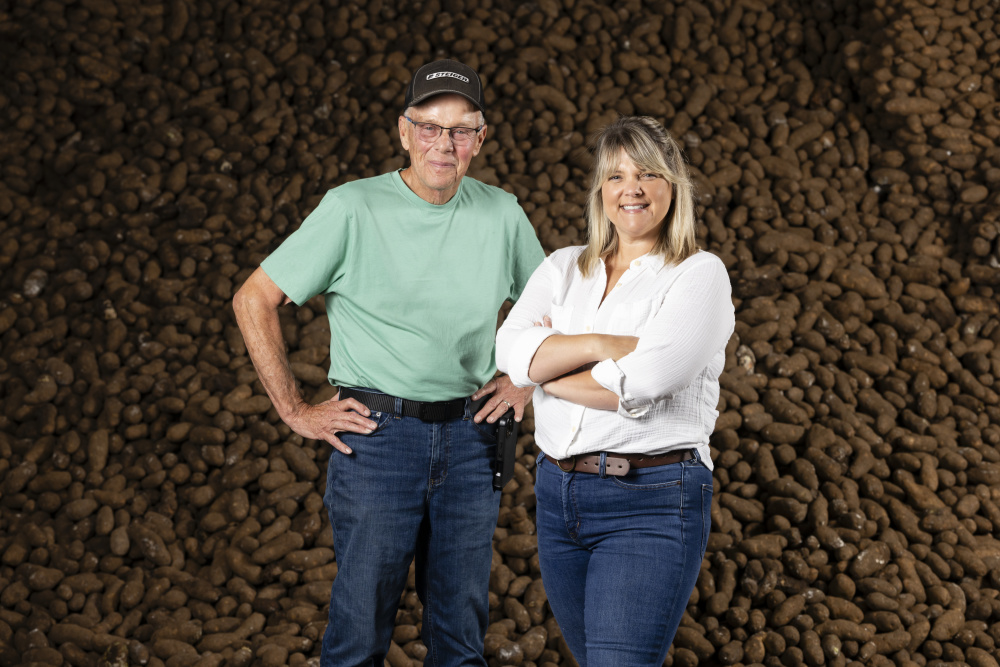
Like many farms in Illinois, Neumiller Farms grows the state’s top crops, corn and soybeans, along with green beans and other produce. But the potato reigns supreme for this family farm, which plants about 3,000 acres of potatoes each year. A significant portion of their harvest becomes potato chips for major companies such as Frito-Lay.
“Potatoes are not a commodity where you just take them down to your local co-op after harvest,” explains Katie Neumiller-Floming, who serves as the farm’s operations manager. “There are too many inputs, so everything we grow is contracted.”
See more: Hostas on the Bluff Grows Many Different Types of Hostas (VIDEO)
A Tuber Tradition
The Neumiller family traces its potato-growing origins to before they made their way to America, let alone Illinois.
“Our farming history goes back to my great-grandfather, who lived in a German community in Russia,” says Neumiller-Floming. “He fled during the Russian Revolution. Eventually, he made it to Canada before settling in Colorado, but all the while, he was growing potatoes. They have always been in our family one way or the other.”
The family’s long-standing relationship with Frito-Lay precedes the brand itself.
“My grandfather, Fred Neumiller, started selling to Red Dot on a handshake in the 1950s,” Neumiller-Floming says. “Red Dot and other companies merged to become Frito-Lay, and we’ve had a relationship with them for more than 70 years.”
The expansion of Neumiller Farms to Illinois can be traced to her father, Tom. After college, Tom returned to his family’s Wisconsin farm. One day, Fred asked him to travel to northern Illinois to collect payment from a farmer who’d purchased seed potatoes from the family.
“My dad never did get the money, but he did get to see some really nice pockets of sandy soil around Savanna,” Neumiller-Floming says. “When he went home to Wisconsin, Dad told my grandfather if we ever got the chance, there was good, sandy ground for potatoes down in Illinois.”
See more: The Fallen Outdoors Helps Illinois Veterans Find Healing and Camaraderie
In 1974, opportunity arrived. Neumiller-Floming’s parents purchased land in Hanover in Jo Daviess County, which they still own today.
“Neumiller Farms in Illinois got its start because my dad couldn’t get the money for the seed potatoes,” laughs Neumiller-Floming, noting the family joke all these years is that it’s good Tom kept his day job as a potato farmer, because he wasn’t a good money collector. “And things just grew from there.”
Over the years, the farm continued to expand, and the family later purchased land down the road in Savanna.
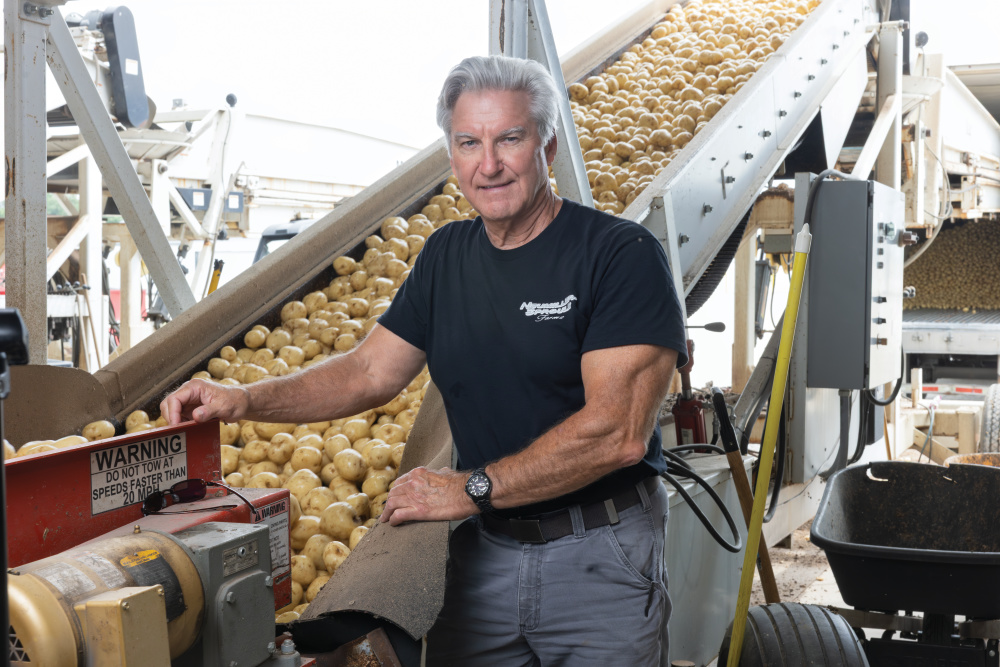
Fred also sowed the seeds of another farm partnership. Decades ago, he ordered holiday gifts from a store in North Dakota. Paul Sproule, a clerk home from college on Christmas break, took Fred’s phone order year after year. They’d talk about farming, Sproule’s classes and other matters.
After college, Sproule went to work for Frito-Lay, with Neumiller Farms among his suppliers. Eventually, Sproule left the company and began farming. In 1998, Sproule and Tom bought land in Bath, now known as the Neumiller-Sproule Farm.
See more: Evergreen Farm Brewing Keeps It “Ale” in the Family
Chipping in Together
These days, the extended Neumiller family works with their 40-plus employees, some of whom have been with the operation for more than 40 years.
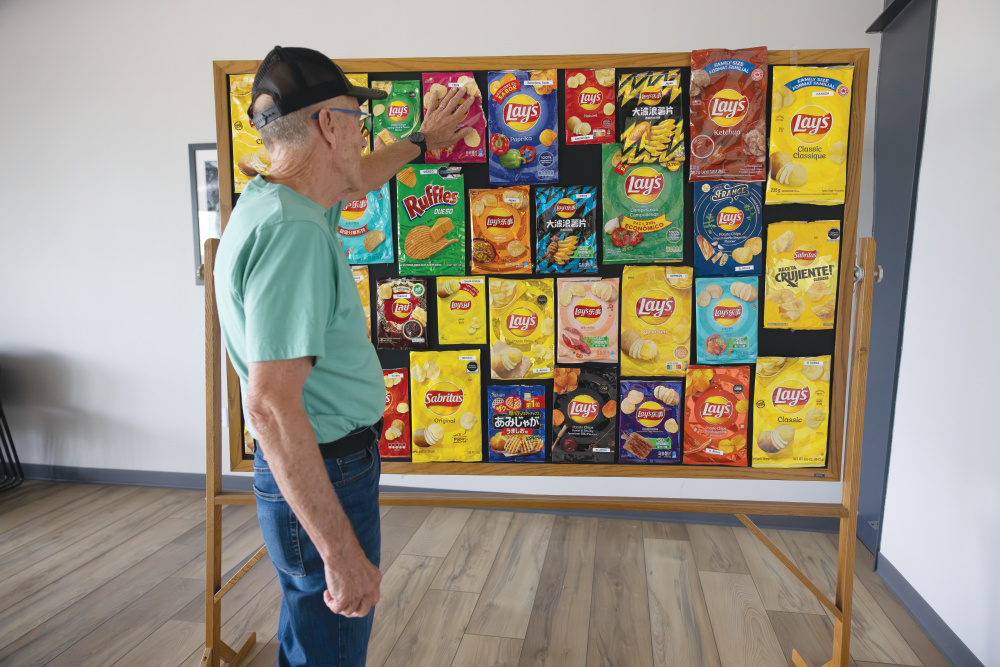
Many of the vintage potato chip cans and boxes in the lobby of their Savanna office date back much longer than that.
“A lot of these cans are from Midwestern companies, and we like to think at some point, maybe my grandfather grew the potatoes that became the chips in these cans,” Neumiller-Floming says.
In fact, Tom and Neumiller-Floming’s story inspired the 2026 Lay’s Super Bowl commercial of the father passing down the family potato farm to his daughter. However, Neumiller-Floming notes that Tom is still very involved in the business, ensuring operations run smoothly.
“He’s the first one here in the mornings and the last one to leave at night,” says Neumiller-Floming, who also manages Neumiller Farms’ trucking operation. “Dad is very involved with our crews, making sure everything gets done the way it should be done.”
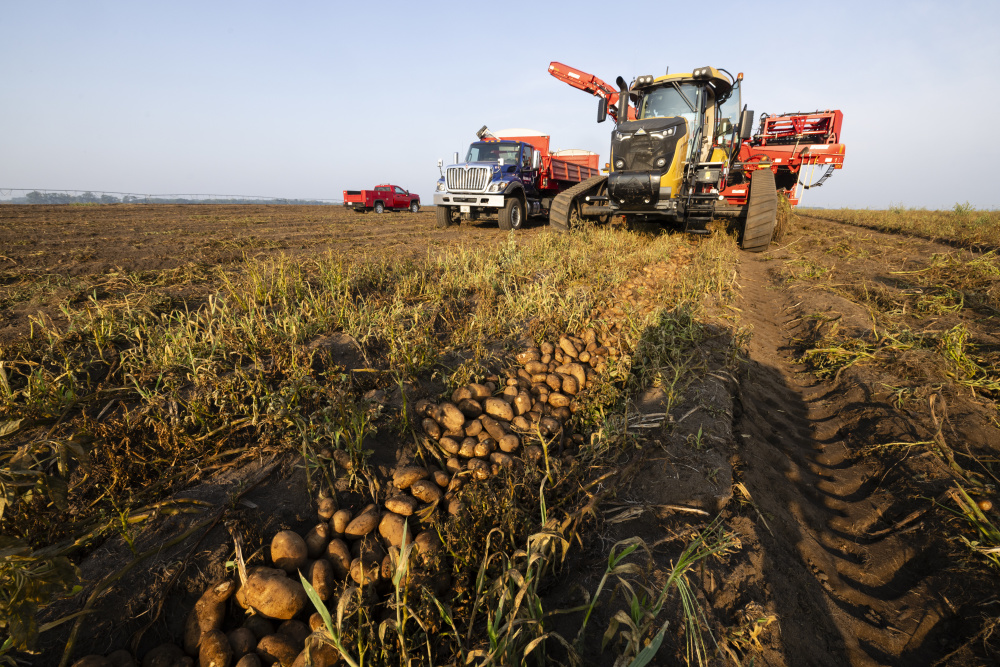
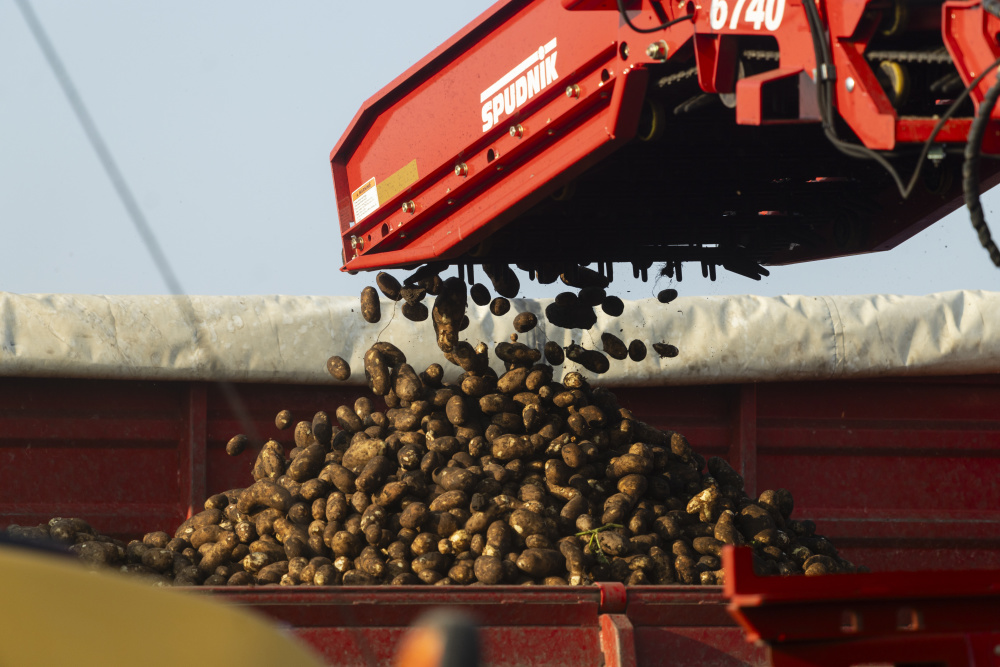
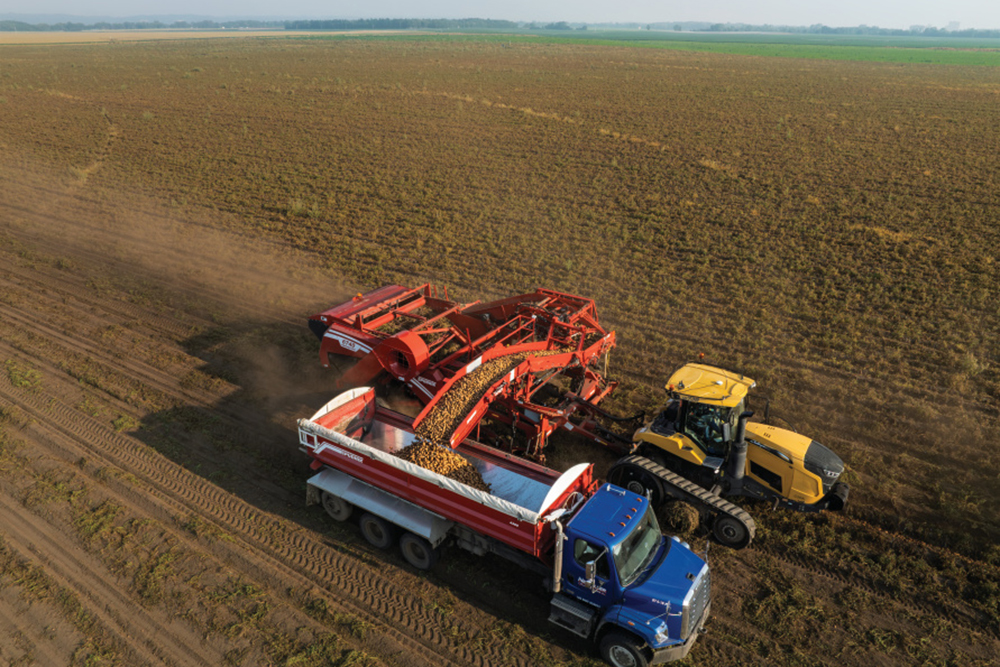
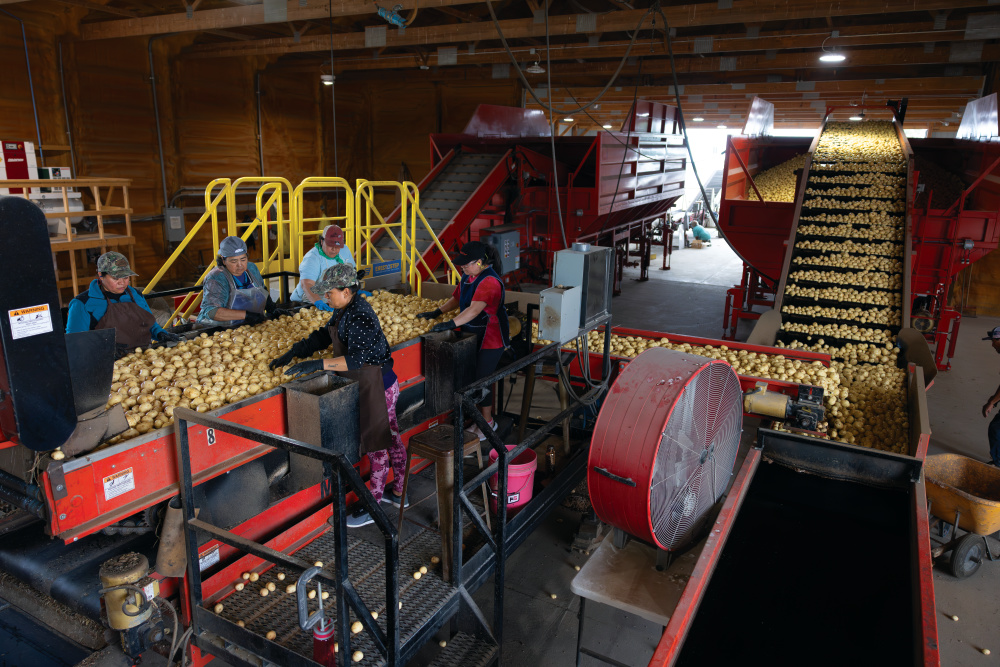
That means typically planting in March, harvesting in July and often continuing until October. After harvest, potatoes are sorted, washed and graded, loaded onto Neumiller Farms’ semitrucks, and shipped to customer processing facilities.
“For those customers less than two hours from us, if we dig a potato at 8 a.m., it could be to our customer by noon, and processed and in a bag by 1 p.m.,” Neumiller-Floming says.
See more: Salger’s Ostrich Products “Meats” a Need With Red Meat Alternative
Spud Sustainability
Down in Bath, Kelsey Bess and Sergio Barragan co-manage the 1,000-acre Neumiller-Sproule Farm. Bess says soil management and potato crop development are her favorite parts of the job.
“Each fall we take soil samples, and in 2025 we did DNA extraction soil samples for the first time, which will tell us what diseases might be present in the soil, if any,” Bess says. “This will help us with pesticide management.”
She explains that from the DNA extraction, they can obtain RNA from leaf tissue samples, which are collected at the same time as petiole (leaf stem) tissue samples. This tells them, for example, if the plant is low in potash – letting them know weeks ahead of traditional methods.
“I’m excited about these new technologies, which should really help improve sustainability,” Bess says.
As another eco-friendly effort, each fall the farm plants cereal rye as a cover crop, which helps keep the topsoil in place and reduces erosion.
“We’re holding those nutrients down in the soil and not letting them blow away in the wind,” Bess says.
Because potatoes thrive in sandy, well-irrigated soil, they use water from the Mahomet Aquifer to irrigate their fields. And they closely monitor for the Colorado potato beetle, a threat not seen on the farm but one they remain vigilant against.
“I’m proud to be a woman in agriculture,” says Bess, a University of Illinois graduate. “Ensuring quality potatoes are shipped to the processing plant, along with having a part in food safety, brings me joy.”
Focusing on sustainability extends to the Savanna farm as well.
“Our goal is to protect the land so it’s productive for the next generation,” Neumiller-Floming says. “We want to do a good job of protecting it.”
To learn more about Neumiller Farms, visit neumillerfarms.com.
Farm
A Place to Grow: Navarro Farm Nurtures Capabilities for People of All Abilities
More than 600 budding farmers have flourished at Navarro Farm, an inclusive homestead in Frankfort offering ag opportunities for all.