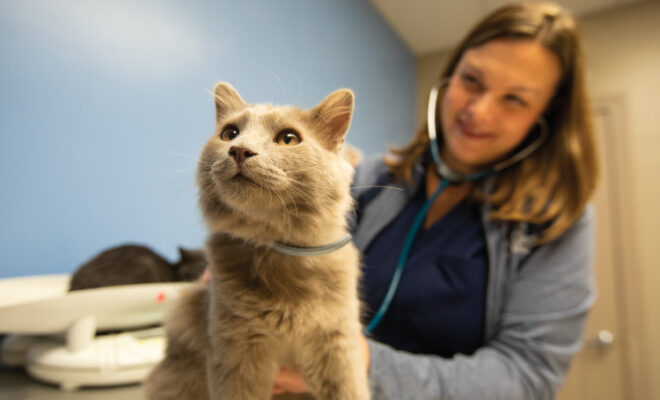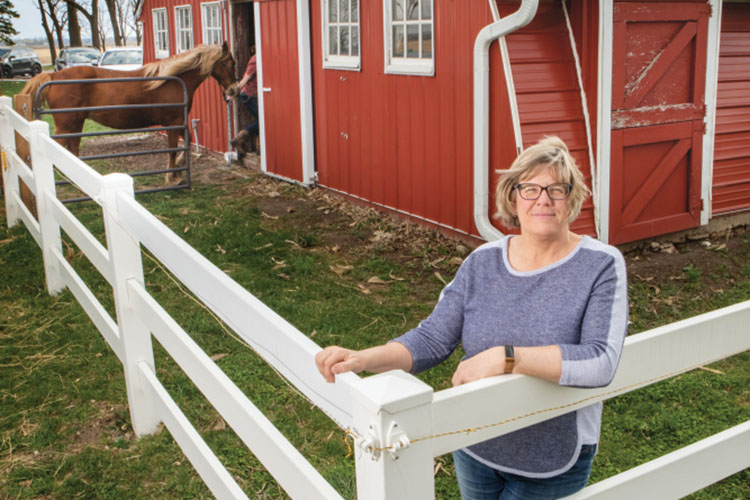
By night, Janet McCabe cares for intensive care patients at Northwestern Medicine Palos Health in the Chicago suburbs. By day, McCabe bales hay on the Orland Park-area farm she runs with her husband, Joe. At first glance, nursing and farming might not have much in common, but McCabe says her two worlds crisscross more often than you might think.
The Cook County Farm Bureau president talked with Partners about the connections between nursing and farming, the challenges of raising food, feed and fuel in the state’s most populous county and why she won’t run the combine, the machinery used to harvest her corn and soybeans.
What type of farm do you have?
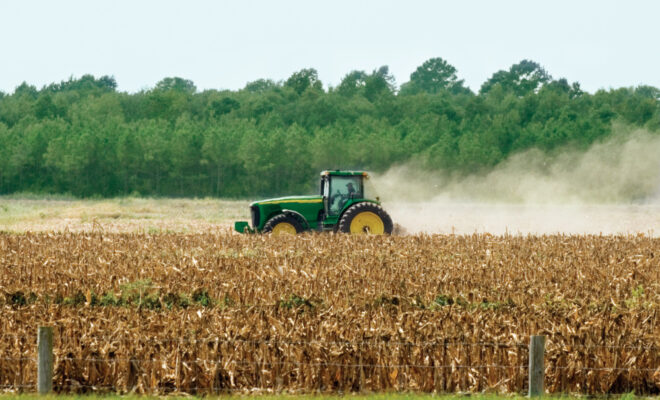
We have a row crop farm of about 400 acres in soybeans, corn and wheat, and we grow about 100 acres of hay, mixed grass and alfalfa that predominantly goes to horse owners or stables.
What are the biggest challenges of farming in proximity to the third-largest city in the country?
People feel the hayfields are an off-road dirt track just for them, so we have (uninvited) four-wheelers and dirt bikes. This summer, someone cut a path for their dirt bike routes. One of our hayfields backs up to houses, and a guy mowed down some of our hay, so his kids had a place to play soccer.
How do you handle these interactions with people so far removed from agriculture they don’t distinguish hay from native grasses or weeds?
With the guy who cut down our hay for the soccer field, you try and let them know that’s part of your livelihood. But we’ve also had some really nice interactions with people. One of our fields is in the middle of Orland Park’s business district. My husband did a whole tutorial once explaining the combine for one guy, who was just fascinated. There’s a fairly new subdivision that backs up to another of our fields, and one woman was very worried about what we sprayed on our crops. Joe asked them if they had a lawn service, and when they said “yes,” Joe explained what their service sprays on the lawn is pretty much the same as we spray on our fields. There are opportunities to explain what you are doing and why you are doing it.
See more: Illinois Farm Families Program Helps Connect Consumers to Farmers
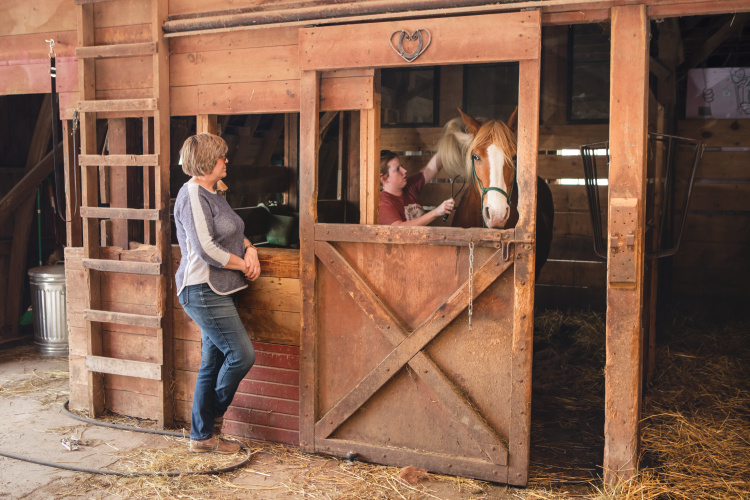
How do your two worlds of health care and farming connect?
While I’m taking care of a patient, I say, “We farm,” if it seems pertinent to the conversation. People are always amazed, and it seems everyone has a fond story about a grandparent’s farm. Another time, I had a discussion with one family about organic food. On the other hand, when I was on the Illinois Farm Bureau’s Healthcare Working Group, looking at health insurance for rural families, I brought a perspective of someone who is both a nurse and who has worked as an employee in a large organization for many years, whereas most farmers work for themselves. They are business owners, so they have a very different viewpoint.
What is the allure of farming for you?
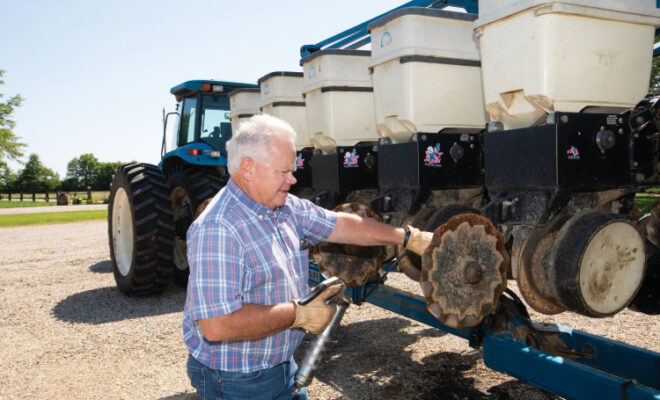
I grew up in Mount Prospect, a northwest Chicago suburb. I knew nothing about ag – I didn’t even cut our grass. I went to Northern Illinois University for nursing, and my (now) husband’s sister was in my dorm, and one weekend he came to visit her. That was my introduction to farming when I met him, and he’s the kind of guy where it was, “Can you just do this one thing [on the farm] for me?” And then that one thing, whatever it was, became my job. He’s always worked an off-farm job, and obviously, you have to bale in the daylight, so that’s partly why I have stayed working nights at the hospital, so I can bale during the day. I like baling, but I am not a “loose dirt” farmer. Joe tried for a long time to get me to disk or cultivate, and it never goes well. I don’t combine. Plus, with him, if you start knowing how to do something, that something becomes your job, too.
See more: Prediction Power on the Farm
How does your farm reflect the Cook County Farm Bureau membership?
We have about 42,000 members, a good portion of whom are associate members (many involved through their insurance with Country Financial). Then, about 758 or so are landowners, or people who have income from farming. Those ag-related members actually are very diverse. We have row crop farmers, a great deal of greenhouse and vegetable growers, equine people, a fair amount of urban farmers, and either hydroponic or vertical farming. A lot of community gardens are actually in the city of Chicago. If you mention “ag,” it’s probably happening somewhere in Cook County.
See more: What It Means To Be Partners