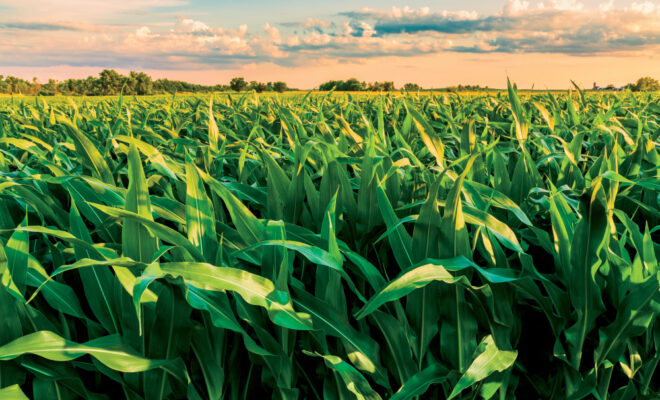
A buttered ear of sweet corn signifies a sure symbol of summer. Yet, corn endures as a staple in our diets and lives every season, even if we don’t see the kernels or the cob.
That’s because we use corn in everything from snacks and cereals to toothpaste and shampoo, from crayons and glue to ethanol and diapers.
See more: Illinois Corn Facts and Stats

Field Corn vs. Sweet Corn
With nearly 11 million acres dedicated to corn production, Illinois ranks as one of the nation’s top producers of corn. Almost 98% of that production consists of field corn, the kind used to feed livestock and produce those snacks and other vital products.
Unlike sweet corn, you won’t find field corn in the produce aisle of your grocery store or at a farm stand. You’ll likely only see it from the road as you drive past many fields across the state, some of which are dotted with seed signs to identify the varieties grown and the seed dealers, many of whom are farmers, who sell them.
Sweet corn and field corn look and feel different as well. Farmers harvest field corn, also known as “dent corn,” when the kernels are just that – dented and hard on the outside and filled with starch on the inside. On the other hand, they harvest sweet corn when the kernels are soft, smooth and glossy on the outside and juicy on the inside.
See more: Field Corn, Sweet Corn & Popcorn: What’s the Difference?

The plants grow differently, too. Field corn usually grows 10 feet high, while sweet corn generally stands about half that tall. At harvest, combines pick and strip field corn from the cob, and farmers and grain elevators store the kernels in grain bins. On the other hand, they harvest sweet corn on the cob for optimum flavor and sell it immediately.
Other varieties of corn, such as popcorn or specialty food-grade corn (for example, white, blue or yellow corn used for tortilla chips), also differ from field and sweet corn and have their own growing characteristics.
See more: Harvest Season Terminology
Fresh From the Field
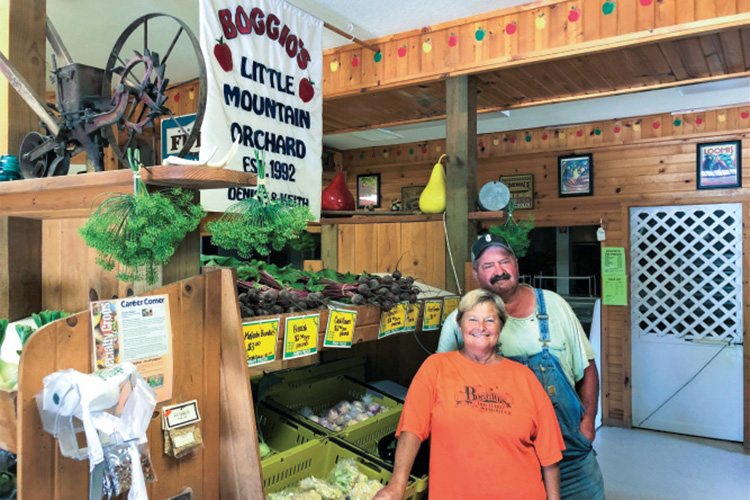
Keith Boggio grows both. A third-generation Putnam County farmer, he grows 200 acres of field corn and soybeans, which farmers often rotate. In addition, he and his wife, Denise, operate Boggio’s Orchard & Produce, which includes 40 acres of sweet corn handpicked and sold there every summer.
If You Go
Boggio’s Orchard & Produce
12087 IL Highway 71, Granville
Call (815) 339-2245 for hours and availability
boggiosorchardandproduce.com
Kristin’s Pumpkin Patch and Corn Maze
6300 Wind Tree Road, Springfield
Open Friday, Saturday and Sunday
kristinspumpkinpatch.com
“We begin to plant corn when the birds start singing,” Boggio says. He explains that planting usually takes place around the third week in March for field corn, although the weather in north-central Illinois can certainly impact when he and his family sow seed.
However, he plants his 40-acre sweet corn field later because it only takes about nine to 12 weeks to mature. “The goal is to be ready to start hand-picking the corn around the Fourth of July and continue until about Labor Day,” he says.
For sweet corn to be available and fresh during those two months, Boggio plants 20 acres starting in early April and another 20 acres beginning in early July. When it’s mature, he handpicks 100 dozen ears an hour or up to an acre a day.
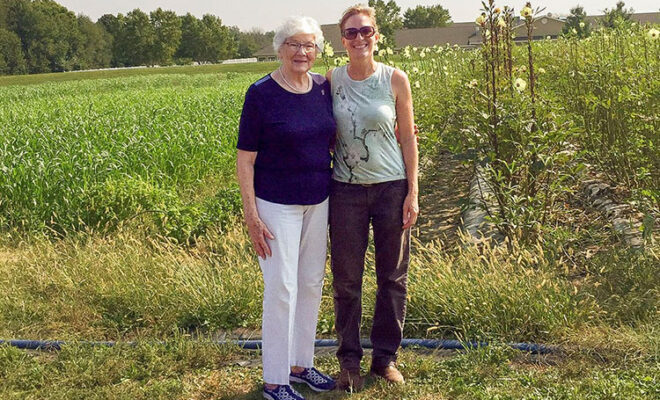
Further south, Norm Diehl grows a much smaller plot of sweet corn on his farm, Kristin’s Pumpkin Patch and Corn Maze, in Sangamon County, using a similar approach and a lot of elbow grease.
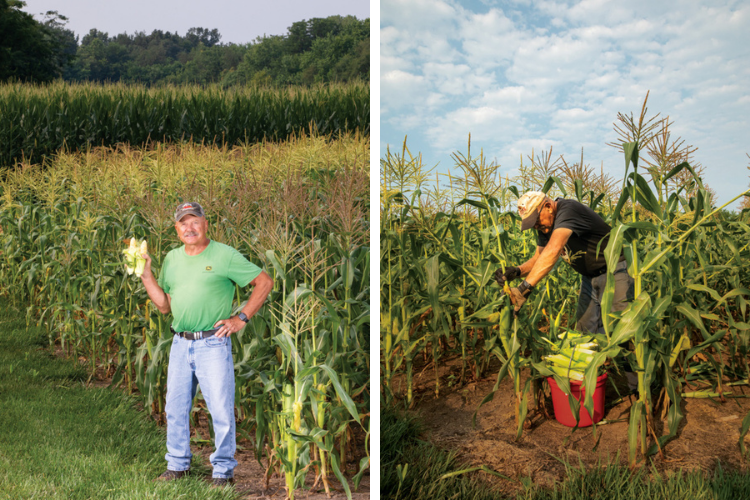
“I grow two different varieties of sweet corn and plant three different times 16 days apart,” Diehl says. “I use a two-row planter to plant 24 rows for 60 feet of corn (12 rows each of early and later maturing varieties). Between each 60 feet, I leave a 6-foot grass strip, so I can irrigate and spray as needed. I use a garden tiller to cultivate and eliminate weeds and might even walk the acre with a ground hoe.”
When it’s time to harvest, Diehl wakes as soon as it’s light enough to see and picks between 60 and 80 dozen ears to sell at the roadside stand on his property that day. He says the corn sells out quickly.
“My customers tell me it’s the sweetest corn you’ll ever eat,” Diehl says.
See more: Nourishing Nutrients: How Farmers Manage Soil Health to Grow Better Crops
Sweet as Can Be
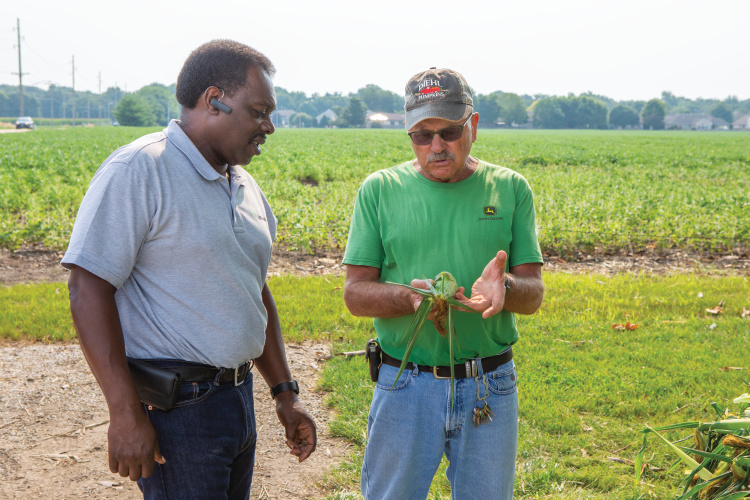
The customers’ compliments for Illinois sweet corn don’t surprise Talon Becker. The University of Illinois Extension commercial agriculture educator grows a small sweet corn breeding nursery at the university’s demonstration farm in Franklin County in the southern part of the state.
“Sweet corn has been developed to what seems to be almost the upper limit of its sweetness,” says Becker, who has a background in plant breeding and genetics. “As you increase sugar content, you generally decrease germination rates. The strategy I am using in my small sweet corn nursery is to first select plants that grow well in our climate and then think about improving edibility and sweetness characteristics in later generations.”
Good growth begins with a warm, moist – not wet – seedbed allowing the seed to germinate and grow quickly, so disease doesn’t set in. This helps ensure a healthy plant that will produce a well-formed and flavorful ear.
“When a customer shucks a fresh ear of corn, they expect to see plump, moist kernels and to enjoy a sweet juicy taste, and that’s what we work to deliver,” Diehl says.
Learn more about Illinois-grown corn in this Partners podcast:
Listen to “Here Comes the Corn” on Spreaker.
Managing Maize

At Boggio’s Orchard & Produce in Granville, not only can customers pick out fresh sweet corn, delicious apples and plump pumpkins, they can also pick up a prize for successfully navigating the farm’s 5-acre corn maze.
The maze has long been a favorite activity for children and families since opening in 1992. Visitors search for hidden stamps through twists, turns and dead ends, making them eligible to win a cash prize.
To turn the field into a maze, Keith plants the 5-acre plot with field corn in June. Then his wife, Denise, creates an illustration by hand.
“We have FS come out and scan the photo into the GPS, hook it up to their zero-turn radius mower and mow the corn to match the drawing,” Keith says. “We mow two more times to create the maze, which opens the first weekend after Labor Day.”
While many of the mazes have had a Halloween theme, last year Denise created an illustration honoring the work of nurses.