If you ask Sara Lipe about her favorite Christmas gift, she’ll take you back to 2006.
“My mom gave each of her kids and grandkids a manila envelope and there was a deed inside,” she recalls. “I got the orchard.”
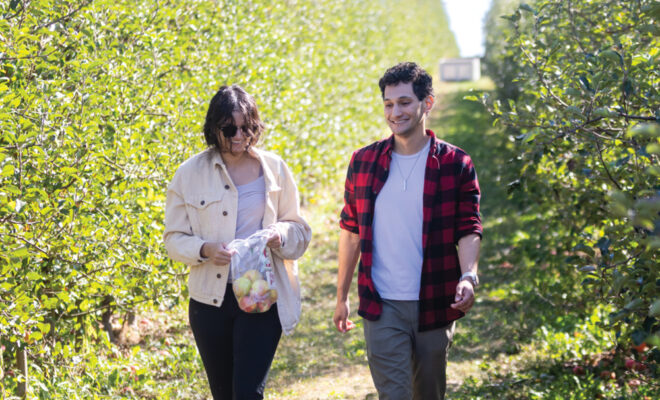
The 100-acre orchard in Carbondale, established in the 1880s by Lipe’s great-grandparents, grows a variety of fruits, vegetables and flowers.
While Lipe spends most days tending to the orchard, she didn’t always spend her workday in the trees. Growing up, Lipe wanted to be a nurse. After seeing her dad sick with kidney stones, she wanted to help others.
By the time college came around, she found herself graduating with an accounting degree from Southern Illinois University. She didn’t stop there. Lipe also holds two master’s degrees — one in education and an MBA from Washington University in St. Louis.
“I was meeting with a career counselor, and she pointed out how I really love the farm,” she says.
Lipe loved her family’s deep orchard roots, but never thought she’d take over the farm. She told her counselor that her brothers would.
“’Well, why not you?’” Lipe’s counselor asked.
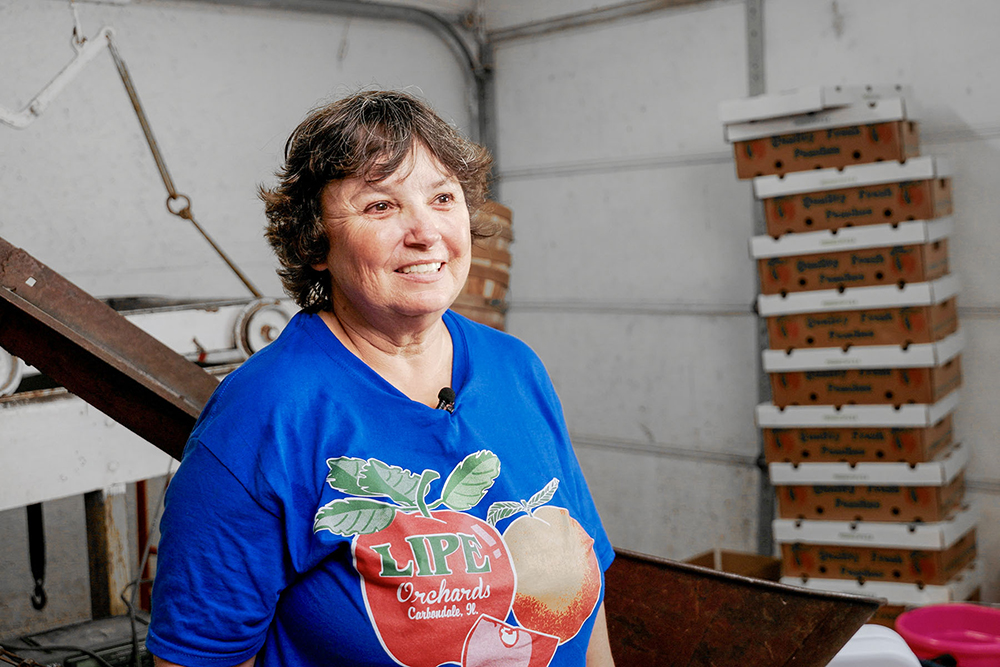
That question gave Lipe the push to let her parents know she wanted to be involved in the orchard.
“They said not yet,” she says. Luckily, it didn’t mean no. “It just meant not yet.”
Lipe left corporate America and worked on the farm for about five years. Then, following her father’s death, her mother divided up the farm. That’s when Lipe opened her most memorable Christmas gift. Her sister, Laura, had received the deed to the nearby market.
“We collaborate on what to grow and what our customers want,” she says.
Lipe enjoys reflecting on the family’s deep roots of the orchard.
“I take a lot of inspiration from the previous generations who have already farmed it,” she says. “It’s really cool to be spraying or bushing on this property and thinking ‘oh, this is where my dad and grandfather and great-grandfather also worked the ground and made their living.’”
Growing up, Lipe spent more of her time helping out at the market.
“I didn’t really have a lot of exposure to the farm, to the orchards. I worked in the gardens, especially helping plant seeds,” she says. “I was the lowest to the ground so I got that job.”
So, inheriting the orchard came with challenges. She attended horticulture conferences, specialty growers conferences and summer field days to immerse herself in the sector. But nothing could have prepared her for her first year’s crop.
“All the fruit was killed,” she says.
Illinois experienced a hard freeze in April 2007, leaving Lipe without a peach or apple crop. Thankfully, Lipe focused on the hard work of her ancestors to forge on.
She began raising flowers, starting with zinnias, as well as chipping wood that had been pruned from the fruit trees to sell as grilling wood.
“My dad would always say, ‘there’s more to life than the pursuit of $1,’” she says.
Even more than running a profitable business, Lipe is setting an example for women who want to run their own farm operation.
“It didn’t mean much to me at first because the plants don’t know who’s running the farm,” she says. “I got my eyes open when I went to my first horticulture conference and some of the other growers had heard that I own the farm and were asking me about it – asking me about my brother. I think in the back of their minds they wanted to know why he didn’t get it instead of me, but they were too polite to ask.”
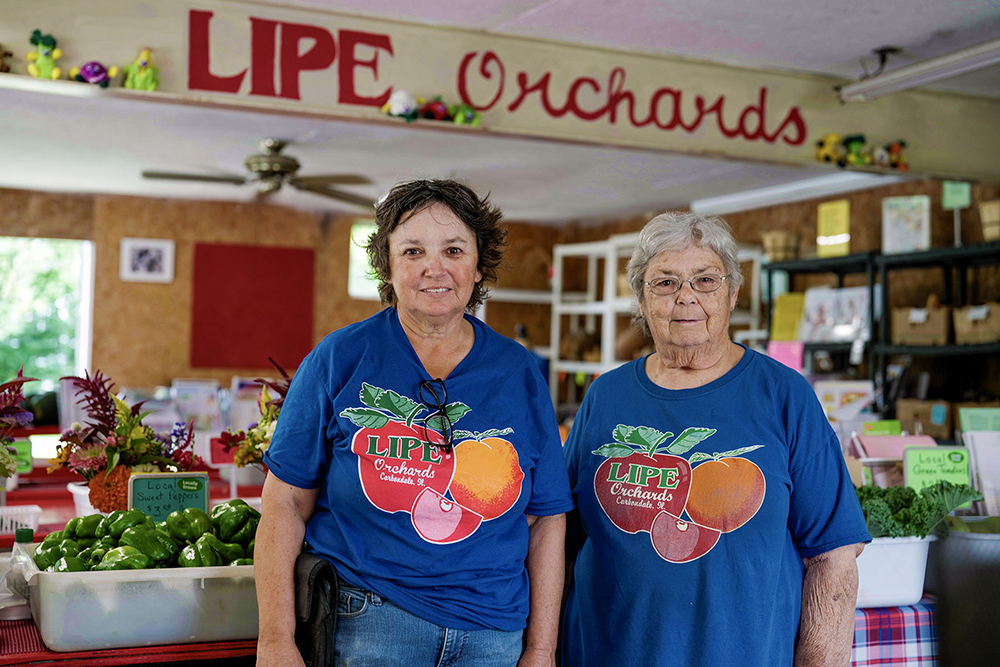
Lipe knows that her and her sister’s situations are unique. Neither are married.
“There aren’t any men in the background doing the heavy lifting,” she says. “I don’t mean anything against my mom, grandmother or great-grandmother. My male ancestors wouldn’t have made it without my female ancestors and all of their contributions to the farm.”
But Lipe says she doesn’t know any other women who grow fruit and run their own farm unless they have a husband. And she uses her position to elevate other women.
“I taught them both how to use a weed eater and drive a manual transmission pickup,” she says of her two female employees. “One learned to drive a tractor this year. I also try to teach them about conservation, stewardship and economics.”
As Lipe Orchards continues its 139-year legacy, Lipe hopes to embody the hard work and perseverance of her ancestors to provide specialty crops and flowers for southern Illinoisans.
This content is part of the Partners 2023 Cultivating Our Communities series, a collaboration among Lt. Gov. Juliana Stratton, Illinois Farm Bureau and the Illinois Specialty Growers Association. It strives to raise awareness of Illinois’ diverse farmers, farms, and the food, animal feed and fuel they produce.