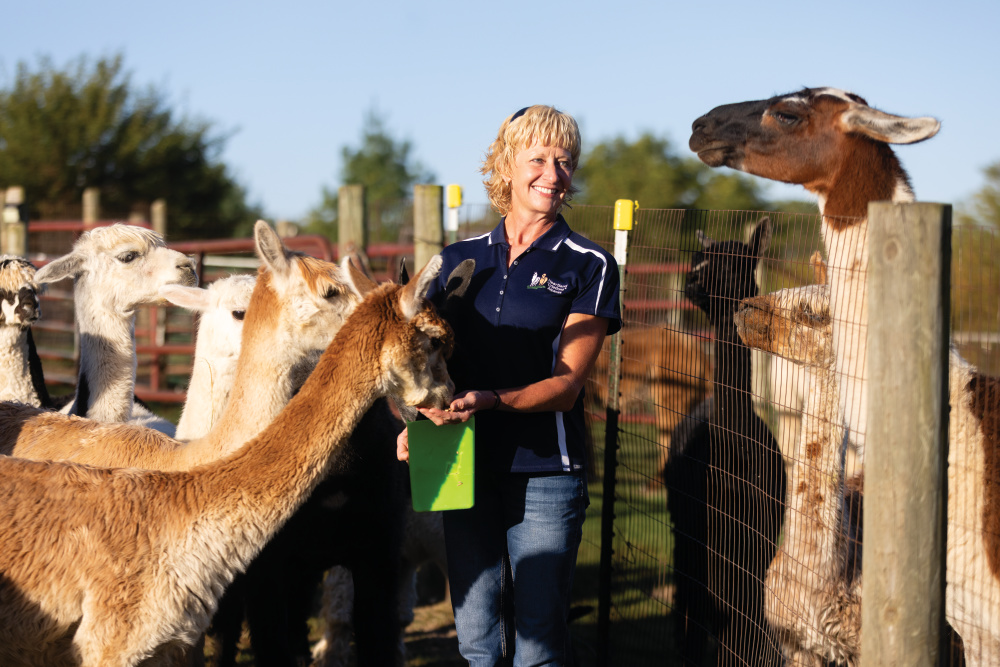
Twenty-five years ago, when Kathy Albert went looking for livestock to raise on her dream farm, she opted for the more exotic option of alpacas. After all, unusual animals were part of her life from the very start.
“My dad is an avian and exotic vet specializing in big cats. I grew up thinking that walking a cougar on a leash was a normal activity,” says Albert with a laugh. “Animals come first in my life. That’s the way I was raised.”
Following in her father’s footsteps, Albert enrolled as a pre-vet student at Illinois State University but graduated as a teacher instead.
“I love learning and sharing knowledge,” says Albert, who went on to enjoy an 18-year career as a high school English teacher and principal.
However, throughout her teaching career, she dreamed of life on the farm.
See more: A Place to Grow: Navarro Farm Nurtures Capabilities for People of All Abilities
Teacher’s Pets
The educator’s dream gained ground when she purchased 10 rolling acres in Rio, Illinois, in 2000. As she looked for livestock to share her land, an advertisement for alpacas – an animal native to the Andes mountain region – caught Albert’s eye.
After 18 months of research into the care required by this unusual animal, Albert purchased her first alpaca: a baby girl named Lovesome Lucy, less than 24 hours old.
Boarding the baby at another farm, Albert rolled up her sleeves and began fixing up her farm, building a barn and installing fencing.
Three years later, she brought home Lovesome Lucy and four other alpacas, and Heartland Criations Alpacas LLC was born. “Creations” is intentionally misspelled in the farm name as a play on “cria,” the word for a baby alpaca.
“It was a slow way to start, and my farm will always be a work in progress,” Albert says. “The animals live in the 20-year-old barn, and I live in the 144-year-old house, so that tells you where the priorities are.”
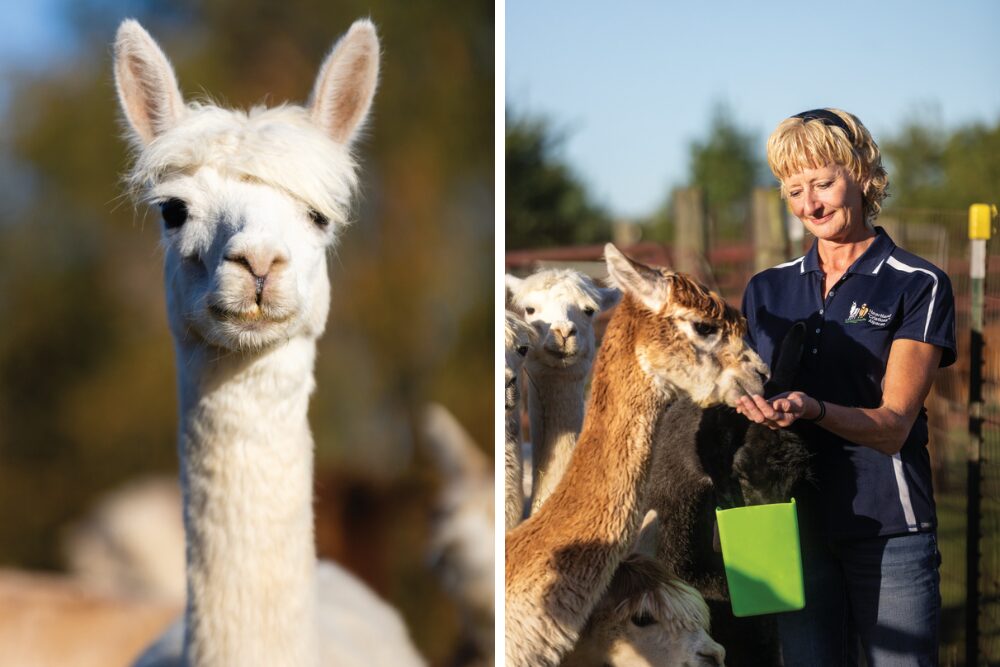
Today, Albert single-handedly cares for a herd of 40 to 50 Suri alpacas and buys and sells show stock and breeding stock.
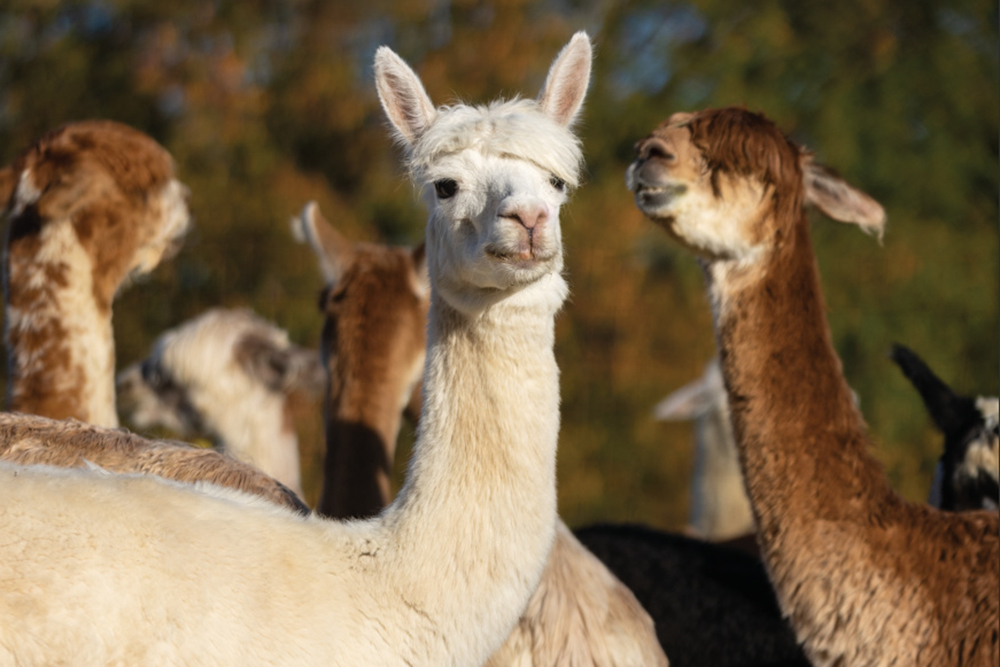
Cartoonishly cute, alpacas are friendly, curious and mild-mannered – each with its own quirks. For example, when one of the alpacas, Consuela, yawns, she sounds a bit like Dory speaking whale in the movie Finding Nemo. Their low-maintenance nature made alpacas especially appealing to Albert.
“Overall, alpacas are very healthy and easy to keep,” Albert says. “Their main care involves regular toenail trims, worming, vaccinations and shearing in the spring.”
Another concern is potential predators, but Albert uses llamas to protect the defenseless creatures from coyotes and other predators.
“Llamas are about 200 pounds heavier than alpacas, and they make excellent guards,” she says. “They watch the perimeter line and sound an alarm call if they deem something to be a predator.”
See more: Freeport Student Garden Sows Solutions for the Community
Weaving Knowledge
If You Go ...
Heartland Criations Alpacas
Location: 2512 Knox Road 500 E., Rio
Website: hcalpacas.com
Open by appointment.
The farm offers fertile ground for Albert’s twin passions: animals and education. She generously shares her hard-earned wisdom with anyone interested in raising alpacas. First and foremost, she advises extensive research before buying an animal to fully understand how to keep alpacas safe, healthy and happy.
“You can’t treat alpacas like other livestock, so it’s very important to have a medical manual specific to alpacas and to get established with an experienced vet before you need one,” she says. “Avoid any breeder who says they are an expert in alpacas because there’s always something new to learn.”
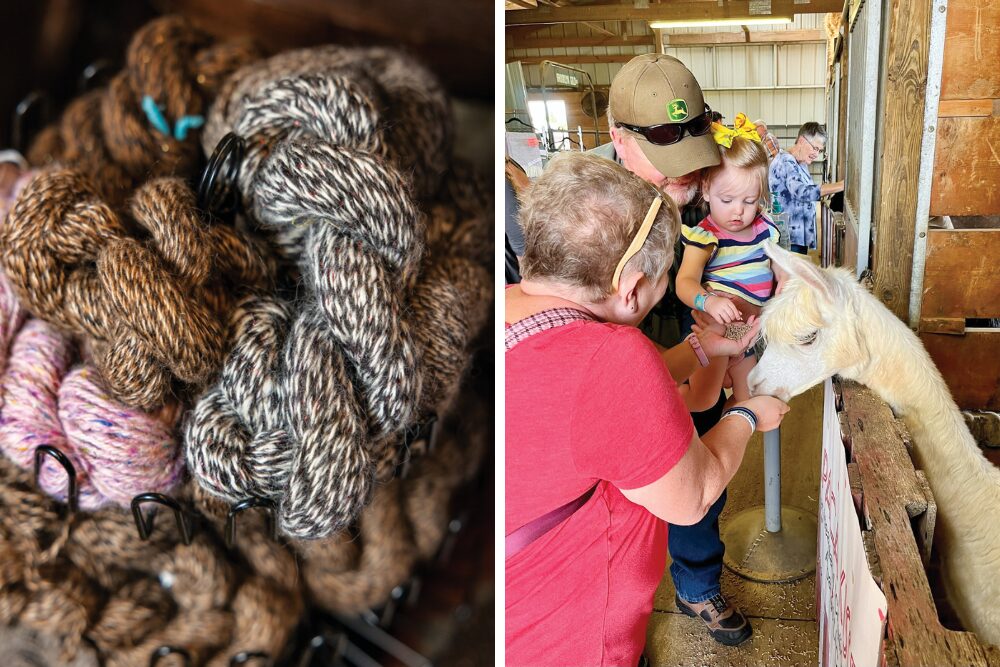
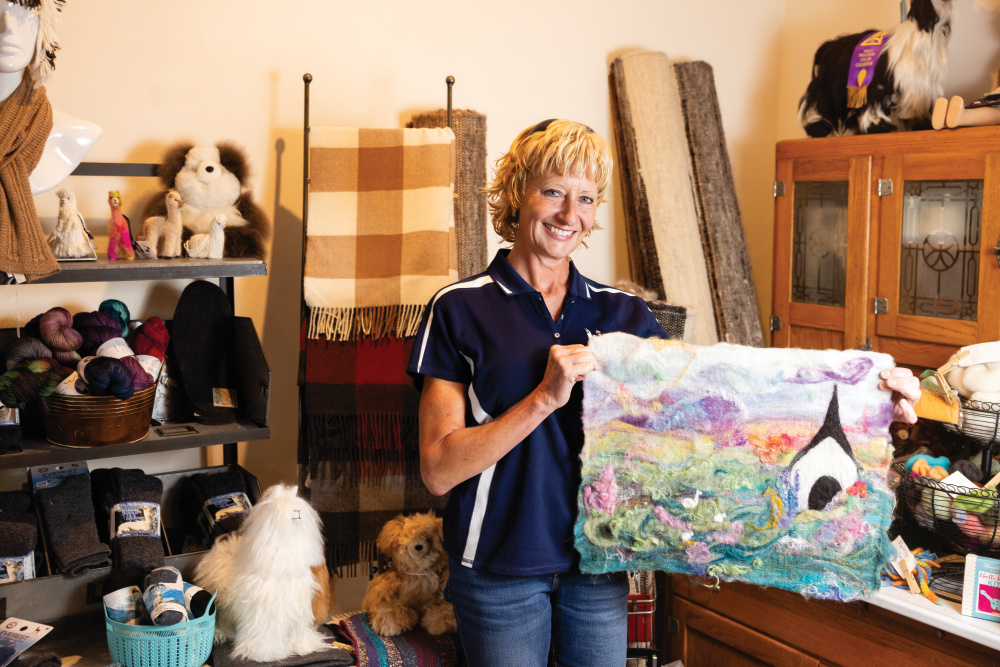
Her own learning journey began with alpaca care and snowballed into fiber processing and art. Albert uses the silky fleece from her Suri alpacas to produce draped items like scarves and shawls. She also works with other companies and cooperatives to offer a variety of yarns, gloves, hats, art and accessories made from alpaca wool at her charming farm store. The socks, however, surpass everything in popularity.
“There is nothing that wears like alpaca socks,” Albert says. “They are fantastic. They are warm and breathable and last forever – as long as you don’t put them in the dryer.”
Always the educator, Albert teaches felting classes, gives farm tours and answers countless questions from thousands of visitors every year. The farm also offers a unique venue for events ranging from weddings to birthday parties.
“I’m still in education every day; my arena has just changed,” Albert says. “Agritourism is a big part of my business, so all of my animals are used to being handled. They are mild-mannered and approachable – and they love people.”
The feeling is mutual and on full display the last weekend in September as the farm opens its doors to the public during National Alpaca Farm Days.
“You can feed and visit the animals and play some farm-themed carnival games,” Albert says. “It’s fun for people of all ages. We have a very good time.”
Throughout the year, the farm also serves as a Harvest Host site, which allows RVers to overnight in a bucolic agricultural setting, in this case, with a view of alpacas in the pasture. For Albert, it’s a view that never grows old.
“The thing I love most is just being around the alpacas,” she says. “My farm is my sanctuary. It’s a beautiful place, and I love sharing it with people.”
See more: Illinois Farm Stays Welcome Visitors to Enjoy a Rural Retreat
Sources: Amazing Facts Home, Oak Crest Alpaca FarmFarm Facts: Alpacas
See more: Chicago’s Wild Blossom Meadery Introduces New Generation to Ancient Elixir