


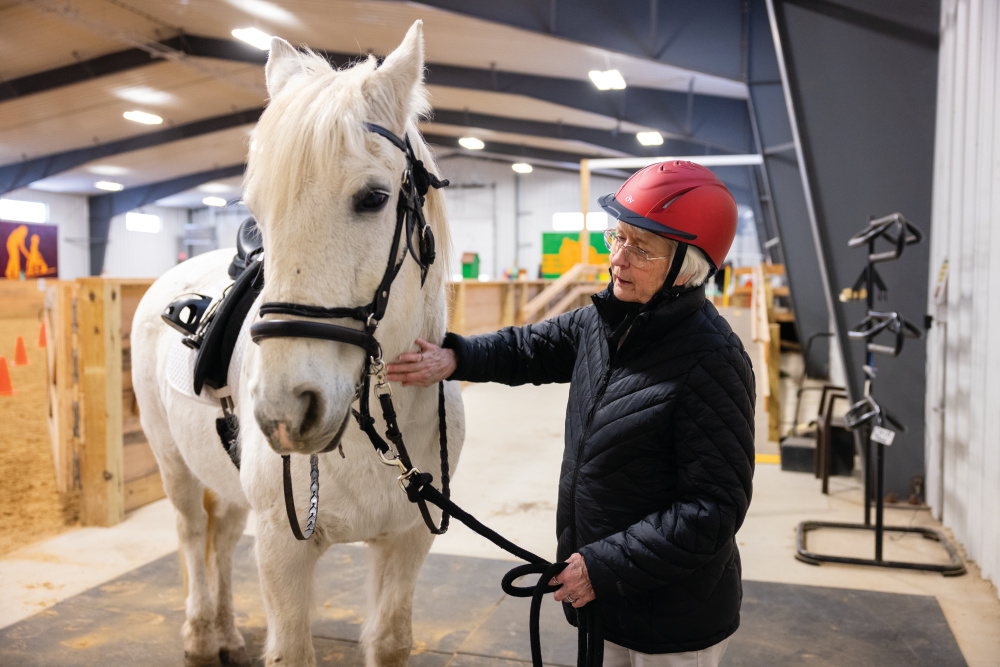
Following the passing of her husband and her own cancer diagnosis, Beverly Auer felt lost. Then, she discovered Main Stay Therapeutic Farm in Richmond, Illinois.
“Once my treatments were finished, my daughter remembered I have always loved horses and looked for a place I could ride,” Auer says. “She found Main Stay, and I will be forever grateful. I had many months when happiness seemed out of reach, but now all that has changed. I’ve learned that missing George doesn’t keep me from being delightfully happy.”
She says riding at 80 years old is more challenging than riding in her 20s, but she looks forward all week to riding Zeke, one of the horses at Main Stay.
“He’s been the best therapy for healing a broken heart,” Auer says.
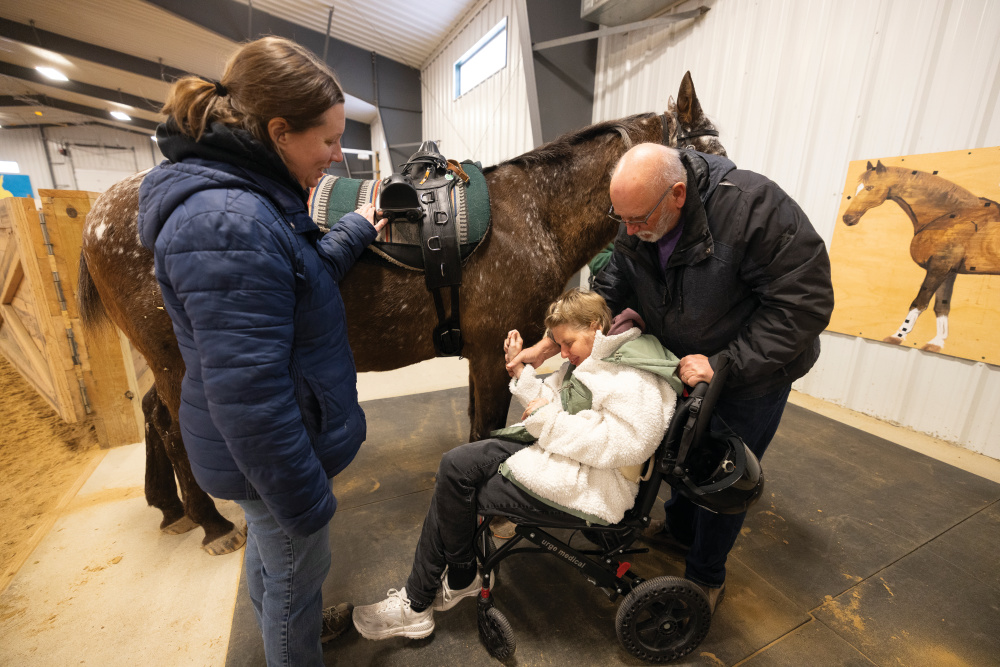
Main Stay caters to people of all ages and ability levels, helping riders work toward their individual goals in a fully accessible environment. Whether developing social and emotional learning skills or building strength and balance atop a horse, anyone who may benefit from adaptive riding can find a home here.
“We really pride ourselves in creating an environment where people feel accepted and that they belong,” says Jean Maraist, director of programming and community engagement and an occupational therapist who has been with the farm for almost 30 years, starting as a volunteer.
See more: Stade’s Farm & Market Offers a Theme Park Experience on an Illinois Farm
Redirecting the Reins
When Sara Foszcz and Sandy Barcus started a boarding stable for horses in Richmond, they hadn’t yet imagined it would become a prominent center for therapeutic horseback riding. Foszcz was a burgeoning equestrian and focused on the horse show world when she founded Main Stay. However, a different calling sparked in her younger years would reshape the stables entirely.
As a teenager recovering from an injury after falling from a horse, Foszcz read a story about therapeutic horseback riding, a new method opening opportunities for those in need of adaptive riding experiences. Years later, after a local therapist reached out to her asking if kids could visit Main Stay, Foszcz was reminded of the benefits and impact therapeutic horseback riding could have. In the 1980s, the farm officially transitioned to an adaptive riding facility and nonprofit.
“The decision to close the boarding and training business was due to totally losing my heart to the kids we were helping,” Foszcz says. “We could see the positive impact immediately. Emotional connections were being made – even with children that typically weren’t responsive in other settings. There really was no choice between the horse show world and this new way of partnering with the horse to help children excel. My heart and all of those involved knew there was no going back.”
Since then, Main Stay has become one of the top accredited adaptive riding centers in the region. Each week, it usually sees 100 individuals, ranging in age from toddlers to seniors.
“Sara was definitely on the forefront of understanding the great partnership that people and horses can have,” Maraist says.
See more: Heartland Criations Alpacas Herds Happiness With Alpacas, Fiber and Farm Fun
Galloping Toward Goals
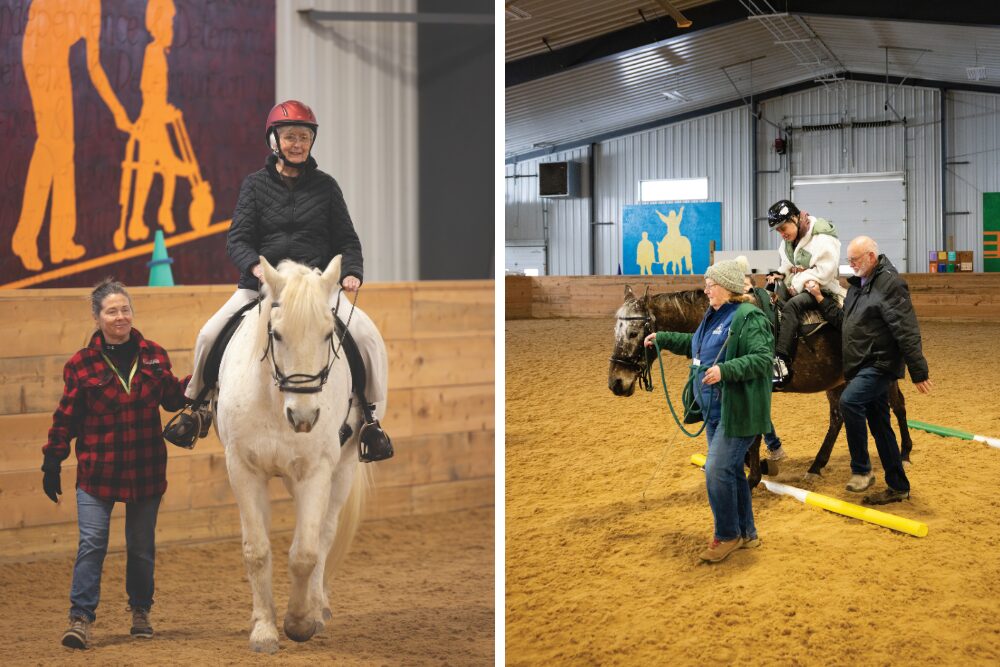
Adaptive riding aims to make horseback riding more accessible to people living with mental and physical disabilities. Their certified therapeutic riding instructors help individuals work with physical, sensory, social and cognitive components to create a meaningful experience for each rider.
“Horses can help people in so many ways,” Maraist says. “Horseback riding is a very motivating and fun activity. For me, adaptive riding is really sort of the full package, because we can do so much in such a short period of time.”
Some Main Stay Therapeutic Farm clients have been coming back for 30 years or more, a testament to the lasting relationships formed at the farm.
“We’re very invested in knowing about our people more than the half hour or 45 minutes that they’re here,” Maraist adds.
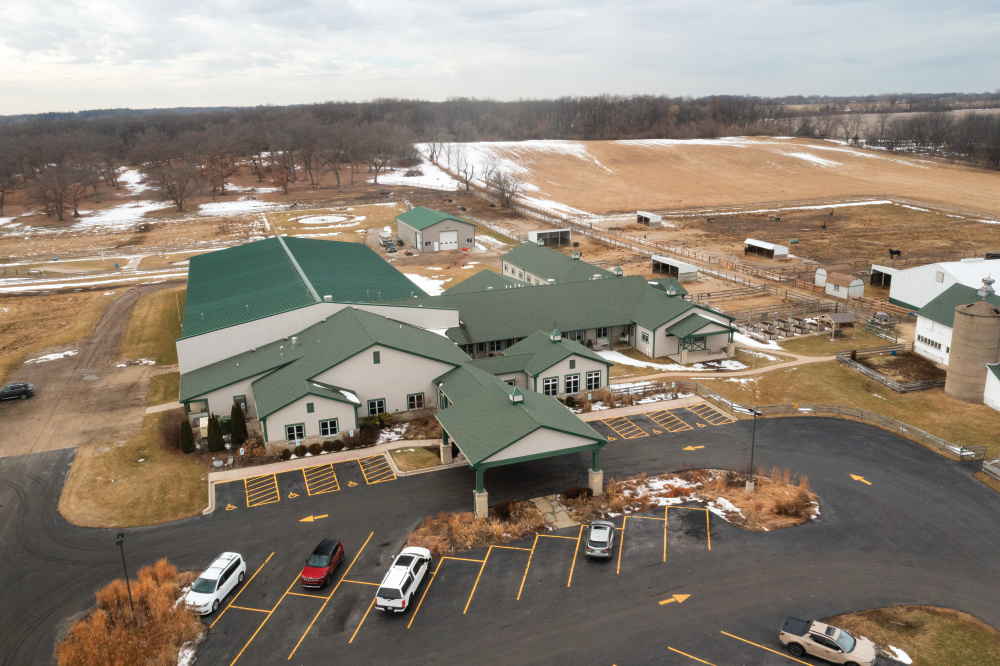
With its 37,000-square-foot covered equine facility, including office and classroom space, Main Stay can operate year-round. ADA-compliant ramps and a wheelchair lift enable people of all abilities to experience adaptive riding. These facilities allowed Main Stay to serve 725 clients in 2025 alone across northern Illinois and southern Wisconsin.
Thanks to a land easement through the Land Conservancy of McHenry County, the property on which the farm operates will be protected in perpetuity.
“We’re very, very, very fortunate, and we totally understand that 99% of the other barns out there in the world don’t have what we have,” Maraist says.
Main Stay is also a premier accredited center through the Professional Association of Therapeutic Horsemanship International, which promotes safe, adaptive riding worldwide. The farm’s horses are carefully chosen and vetted to ensure they are a good fit for the job and, more importantly, that they will enjoy the work.
See more: Freeport Student Garden Sows Solutions for the Community
Helping Hands, Hoofs and Paws
In addition to adaptive riding, Main Stay Therapeutic Farm offers other programs allowing people to experience the benefits of working and learning on a farm.
Through the Equine and Animal-Assisted Learning (EAAL) program, people can play, learn and grow around a range of friendly farm animals. Barn cats, miniature horses, sheep, rabbits and other small animals, including a 14-year-old goat named Jasmine, are all on deck to assist with EAAL. A typical session might include learning about communication, navigating conflict and advocating for oneself, all while supported by some of the 30 animals on the farm.
As part of the EAAL program, Main Stay has developed an adaptive garden where people can pick produce, learn about farming and make “bunny salads” for the farm’s rabbits.
While Main Stay couldn’t operate without its animals, it also couldn’t get by without its staff, some of whom have been on board for nearly 30 years. The farm means just as much to the staff members and volunteers who keep it running as it does to the clients.
“This place is so very special, and the people here are so very special, and it really is an honor to be able to share the stories that are happening around here,” says Randi Murawski, communications manager for Main Stay.
Stories are unfolding each day at the farm, as clients face challenges and meet goals under the patient watch of horses, staff members and volunteers who support them.
“I hope that clients are able to see that they’re capable of more than what they think they are capable of,” Murawski says. “We’ve seen a lot of things happen here at Main Stay where perhaps someone was told that was impossible, but then it became possible.”
To learn more about Main Stay Therapeutic Farm, visit mainstayfarm.org.
See more: A Place to Grow: Navarro Farm Nurtures Capabilities for People of All Abilities


