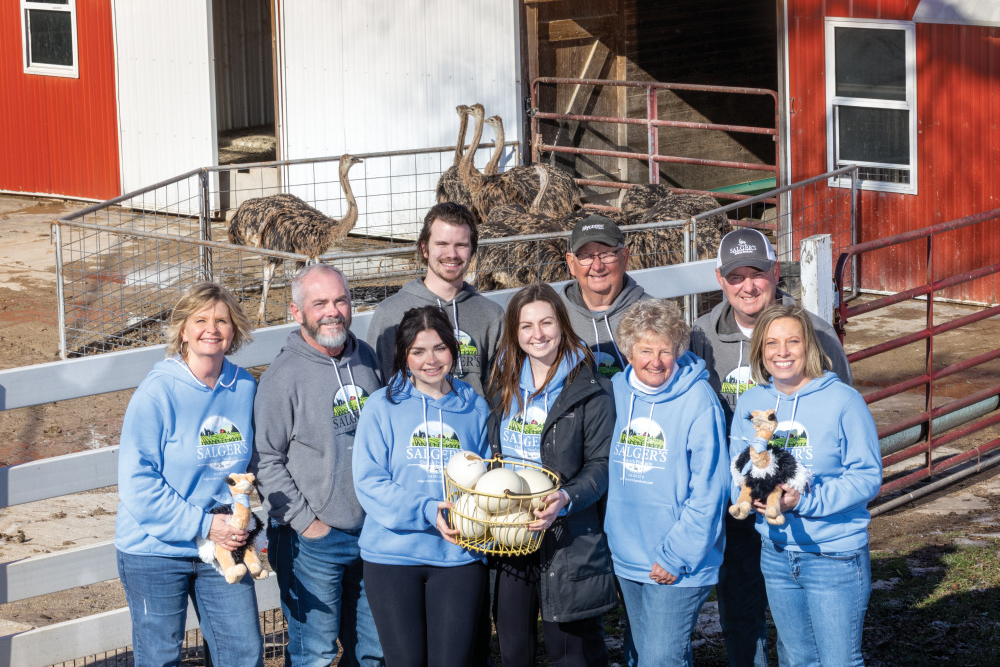
Salger’s Ostrich Products in Illinois offers a red meat alternative, meeting a need within growing market demand.
When people are encouraged to try an unfamiliar meat, the person offering the new protein often says, “It tastes just like chicken.” But Paul Mollet won’t ever say that. He chuckles when he’s asked if ostrich meat tastes like chicken because after all, ostriches are birds.
“Ostrich is closer to beef than any other protein in taste and texture,” says Mollet, who runs Salger’s Ostrich Products near Red Bud with his wife, Erica. “You cook it like beef, and it’s very similar to a lean beef, except it is lower in fat.”
See more: Heartland Criations Alpacas Herds Happiness With Alpacas, Fiber and Farm Fun
Erica and her brother, Nathan, grew up on a farm. Their parents, Kathleen and Fred Salger, entered the ostrich industry after purchasing a neighboring dairy farm at auction in 1992.
That 40 acres wasn’t enough for a large livestock or row crop operation, so Fred Salger began researching viable ideas for the land. He discovered raising ostriches takes a third of the land and water it takes to raise a cattle herd of similar size.
And while both Salger and Kathleen had always raised a few cattle, goats, donkeys, sheep and chickens, they soon discovered ostriches were a big step in a different direction.
Feathers and Family
If You Go ...
Salger’s Ostrich Products
Location: 10102 First Road, Red Bud
Phone: 314-282-5198
Website: salgersostrichproducts.com
Hours: 3 to 7:30 p.m. Mondays and Tuesdays; 8 a.m. to noon Saturdays; Wednesdays through Fridays and Sundays by appointment
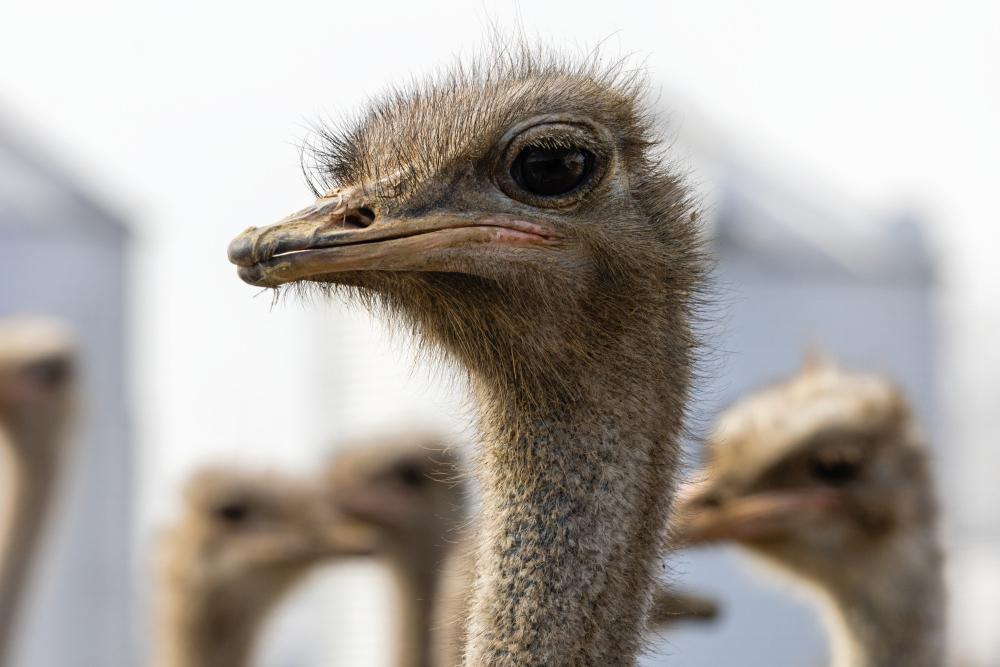
In 1994, Salger started with two birds and an incubator in his basement, gradually acquiring more birds over the years to build a flock.
“Back in the early 1990s, raising ostrich was going to be this big, booming business where everybody was going to get rich,” Salger says. “There were a lot of growing pains in the early years.”
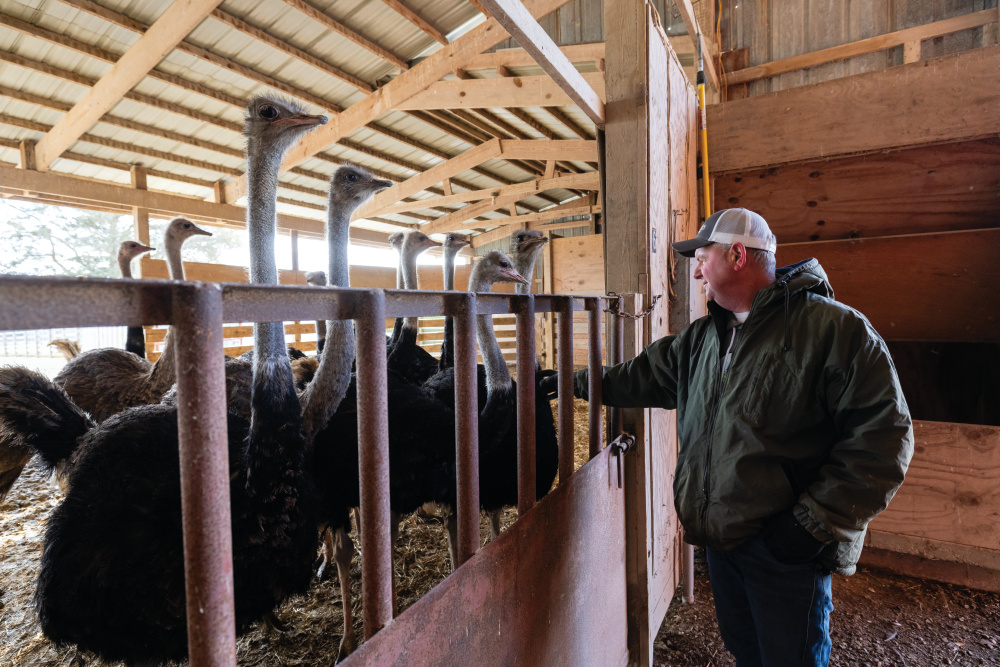
Today, the family business is divided into two divisions: Salger Livestock as the farming side and Salger Ostrich Products as the retail side. Salger, Kathleen, Nathan and his wife, Patty, raise the ostrich flock, numbering about 300 birds on average.
“Nathan, Patty, Fred and Kathleen do all the farming,” Mollet says. “Erica is the primary owner of Salger Ostrich Products, and we run it together after joining the operation in 2019.”
Salger says one of the greatest challenges in raising ostriches is the incubation stage.
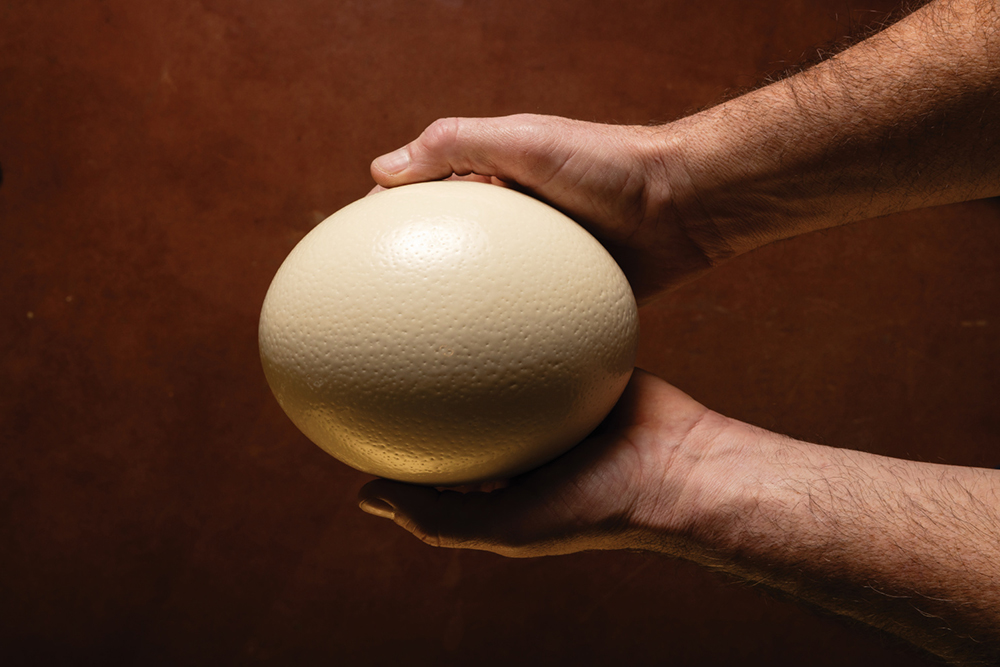
“A hen lays an egg every other day on average during laying season, which typically runs March to early October,” Salger says. “We collect the eggs from the pens every night.”
Early development is very difficult due to many factors that are out of the farmer’s control.
“If an egg gets rained on or is laid in the mud outside of the pen, for example, we’ve learned it’s not worth our time to try to incubate it,” Salger says. “Learning the optimum humidity levels and temperature levels has been one of the toughest things over the years.”
Eggs are placed on a roller tray and rotated for a few days before they are incubated for about 42 days.
“We have a specialized building for our incubation and hatchery with controlled temperatures, humidity levels and sanitary conditions,” Salger says. “Once you get a chick past 10 to 12 weeks, ostriches have great immune systems.”
Chicks weigh approximately 3 pounds once hatched. The ostriches are fed a mixture of alfalfa grass, corn and soybean meal. Salger and Nathan raise all the hay and corn used in the ostrich feed and mix it on-site. They also raise the soybeans that are ground into the soybean meal.
See more: Freeport Student Garden Sows Solutions for the Community
Direct to Consumers
Salger’s Ostrich Products focuses on the sale of meat products. About 90 pounds of meat can be processed from one bird. Ostrich meat is lower in fat than either beef or pork.
“It’s very comparable to beef filet mignon in that there is very little fat,” Mollet says. “There are no bones in the meat unless you get wings.”
And while some consumers purchase ostrich because it carries less fat and cholesterol than beef or pork, the largest market of customers for Salger Ostrich Products is the alpha-gal syndrome community.
Alpha-gal syndrome is a serious, potentially life-threatening allergic condition that can occur after a tick bite. Symptoms typically occur after people consume red meat or are exposed to other products derived from mammals. Even though ostrich meat has the appearance of beef, it is poultry, making it safe for those with alpha-gal syndrome.
“I get calls daily from people around the country who say they’ve just been diagnosed with alpha-gal, and they found us online,” Mollet says. “It’s unbelievable how many people have it. We try to help people learn more and make them aware of what they can eat that we produce. In the seven years I’ve been involved with the business, I’ve learned as much about alpha-gal as I have about ostriches.”
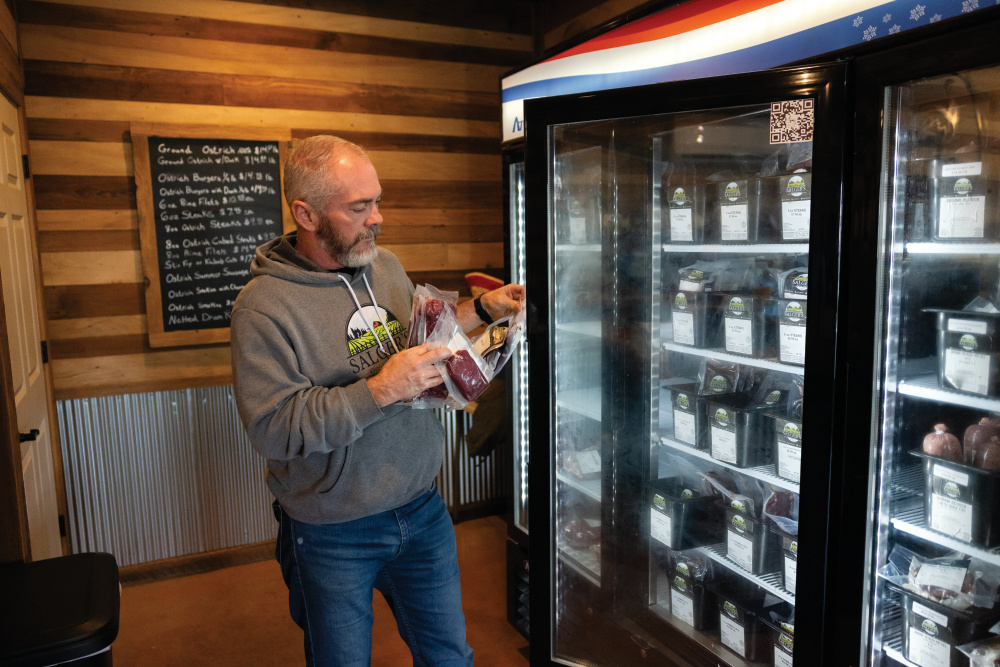
The farm’s offerings include prime-cut filets, roast, ground ostrich, wings, burgers and even ostrich summer sausage.
“We are one of just a few ostrich suppliers that have as many products as we do,” Mollet says.
Local customers can shop at the Farm Store, located in Randolph County, or find Salger Ostrich Products at select farmers markets in the region. Products can also be ordered from the farm website, salgersostrichproducts.com and are shipped nationwide weekly.
“Everything gets to its location within two days no matter where it’s going in the U.S.,” Mollet says.
The farm’s focus is providing fresh, delicious ostrich meat direct from their farm to consumers’ tables.
“We cater to the direct consumer, having the product ready for them to cook at home rather than selling or shipping to meat markets,” Mollet says.
See more: A Place to Grow: Navarro Farm Nurtures Capabilities for People of All Abilities