When European settlers arrived in what’s now America in the 16th and 17th centuries, they stumbled upon many unfamiliar foods, cranberry bogs included. They also discovered cornstalks, pumpkins and wild turkeys. We credit the Pilgrims with having the first Thanksgiving feast – an ode to the country’s bounty and the foundation of our giving thanks.
This season, don’t forget to thank a farmer for the hours of labor put in to feed you, me and a good part of our world. I’m proud to have grown up on an Illinois farm with memories of taking grain to the local elevator each fall. I can even remember my father and uncle getting up from the Thanksgiving table after we finished dinner to finish the harvest. I learned dedication to a job and gratefulness for our land’s abundance from helping on the farm.
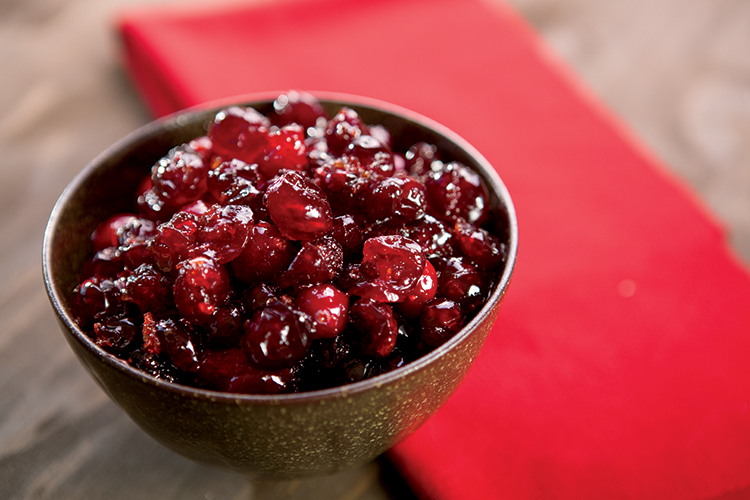
Cranberries, by the way, pack a lot of nutrition – rich in phytonutrients (naturally derived plant compounds), particularly proanthocyanidin antioxidants, essential for all-around wellness. The berries contain numerous substances that may offer protection from tooth cavities, urinary tract infections and inflammatory diseases. This simple Brandied Cranberry Relish recipe features the fruit baked with sugar, brandy and citrus. You can serve it warm or cold in a variety of ways, from a topping for turkey to a dip for crackers and cream cheese.
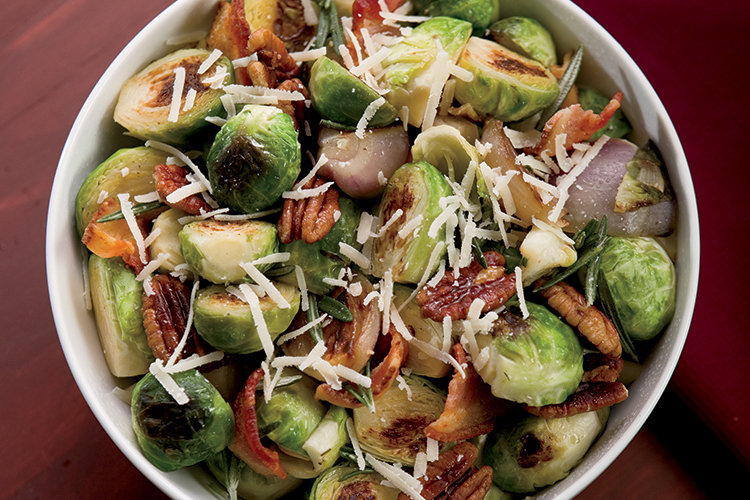
Brussels sprouts look like small leafy green buds that resemble miniature cabbages. The buds – exceptionally rich in protein, dietary fiber, vitamins, minerals and antioxidants – offer protection from vitamin A deficiency, bone loss, iron-deficiency anemia, some cardiovascular diseases, and colon and prostate cancers. Brussels sprouts also serve as an excellent source of vitamin C. Together with other antioxidant vitamins such as vitamin A and E, it helps protect the body by trapping harmful free radicals.
And if anyone turns up their nose, have them try Roasted Brussels Sprouts with Bacon and Pecans. This warm salad gets a savory crunch from bacon and pecans along with wonderful flavors from rosemary and shallots.
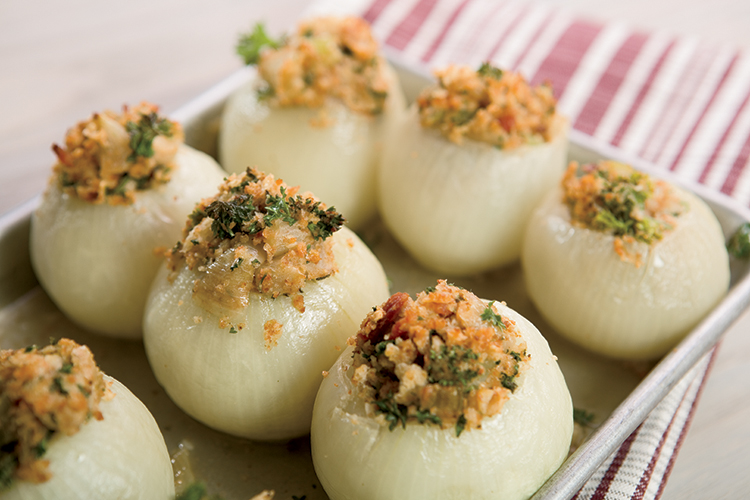
We consider onions, a bulb vegetable, one of the oldest edible food sources known. We use them in an array of recipes and preparations, from salads to gravy and curries. Low in fat, onions contain very few calories (just 40 calories per cup), but a lot of soluble dietary fiber. They contain phytochemical compounds such as allium, which is converted to allicin by an enzymatic reaction when its modified leaves are crushed or cut. Studies have shown these compounds protect from cancers and offer anti-diabetic properties by helping lower blood sugar levels.
In addition to your regular stuffing, you can use breadcrumbs, broth and herbs to fill hollowed-out onions. These Baked Stuffed Onions make for a pretty presentation, too.
As you share your holiday feasts this year – the turkey, mashed potatoes, stuffing, gravy, cranberries, maybe even Brussels sprouts and onions – remember to thank the ones who provided it, some local, some farther away.
We all know it takes many cooks to make the Thanksgiving dinner appear on the table, but it also takes several hard-working farmers to bring us the best food in the world.
Here’s to all the farmers who give it their all – and a few recipes to share around the table.