When we moved to the farm, I found small, scattered heaps of discarded bricks left over from a previous house. What a find! I chipped off the mortar and stacked them in a neat pile using the grid – two bricks north to south, then two bricks east to west. Over the next 40 years, I moved and restacked the pile three times after kids and grandkids built forts with them. I found bringing order to chaos and even the physical nature of the work oddly satisfying.
Previously, I had primarily gardened in pots, plus some tulips in the ground. I soon discovered grass would rush in from the lawn in an attempt to fill in any blank spot along the edge of a new bed. The solution? Sinking some bricks into the soil, making a barrier to slow down the grass. It worked, and it was free.
My first border defined a small plot parallel to the base of a deck. It kept the grass out but failed to keep the English ivy ground cover in. No problem, the mower took care of any spillage into the yard.
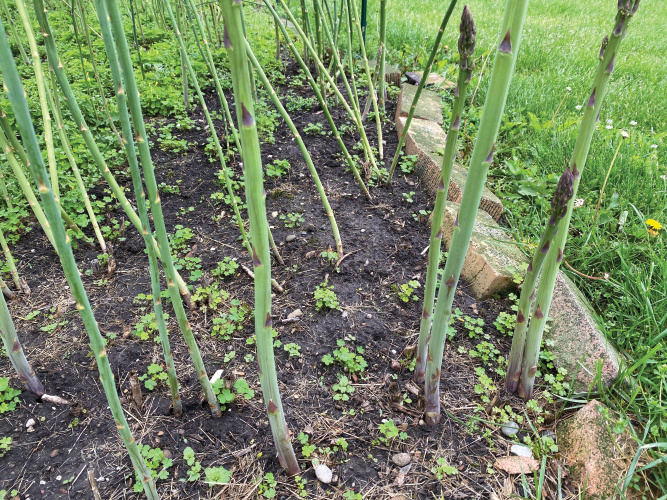
Little by little, I started adding brick borders to many new beds. As the gardens proliferated, the brick pile shrank. After the ivy, I installed a large rectangular bed, 32 feet by 5 feet – half planted with asparagus, which remains today, and half with strawberries. Later came a garden surrounding an old hand pump, planted with daylilies and asters. After 10 years, strawberries need renewal, so I move them to a new bed and planted flowers, subshrubs or shrubs in their vacated spot. The brick borders remain.
Next came brick stepping stones. Years ago, I positioned a birdbath under a shade tree and planted lily of the valley and hostas around it. The garden, slowly expanding outward in all directions, made it impossible to get to the birdbath, so I would add another brick steppingstone every few years.
Bricks also make a lovely pedestal for a rain barrel, elevating it high enough to fit a watering can under the spigot.
The brick pile continued to shrink until it recently started growing again. After 40 years of expansion, consolidation seems more important to this gardener. If the area underperforms, out it comes, including the border. The bricks make their way back to the pile, getting stacked two in one direction and two in the other.
Ask the Expert
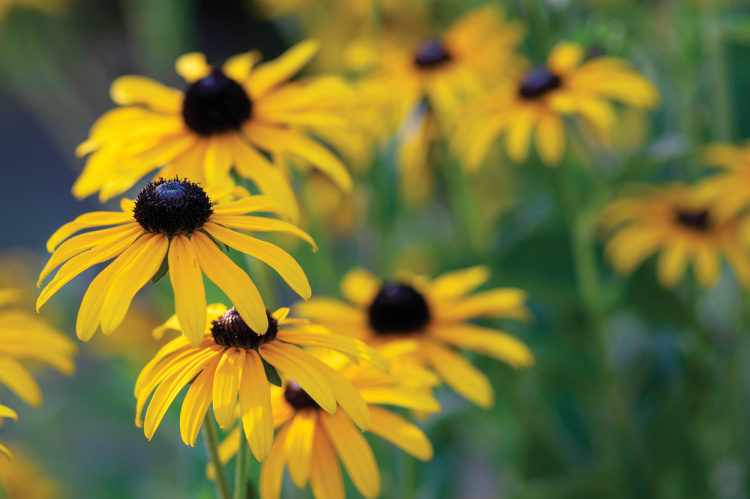
- A strange growth is coming out the top of a few of my black-eyed Susan blooms. What is it, and do I need to do anything?
- Your rudbeckia contracted a disease called “aster yellows.” Aster leafhoppers feed on infected plants and transmit the bacteria-like organisms by injecting them into the next plant they visit. It won’t kill the plant, but removing the infected plant will stop the spread to the 300 species that are susceptible, including many perennials, annuals and vegetables. Controlling leafhoppers is problematic because they move continually, and insecticides also harm the beneficial insects you need.