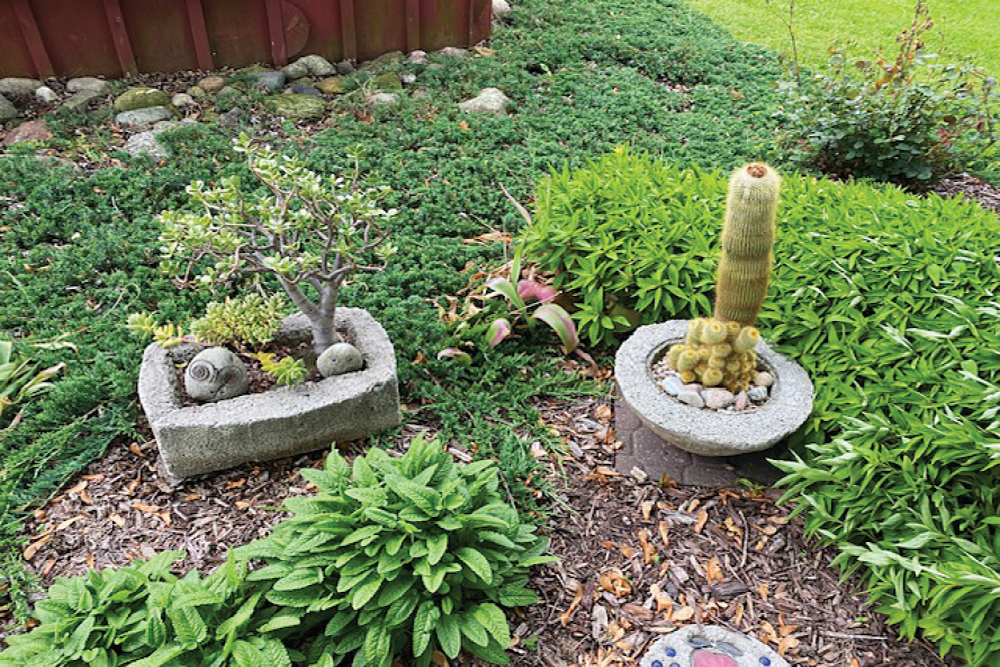
Hypertufa. It sounds like some kind of outdoor furniture or maybe a spa treatment. But thanks to hypertufa, anyone can create a planter or garden ornament that looks like concrete or stone with the advantage of it being much lighter.
See more: Enjoy Vibrant Color in the Garden with Annuals
The Right Recipe
Recipes for hypertufa abound on the internet, but the basics start with equal parts sand, cement mix and peat moss or perlite mixed with enough water to make it moldable.
The recipe changes depending on if you make a planter, leaf casting, stepping stone or something else. Do you want a whiter pot than the normal concrete gray? Use white sand and white perlite. Do you prefer some color in your leaf casting? Add dye into the mix.
See more: Expert Tips and Insights for Successful Container Gardening
Marvelously Molded
What can you make? Anything using containers, globes, stepping stones, birdbaths, leaf impressions or whatever you can devise a mold for to accomplish your idea. I’ve seen pictures of hypertufa hands reaching up from the soil, molded in old rubber gloves.
First, you’ll need a mold. You can press the hypertufa on the mold’s outside or inside. The heavier projects require an internal structure using chicken wire or rebar for strength.
For troughs, use rectangular cardboard boxes reinforced with duct tape to maintain the shape. To construct a sphere, use a spherical replacement globe for a light fixture. Once set, put the globe in a plastic bag and break off the glass using a hammer.
Stepping stones can be made from old frying pans or inexpensive plastic container saucers. Leaf molds can be created from large heavy leaves by covering the back side usually with the leaf supported by a mound of sand to keep its shape. I’ve even used a woven stick planter, molding on the inside so the design appears on the outside when unmolded.
For easy removal, either line the mold with thin plastic or spray with a kitchen oil spray. Don’t forget the drainage hole. A piece of dowel or wine cork works great. Let the project set for 48 hours, remove from the mold, then pop out the cork.
Cover the entire project with plastic and let it cure for a month. Then, you can waterproof birdbaths and fountains with a water sealer.
This autumn, when active gardening slows down, indulge your creative side and have some fun making your own hypertufa creation.
See more: Helpful Garden Gadgets
Ask the Expert
Q: I see webbing in my walnut tree. Is it a tent caterpillar? Should I treat it?
No to both. Tent caterpillars appear in the spring and are harmful. Fortunately, you probably have fall webworms (Hyphantria cunea). They look unsightly but are not very harmful because the foliage will soon disappear for winter. If you want to treat them, they stay inside their web, so any insecticide must be sprayed around the interior. Bacillus thuringiensis (Bt) will work without harming beneficial insects. Removing and destroying the infected branch with the web intact also works.
See more: Rooted Bird Feeders Allow Mother Nature to Take Over Filling the Bird Feeder
About the Author: Jan Phipps is a University of Illinois Extension Master Gardener. She gardens, writes and podcasts near Chrisman.